

Blog Post August 19, 2026 | 5 minutes read

Why good policies are no longer enough to prove compliance

Compliance is getting harder to prove for BFSI firms. See why looking compliant on credit, claims, or onboarding decisions is not the same as proving it.

Learn how stitched-together, Frankenstein customers put you at risk

Download ebook

Select an AI tool to explore this article

Why good policies are no longer enough to prove compliance

Master Data Management Blog by Stibo Systems logo
| 5 minutes read
August 19 2026
Why good policies are no longer enough to prove compliance
7:54

Many banking, financial services and insurance (BFSI) firms believe their customer data is compliant. But when a regulator asks them to prove it, their confidence starts to crack.

Proof is not the same as a policy sitting in a governance folder. Regulators want something more specific than that.

For a particular customer and decision, firms need to show:

  • Which record was trusted, and why it was used for a particular decision
  • Where the data came from, and who owned it
  • Which data and control supported the decision, and who approved any exceptions

Most compliance teams can describe their processes in detail. But few can produce that supporting evidence quickly, for one customer, one decision and one point in time.

Having a policy is not the same as being able to demonstrate that it was applied consistently, and that difference is where many BFSI firms get caught out. The rules are in place, but they don’t have a fast, defensible way to show that they follow them.

Here is a simple way to test whether your firm can produce that evidence quickly and consistently.

Can your customer data withstand regulatory scrutiny?

If a regulator asked you for proof about one customer and one decision, could your team answer within minutes, or would you spend weeks chasing that customer across systems that were never built to talk to each other, reconciling names and addresses that do not match before you could even begin?

Answering quickly comes down to two things:

  1. One trusted version of that customer, instead of several conflicting ones
  2. A visible trail showing where the data came from and who approved it

Many firms still struggle to produce both quickly and consistently, particularly when supporting data is spread across multiple systems.

What are regulators asking for right now?

Different regulatory frameworks place different obligations on BFSI firms, but several share a growing emphasis on governance, accountability and demonstrable evidence.

  • Consumer Duty and the FCA, requiring firms to assess, understand, and evidence the outcomes received by retail customers
  • GDPR, requiring firms to understand what personal data they hold, why it is processed, how long it should be retained, and how individual rights are supported
  • DORA, requiring financial firms to strengthen ICT risk management, operational resilience, and oversight of critical technology providers
  • The EU AI Act, introducing governance, transparency, and risk management obligations for certain AI systems used in financial services.

None of this is new territory. What has changed is how much detail regulators expect on demand.

When that regulator points at one customer and asks for the reasoning behind one decision, you must be able to connect the outcome to the data, controls, and approvals that supported it.

How do disconnected systems create compliance blind spots for BFSI companies?

Every system in a BFSI firm captures customer data for a different business purpose.

For example, a core banking platform may record an account, a CRM a relationship, a policy administration system a contract, and a claims platform an event or loss. Each of them updates its own version on its own schedule, using whatever a customer or colleague typed in at the time.

Over months and years, those records drift apart. Nothing forces them to agree with each other, and nothing tells anyone which version to trust.

The result can be several versions of the same person or organization, with different addresses, identifiers, roles, and relationships spread across systems that were never designed to reconcile them.

What goes wrong during a KYC refresh, for example?

  1. The core banking system lists an address from three years ago
  2. The CRM has a newer one
  3. The onboarding platform names a different legal entity for the same beneficial owner, because a form was completed by someone else at a different point in the relationship

Each record may have been valid in its original context, but together they present a conflicting and incomplete picture. Before the review can begin, the team must establish whether the records represent the same party, which source is current, and which information should be trusted.

That is when you can no longer answer a regulator in minutes.

Why does AI make weak customer data an even bigger compliance risk?

An AI model treats whichever customer record it receives as fact. It makes a decision within milliseconds, whether that decision is:

  • A credit line
  • An onboarding approval
  • A suitability check
  • A fraud flag
  • A claims decision
  • An underwriting referral
  • A customer vulnerability assessment

Unless conflicting or outdated records are identified and governed upstream, they may be processed with the same apparent confidence as trusted data. An unreliable record can therefore influence decisions quickly and at scale.

Increasingly, firms must be able to explain not only how a model performed, but also which data supported its output, where that data came from, and what controls were applied.

  • Manual errors may remain isolated or be detected one case at a time
  • Automated processes can repeat the same data problem across a much larger population

The test I mentioned earlier applies here, too. But here the problem runs at machine speed. A firm that could not answer for one customer in minutes now has a model repeating that same unproven decision across thousands of customers before anyone notices.

Why can strong compliance policies still be difficult to prove?

Many BFSI firms already have detailed policies, data governance frameworks, and documented controls.

The problem appears when it is time to prove the policy was followed:

  1. For one customer
  2. On one day
  3. For one decision

The real test is whether the data, controls, and approvals behind a decision were captured and retrievable at the moment someone asked for it. Most firms test whether policies and controls exist but may be less prepared to test how quickly the supporting evidence can be assembled for a real customer or decision.

And that is the real challenge.

McKinsey’s recent research on AI data readiness reaches a similar conclusion from a technical angle: AI does not lower the bar on data quality, but it raises the cost and the speed of getting it wrong. The same research found that only 7% of companies have fully scaled AI across their organizations. Largely because the underlying data was not ready to support it.

How BFSI firms can make compliance evidence easier to produce

Solving it starts with treating trusted customer and party data as shared infrastructure.

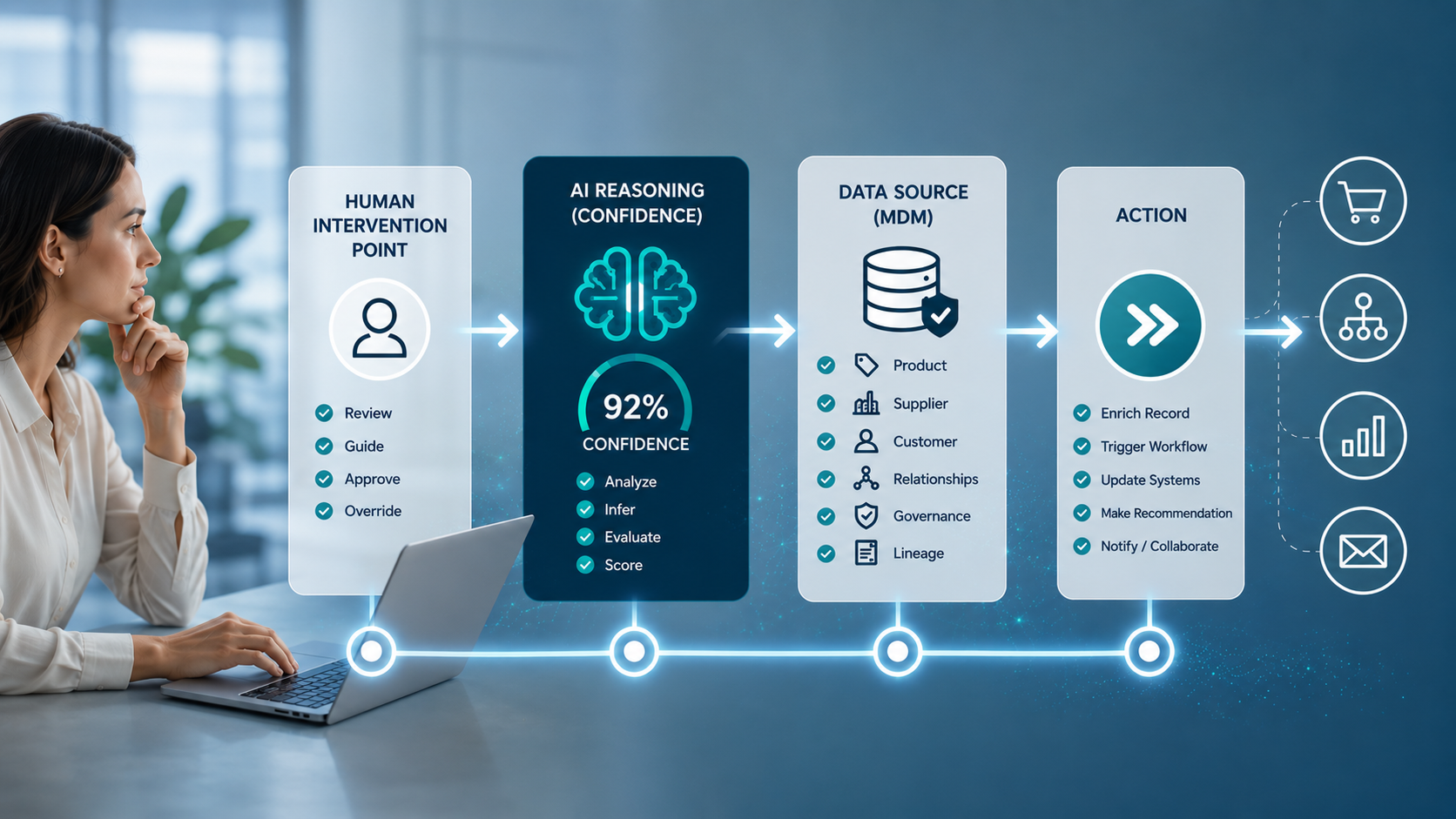
Customer Experience Data Cloud, the customer data solution built on STEP, Stibo Systems’ trusted intelligence platform, gives BFSI firms a governed master data foundation that can help BFSI firms connect identities, apply transparent rules, and retain evidence of how trusted records were created. The solution:

  • Applies transparent matching and survivorship rules, helping firms understand why records were linked and which values were selected
  • Tracks lineage, showing where each piece of customer data came from and when it last changed
  • Manages relationships and hierarchies across customers, accounts, policies, organizations, brokers, and related parties
  • Supports stewardship and exception workflows so significant identity decisions can be reviewed rather than remaining hidden inside system logic

Firms including Royal London already run their customer data this way. The ones that pass a regulator’s question can answer instantly, every time it is asked, regardless of how much documentation sits in a folder.

FAQs

What is the difference between a CRM, a data lake and a governed identity layer for compliance purposes?

A CRM records interactions with a customer. A data lake stores and analyzes raw data. Neither is built to decide which version of a customer record is correct, or to make that decision explainable, which is what a governed identity layer is designed to do. 

When does the EU AI Act apply to BFSI firms using AI in customer decisions?

The EU AI Act becomes fully applicable in August 2026, with specific obligations for high-risk AI systems, which covers many AI-driven credit, onboarding, claims, and underwriting decisions in BFSI.

Does a governed identity layer replace the need for a data governance program?

No. It gives a governance program something to enforce. Policy sets the rules; the identity layer is what makes those rules checkable against a real customer record. 

Can a firm be compliant on paper but still fail an AI audit?

Yes, and this is becoming one of the more common gaps regulators are finding. Documented policy shows intent. An AI audit tests whether the data behind an actual decision matches that intent, which is a different question entirely. 

What happens to legacy customer data created before current rules applied?

Legacy data does not get an exemption. If it still feeds a customer decision today, a regulator can still ask for proof behind it, regardless of when the record was originally created.

How often should a firm test whether it can produce this evidence?

There is no fixed regulatory interval, but leading firms treat it like a fire drill, running the test internally on a live customer scenario rather than waiting for a regulator to run it first.


Master Data Management Blog by Stibo Systems logo

Mark Blake is BFSI Industry Practice Lead at Stibo Systems, helping banks and insurers build trusted, governed data foundations for transformation, regulatory confidence and AI-ready operations. With over 20 years’ experience across financial services, insurance, change and data-led transformation, Mark focuses on turning complex customer, product, policy and risk data challenges into clear business value.

Connect on:

Discover blogs by topic

  • See more
  • AI
  • Automotive
  • Business Partner Data Cloud
  • Compliance and risk management
  • Consumer packaged goods
  • Customer Experience Data Cloud
  • Customer and party data
  • Customer experience and loyalty
  • Data compliance
  • Data delivery
  • Data governance
  • Data integration
  • Data modeling
  • Data quality
  • Data sharing
  • Data sourcing
  • Digital asset management
  • Digital shelf analytics
  • ERP success
  • Enhanced content
  • Financial services
  • Insurance
  • Life sciences
  • Location Data Cloud
  • Location data
  • MDM strategy
  • Manufacturing
  • Multidomain data
  • Operational efficiency
  • Platform
  • Product Experience Data Cloud
  • Product data and PIM
  • Product data syndication
  • Product onboarding
  • Retail
  • Supplier Data Cloud
  • Supplier data
  • Sustainability
  • Translation and localization
  • User experience
August 19, 2026

Why good policies are no longer enough to prove compliance

August 11, 2026

Buyers Are Better Informed Than Ever — But Are They Making Better Decisions?

August 10, 2026

Why enterprise AI stalls at scale — and why data is the barrier leaders must solve

July 31, 2026

How to Build Data Governance That Holds Up Across Agent-to-Agent AI Workflows

July 30, 2026

Why Master Data Management Is Critical to Reliable AI Agents

July 27, 2026

Is Your Data Ready for AI Agents? 5 Tests to Find Out

July 24, 2026

From Zero to Launch in Under 6 Months: A Quick Guide to Deploying Master Data Management

July 23, 2026

5 Key Trends in Product Experience Management

July 23, 2026

The New Rules of Competition in Agentic Commerce

July 22, 2026

Why the Data Standard That Powers Your Reports Will Let Your AI Agents Down

July 21, 2026

The 5 Data Standards That Determine Whether Your AI Agents Succeed or Fail

July 20, 2026

Why Most AI Initiatives Fail Before the Model Ever Runs

July 20, 2026

Solving Retail Data Fragmentation: The Key to Consistent Customer Journeys

July 20, 2026

What’s Next for GenAI in Product Experiences?

July 20, 2026

Is Your PIM Strategy Future-Ready? 3 Takeaways from the SPARK Matrix™ Report

July 19, 2026

CDP and MDM: Complementary Forces for Enhancing the Customer Experience

July 17, 2026

Reyes Holdings' MDM Journey to Better Data

July 17, 2026

PIM explained: How Product Information Management transforms data quality

July 16, 2026

Why Trust Is the Real Bottleneck in Agentic Commerce

July 16, 2026

How to Avoid Bad Retail Customer Data

July 16, 2026

10 Dangerous Myths About Managing Your B2B Partner and Account Data

July 16, 2026

Master Data Management Tools: A Complete Guide

July 15, 2026

How Agentic Workflows Are Changing Master Data Management at the Core

July 14, 2026

How to Implement Master Data Management: Steps and Challenges

July 13, 2026

How Signet Jewelers Built Trust in Its Retail Data

July 13, 2026

A Modern Guide to Data Quality Monitoring: Best Practices

July 13, 2026

Guide: Get enterprise data enrichment right with master data governance

July 10, 2026

Guide: How to comply with industry standards using master data governance

July 9, 2026

How to Evaluate MDM Vendors in a Market Full of Acquisitions

July 9, 2026

Guide: Improving your data quality with master data governance

July 9, 2026

How Operations Leaders are Modernizing Manufacturing Data Without Halting Production

July 9, 2026

Guide: Getting enterprise data modelling right with master data governance

July 9, 2026

How URBN Leverages Data Management to Support Its Sustainability Information  

July 8, 2026

Why Agentic AI Demands a Digital Twin of the Business

July 8, 2026

AAPEX and SEMA: The Automotive Aftermarket Industry’s Mega-Showcase

July 7, 2026

Trust the Machine: Making AI Automation Reliable in Master Data Management

July 7, 2026

Is Your Data the Cause of Flawed AI Outputs?

July 7, 2026

Risks of Using LLMs in Your Business – What Does OWASP Have to Say?

July 6, 2026

Navigating Change: Engaging Business Users in Successful Change Management

July 6, 2026

Consumers are Using AI-Powered Tools to Shop Smarter: Why Retail Data Trust Matters More than Ever

July 6, 2026

Building Supply Chain Resilience: Strategies & Examples

July 4, 2026

Gen Z: Seeking Excitement Beyond Amazon

July 3, 2026

How CPG Сompany Bonduelle Сentralized Product Data Across 37 Countries

July 2, 2026

AI Adoption: A High-Stakes Gamble for Business Leaders

July 2, 2026

Why Data Accuracy Matters for CPG Brands

July 1, 2026

Building the Future of Construction with AI and MDM

July 1, 2026

Why Choose a Cloud-Based Data Solution: On-Premise vs. Cloud

June 19, 2026

AI Systems Want Clean Data – But They NEED Governed Intelligence

June 17, 2026

Bosch and Stibo Systems Partner for Enterprise Data Transformation

June 17, 2026

With Semantic Master Data, Your AI Stops Guessing and Starts Understanding What You Want

June 17, 2026

5 Hidden Costs of Bad Customer Data in Retail (and How to Avoid Them)

June 12, 2026

The Complete PIM Features Guide: The Capabilities You Need for Successful Data Strategies

June 12, 2026

5 Product Data Problems That Make Your Brand Invisible in AI Search

June 11, 2026

4 Common Master Data Management Implementation Styles

June 11, 2026

Designing Trust in Agentic Enterprise Systems

June 8, 2026

AI and Master Data: The Business Powerhouse

June 8, 2026

Master Data Meets Microsoft Fabric: Building a Trusted Foundation for AI and Analytics

June 4, 2026

7 Signs Your Brand Is Losing Ground in Agentic Commerce

June 1, 2026

The Future of Master Data Management: Trends in 2026

June 1, 2026

What is a Data Domain? Meaning & Examples

May 28, 2026

8 Best Practices for Customer Master Data Management

May 27, 2026

Data Migration to SAP S/4HANA ERP: The Fast and Safe Approach with MDM

May 25, 2026

Model Context Protocol (MCP): The Missing Layer for AI Systems That Interact with Enterprise Data

May 21, 2026

Better Together: CRM and Customer Master Data Management

May 21, 2026

4 Supplier Onboarding Taxes That Drain Margin Every Day – and How Agentic AI Fixes Them

May 20, 2026

The 7 Types of Customer Data Your AI Agents Can't Ever Act Without

May 19, 2026

What Is Master Data Governance – And Why Do You Need It?

May 18, 2026

The Difference Between Master Data and Metadata

May 13, 2026

Product Attribution Strategies That Convert Searchers into Buyers

May 12, 2026

How to Choose the Right Master Data Management Solution

May 12, 2026

PIM and MDM: Key Differences, Benefits and How They Work Together

May 12, 2026

5 CPG Industry Trends and Opportunities for 2026

May 11, 2026

A Quick Guide to Golden Customer Records and How to Create Them with Master Data Management

May 11, 2026

What is Master Data Management? A Complete Guide

May 11, 2026

Master Data Management Roles and Responsibilities

May 8, 2026

What is Application Data Management and How Does It Differ From MDM?

April 30, 2026

6 Features of an Effective Master Data Management Solution

April 22, 2026

What is the difference between CPG and FMCG?

April 17, 2026

Most Common ISO Standards in the Manufacturing Industry

March 18, 2026

A Complete Master Data Management Glossary

February 24, 2026

BIC's Blueprint for Conquering Complex Global Product Data Challenges

February 17, 2026

Product 360 After the Salesforce Acquisition: Why You Need to Map Out a Plan B

January 13, 2026

Discover the Value of Your Data: Master Data Management KPIs & Metrics

December 9, 2025

Product Listing Page Best Practices: How to Create Better Product Listings with PIM

December 8, 2025

The Board of Directors’ Guide to Selecting Product Experience Software (With Checklist)

December 5, 2025

5 PIM Trends That Will Define 2026 and the Near Future (And How to Prepare for Them)

December 4, 2025

Process Insurance Claims Faster with Trusted Data

December 3, 2025

Fixing Fragmented Customer Account Data: Stop Losing Revenue and Trust

December 2, 2025

How Master Data Management Keeps Manufacturers Compliant — From Design to Delivery

November 20, 2025

What is Manufacturing-as-a-Service (MaaS)?

November 18, 2025

AI in Retail: How to Make Your Data Ready to Use in Microsoft Fabric

November 17, 2025

What is Party Data? All You Need to Know About Party Data Management

October 27, 2025

How to Estimate ROI of Master Data Management

October 20, 2025

Managing Product Complexity: Leveraging Custom Product Management with BOM-Level Precision

October 2, 2025

How CPG Brands Scale D2C Business Without Breaking What Already Works

September 24, 2025

How Leading Brands Built Trusted Data with Amplifi and Stibo Systems

August 13, 2025

The 5 Biggest Retail Trends in 2026

August 4, 2025

Digital Product Passports: The Data Management Mandate

August 1, 2025

How to Improve Back-End Systems Using Master Data Management

July 9, 2025

How to Get More Value from Your Data: The Benefits of Master Data Management

May 12, 2025

Manufacturing Trends and Insights in 2026

March 17, 2025

What is Smart Manufacturing and Why Does it Matter?

March 7, 2025

MDM and AI: Real-World Use Cases and Learnings From OfficeMax and Motion Industries

February 3, 2025

4 Trends in the Automotive Industry

January 29, 2025

How to Choose the Right Data Quality Tool?

January 27, 2025

All You Need to Know About Supplier Information Management

January 27, 2025

How Kramp Optimizes Internal Efficiency with Data Strategy

January 27, 2025

From Patchwork to Precision: Moving Beyond Outdated and Layered ERP Systems

January 24, 2025

Thriving Beyond NRF 2025 with Trustworthy Product Data

January 17, 2025

Why Addressing Data Complexity in Pharmaceutical Manufacturing Is Critical

January 14, 2025

An Introductory Guide to Supplier Compliance

December 17, 2024

How to Implement Data Governance

December 9, 2024

What is Supply Chain Analytics and Why It's Important

December 5, 2024

What is Supplier Lifecycle Management?

December 3, 2024

Using Machine Learning and MDM CBAM for Sustainability Compliance

October 22, 2024

Live Shopping: How to Leverage Product Information for Maximum Impact

September 23, 2024

How Master Data Management Can Enhance Your ERP Solution

September 11, 2024

What is Digital Asset Management?

September 3, 2024

How to Improve Your Data Management

August 30, 2024

Digital Transformation in the CPG Industry

August 27, 2024

Responsible AI Relies on Data Governance

August 19, 2024

Making Master Data Accessible: What is Data as a Service (DaaS)?

August 13, 2024

Great Data Minds: The Unsung Heros Behind Effective Data Management

August 6, 2024

A Data Monetization Strategy - Get More Value from Your Master Data

August 4, 2024

Introducing the Master Data Management Maturity Model

July 31, 2024

What is Augmented Data Management? (ADM)

July 17, 2024

GDPR Data Governance and Data Protection, a Match Made in Heaven?

April 11, 2024

Guide: Deliver flawless rich content experiences with master data governance

March 25, 2024

How to Get Rid of Customer Duplicates

March 18, 2024

5 Tips for Driving a Centralized Data Management Strategy

February 20, 2024

5 Key Manufacturing Challenges in 2025

February 20, 2024

How to Enable a Single Source of Truth with Master Data Management

February 12, 2024

What is Data Quality and Why It's Important

February 7, 2024

Data Governance Trends 2026

February 6, 2024

What is Data Compliance? An Introductory Guide

January 18, 2024

How to Build a Master Data Management Strategy

January 16, 2024

The Best Data Governance Tools You Need to Know About

November 29, 2023

Shedding Light on Climate Accountability and Traceability in Retail

November 13, 2023

Location Analytics – All You Need to Know

October 16, 2023

Understanding the Role of a Chief Data Officer

October 5, 2023

5 Common Reasons Why Manufacturers Fail at Digital Transformation

September 29, 2023

How to Digitally Transform a Restaurant Chain

September 14, 2023

Three Benefits of Moving to Headless Commerce and the Role of a Modern PIM

July 6, 2023

12 Steps to a Successful Omnichannel and Unified Commerce

June 28, 2023

Navigating the Current Challenges of Supply Chain Management

April 6, 2023

Product Data Management during Mergers and Acquisitions

March 1, 2023

Asset Data Governance is Central for Asset Management

February 14, 2023

How to Leverage Internet of Things with Master Data Management

February 13, 2023

Sustainability in Retail Needs Governed Data

January 4, 2023

Innovation in Retail

November 21, 2022

Life Cycle Assessment Scoring for Food Products

November 14, 2022

Retail of the Future

November 7, 2022

Omnichannel Strategies for Retail

November 5, 2022

Hyper-Personalized Customer Experiences Need Multidomain MDM

October 25, 2022

What is Omnichannel Retailing and What is the Role of Data Management?

October 17, 2022

How to Get Started with Master Data Management: 5 Steps to Consider

October 1, 2022

An Introductory Guide: What is Data Intelligence?

September 15, 2022

Revolutionizing Manufacturing: 5 Must-Have SaaS Systems for Success

August 25, 2022

Digital Transformation in the Manufacturing Industry

August 17, 2022

Master Data Management Framework: Get Set for Success

June 15, 2022

Supplier Self-Service: Everything You Need to Know

June 14, 2022

Omnichannel vs. Multichannel: What’s the Difference?

June 10, 2022

Create a Culture of Data Transparency - Begin with a Solid Foundation

May 31, 2022

What is Location Intelligence?

May 30, 2022

Omnichannel Customer Experience: The Ultimate Guide

May 24, 2022

Omnichannel Commerce: Creating a Seamless Shopping Experience

May 11, 2022

Top 4 Data Management Trends in the Insurance Industry

May 1, 2022

What is Supply Chain Visibility and Why It's Important

April 21, 2022

The Ultimate Guide to Data Transparency

April 20, 2022

How Manufacturers Can Shift to Product as a Service Offerings

April 16, 2022

How to Check Your Enterprise Data Foundation

April 14, 2022

An Introductory Guide to Manufacturing Compliance

March 31, 2022

Multidomain MDM vs. Multiple Domain MDM

March 23, 2022

How to Build a Successful Data Governance Strategy

March 22, 2022

What is Unified Commerce? Key Advantages & Best Practices

March 17, 2022

6 Best Practices for Data Governance

March 16, 2022

5 Advantages of a Master Data Management System

February 24, 2022

Supply Chain Challenges in the CPG Industry

February 14, 2022

Top 5 Most Common Data Quality Issues

February 10, 2022

What Is Synthetic Data and Why It Needs Master Data Management

February 8, 2022

What is Cloud Master Data Management?

January 28, 2022

Build vs. Buy Master Data Management Software

January 27, 2022

Why is Data Governance Important?

January 24, 2022

Five Reasons Your Data Governance Initiative Could Fail

January 21, 2022

How to Turn Your Data Silos Into Zones of Insight

January 16, 2022

How to Improve Supplier Experience Management

January 16, 2022

​​How to Improve Supplier Onboarding

January 11, 2022

What is a Data Quality Framework?

January 4, 2022

The Ultimate Guide to Building a Data Governance Framework

December 20, 2021

The Dynamic Duo of Data Security and Data Governance

December 20, 2021

How to Choose the Right Supplier Management Solution

December 6, 2021

How Data Transparency Enables Sustainable Retailing

December 1, 2021

What is Supplier Performance Management?

November 7, 2021

The Complete Guide: How to Get a 360° Customer View

October 29, 2021

How Location Data Adds Value to Master Data Projects

October 15, 2021

What is a Data Mesh? A Simple Introduction

September 2, 2021

10 Signs You Need a Master Data Management Platform

August 31, 2021

What Vendor Data Is and Why It Matters to Manufacturers

August 25, 2021

3 Reasons High-Quality Supplier Data Can Benefit Any Organization

August 9, 2021

What is Reference Data and Reference Data Management?

Let’s get started

Ready to see how trustworthy intelligence turns data into confident decisions? Let’s chat.

2