

An S/4HANA migration puts master data on the agenda in a way that doesn't happen often outside a transformation program.
Usually, though, the master data scope is defined first around what the S/4HANA program needs to migrate and operate. Material/product, business partner, and finance data may be governed well enough for ERP cutover, while related content, relationships, and classifications in product information management (PIM), product lifecycle management (PLM), customer relationship management (CRM), supplier systems, and regional applications remain outside the program's immediate scope.
The problems appear later, when an AI initiative needs supplier, product and finance data to agree with each other and it does not have that foundation to draw on.
By then, you may no longer have the program budget and the executive attention that made the work possible.
Master data management (MDM) is the work behind that foundation.
It's what defines who owns a record, what rules it follows, and which systems it connects to. Most S/4HANA programs build enough of it to support the ERP. But for AI, you need something far wider.
What's the difference between MDM for the ERP and MDM for AI?
ERP-centered MDM optimizes governed master data for the operational models and processes the ERP needs.
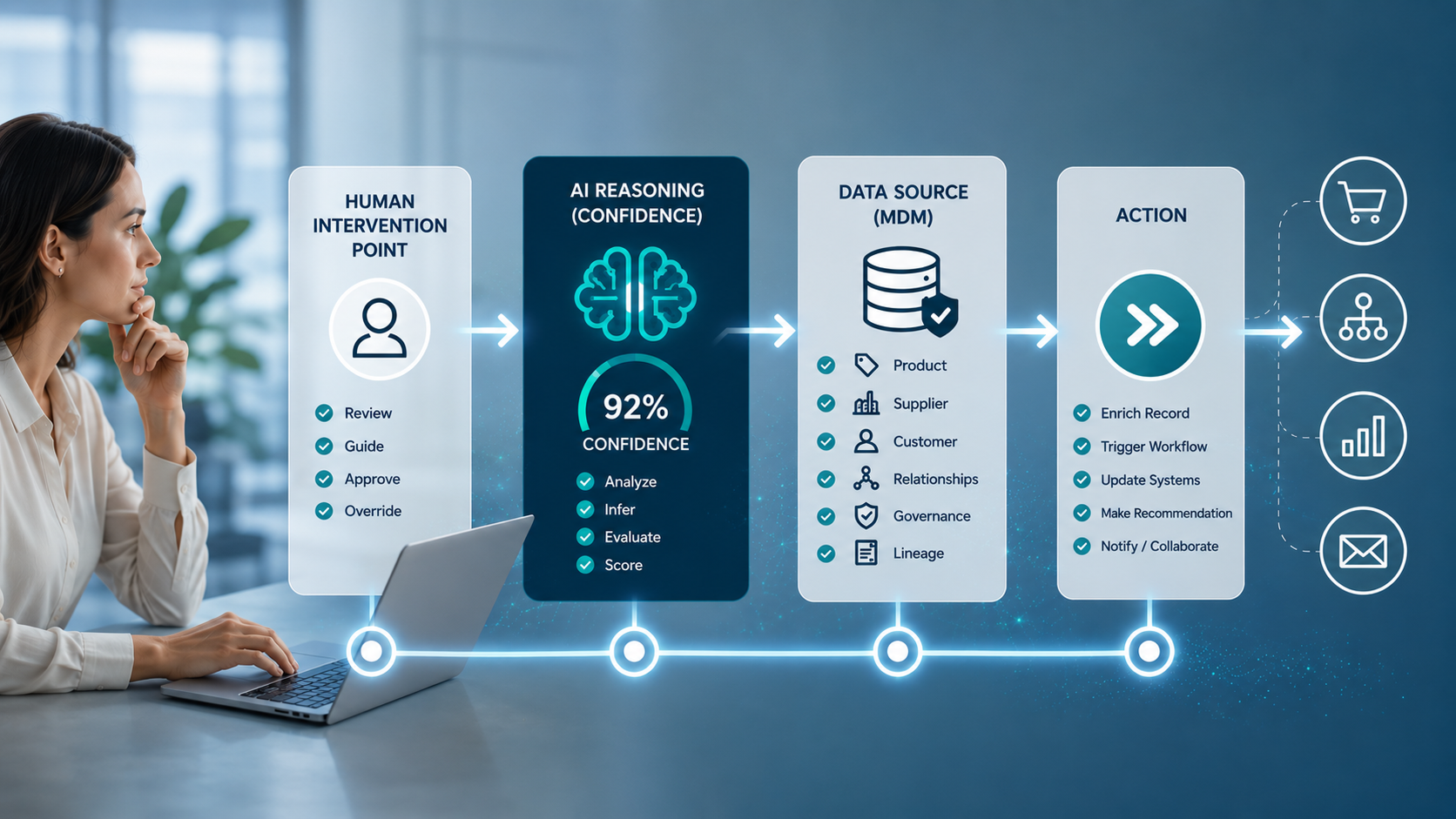
AI-ready MDM extends that foundation across domains, systems, and relationships, so AI can reason over consistent business context rather than isolated records.
To some, that sounds like a small difference, but it changes what the data can support.
An AI agent working across supplier, product, and finance data does not read one record at a time. It reasons across relationships. Which supplier ties to which material, and which material feeds into which product configuration, which in turn carries a different price depending on the market.
That broader context does not emerge automatically from an S/4HANA program. SAP Master Data Governance (MDG) can govern and consolidate SAP and third-party data, but many enterprises still manage adjacent data in separate applications. Unless those domains are deliberately harmonized, the same entity can still acquire different definitions and relationships across the landscape.
Examples include:
- PIM data
- Supplier portals
- Regional databases
- Ecommerce platforms
- Customer master data
Without an enterprise-wide governance model, identifiers, definitions, and relationships can still drift across those systems.
Why is an S/4HANA migration the best time to fix master data for AI?
Enterprise transformation programs are one of the few moments when organizations have both the executive mandate and the operational momentum to address master data at scale.
Outside these programs, the need gets recognized, but maybe not funded. Competing priorities push it back every time.
An S/4HANA program forces the questions that usually stay unanswered:
- Who owns this data?
- Who enforces the rules?
- How do regional variants get reconciled?
With a dedicated migration/transformation budget and project team, you have a rare opportunity to resolve them. After go-live, that concentrated sponsorship and funding often diminishes.
That does not mean an MDM platform replaces SAP's migration tooling. SAP executes and validates the transition; the role of STEP, Stibo Systems' trusted intelligence platform, is to prepare, harmonize, and govern the master data those processes depend on, then sustain that governance across the wider estate after go-live.
The same problem resurfaces later, often when an AI initiative needs the data to be consistent and finds no foundation to draw on, and no program left to fund the fix.
What makes a data foundation ready for AI and not just for S/4HANA?
1. It aligns data across domains
A product means the same thing whether procurement, commercial, or finance teams are looking at it. Supplier classifications line up with material specifications. Market hierarchies stay consistent from one region to the next.
2. It encodes governance instead of documenting it
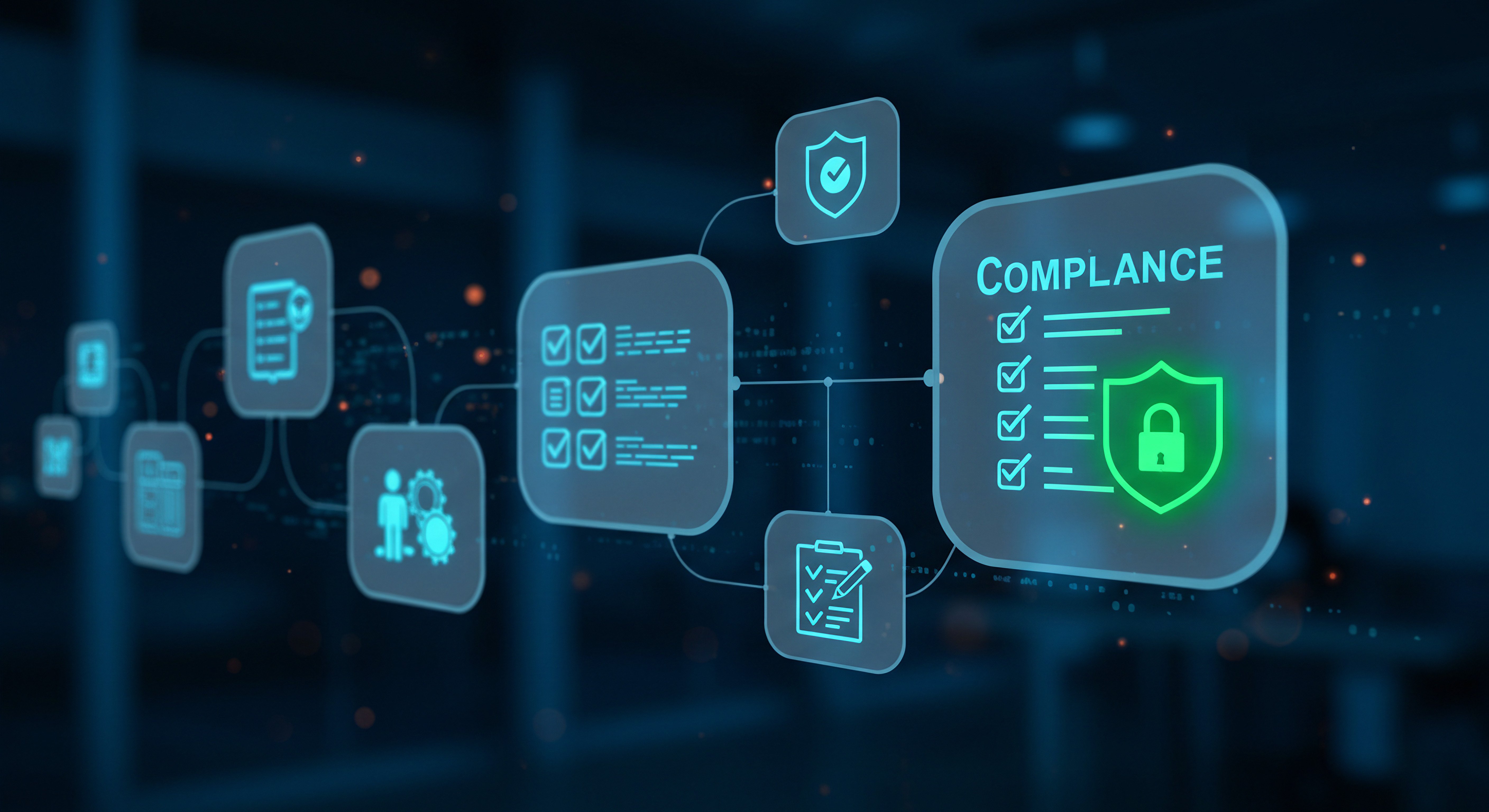
Rules live in the infrastructure itself, applied automatically to every record, rather than sitting in a policy document nobody checks during a busy quarter.
3. It makes AI inputs traceable
When governed data carries lineage, provenance, relationships, and rule context, the information supplied to an AI system can be traced back to its sources. That does not make every model decision inherently explainable, but it makes the data context auditable and easier to investigate.
4. It delivers data at the freshness the use case requires
Many operational and agentic AI use cases – such as pricing, inventory rebalancing, or supplier-risk monitoring – need current or near-real-time data. A foundation designed only for periodic reconciliation may not support them.
The key difference is therefore not simply SAP versus non-SAP, or batch versus real time. It is whether governance, semantics, and delivery are designed across the systems and freshness requirements the AI use case actually depends on.
SAP-scoped MDM can deliver the first two inside the ERP. The last two, especially real-time operation across systems SAP doesn't own, need a foundation built with AI in mind from the start.
What four outcomes come from fixing master data during an S/4HANA migration?
Get this right during the program, and four things follow.
1. Testing and cutover stop getting derailed by data inconsistencies that should have been caught earlier.
When materials, products, suppliers and key hierarchies have clear definitions and clear owners, the team running the program isn't tracking down data problems in the middle of a testing cycle.
2. Harmonizing data across countries and business units gets faster. Local variants in attributes, classifications and units of measure get reconciled against a shared model, while important market differences stay intact. That means less rework during the program and less cleanup once it's live.
3. A governed canonical model for material/product, supplier and other master entities reduces bespoke master data mappings and gives downstream integrations a consistent semantic source.
4. The foundation is ready for what comes after go-live:
- S/4HANA standardizes how processes run
- Master data standardizes what the data means
A published Stibo Systems manufacturing customer story shows what this can look like at enterprise scale. As part of its S/4HANA journey, the organization reduced more than 200 legacy data models to five semantic models across 500+ applications and 1,000+ interfaces, supporting 600+ global projects.
Where does enterprise MDM fit alongside SAP MDG and SAP Business Data Cloud?
SAP MDG is a capable option for central governance, consolidation and mass processing across SAP master data domains, and it can work with SAP and third-party data sources. SAP's acquisition of Reltio also broadens SAP's multidomain MDM position within Business Data Cloud.
That changes the architectural question. It is no longer whether SAP can govern data beyond S/4HANA; it is where the organization wants enterprise master data ownership, semantics, and governance to sit across SAP, non-SAP, and future application estates.
STEP provides an independent multidomain governance layer that can complement SAP MDG, coexist with SAP Business Data Cloud, or serve as the enterprise master data control plane across the wider landscape. With STEP, companies can:
- Govern product, supplier, customer, and location data within a shared multidomain model, with relationships and hierarchies made explicit
- Connect with SAP R/3, ECC and S/4HANA and a library of 100+ prebuilt connectors and integrations
- Apply governance rules, workflows, validation, and permissions whether changes are initiated by people or automation
- Retain auditable history and provenance of governed changes to support traceability
- Give AI agents standards-based access to governed master data and semantic context via Data as a Service and the Stibo Systems MCP Server, reducing the need for bespoke agent integrations
In summary
An S/4HANA migration gives you a rare opportunity to build master data that works for more than the ERP.
Get the scope right during the program, and the payoff shows up on both sides. Testing goes smoother, harmonization takes less rework, and integration gets simpler.
AI agents reasoning across supplier, product, and finance data depend on that foundation to already be there. Miss the window, and you end up doing the same work later, without the program budget or the executive attention that made it possible the first time.
To go deeper on why this window opens where it does, and what an AI-ready data foundation requires, download our AI at Scale white paper, which was co-authored with Accenture.
Frequently asked questions
How do you standardize material and supplier data before an SAP S/4HANA migration?
Start by assigning ownership for each domain to a specific team, then encode the rules that decide what counts as valid, complete, or duplicate data instead of leaving them in a document.
From there, reconcile the different versions sitting in ERP, PIM, and supplier portals into one governed record per entity, and connect that record to every system that consumes it.
Doing this before cutover means the migration team tests against clean data instead of finding the inconsistencies during go-live.
Which MDM platform works best with SAP S/4HANA?
There isn't one universal answer. The choice depends on the target architecture, governance operating model, domains, coexistence requirements, and how far trusted master data must span beyond SAP.
SAP MDG is a strong fit where organizations want SAP-centered central governance and consolidation. STEP is a strong fit where multidomain governance must remain independent of ERP and serve SAP plus a wider heterogeneous estate. In some architectures, the two coexist.
SAP MDG or dedicated multidomain MDM, which is the better long-term choice?
It comes down to architectural responsibility rather than a blanket choice of one tool being “better.” SAP MDG and Reltio within SAP Business Data Cloud give SAP customers broader master data options.
A dedicated independent multidomain platform such as STEP is most differentiated where the organization wants one governance layer and semantic model spanning multiple ERPs, PLM/PIM, CRM, supplier systems, channels, and future AI consumers without making enterprise master data ownership dependent on one application suite.
Does this work need to happen before go-live, or can it happen after?
It can happen after, but the cost changes. During the program, master data work depends on budget and executive attention already in place for the migration.
After go-live, that budget and attention move to other priorities, so the same work usually needs its own business case, sponsor, and funding cycle to get approved.
Do SAP object types cover the same ground as business domains like product or supplier?
Not necessarily. ERP master data objects are designed primarily around the transactional and process requirements of the ERP. An enterprise business domain can include richer relationships, classifications, content, and governance context held across adjacent systems.
A product, for example, may combine SAP material/product attributes with PIM content, PLM specifications, regional classifications, and supplier relationships. The architecture needs to govern the complete business meaning, not assume every relevant attribute belongs in one application.
Will fixing master data during migration slow the S/4HANA program down?
It adds work, but not necessarily time. Data rationalization can run in parallel with process design and testing, rather than as a separate phase tacked onto the schedule.
Skipping the work can push data quality issues into testing or post go-live, where they are generally harder and more disruptive to resolve.