
STIBO SYSTEMS MCP SERVER

Give your AI agents a direct line to trusted master data

Connect your AI agents to modeled, governed, and validated master data through our MCP — without building a custom integration for every agent, system, or use case.

Rotate your device

Rotate your device to landscape for a better viewing experience

Connect your agents to data with context

Stibo Systems MCP Server gives your AI agents secure, governed access to trusted enterprise data through the open Model Context Protocol (MCP). Built on STEP, our trusted intelligence platform, it provides verified multidomain data with the context, relationships, and governance agents need to act on data — not just query it.

Secure access to trusted enterprise data

Trace every response to its source

Work across verified multidomain data

Enforce governance on every request

Provide context for intelligent decisions

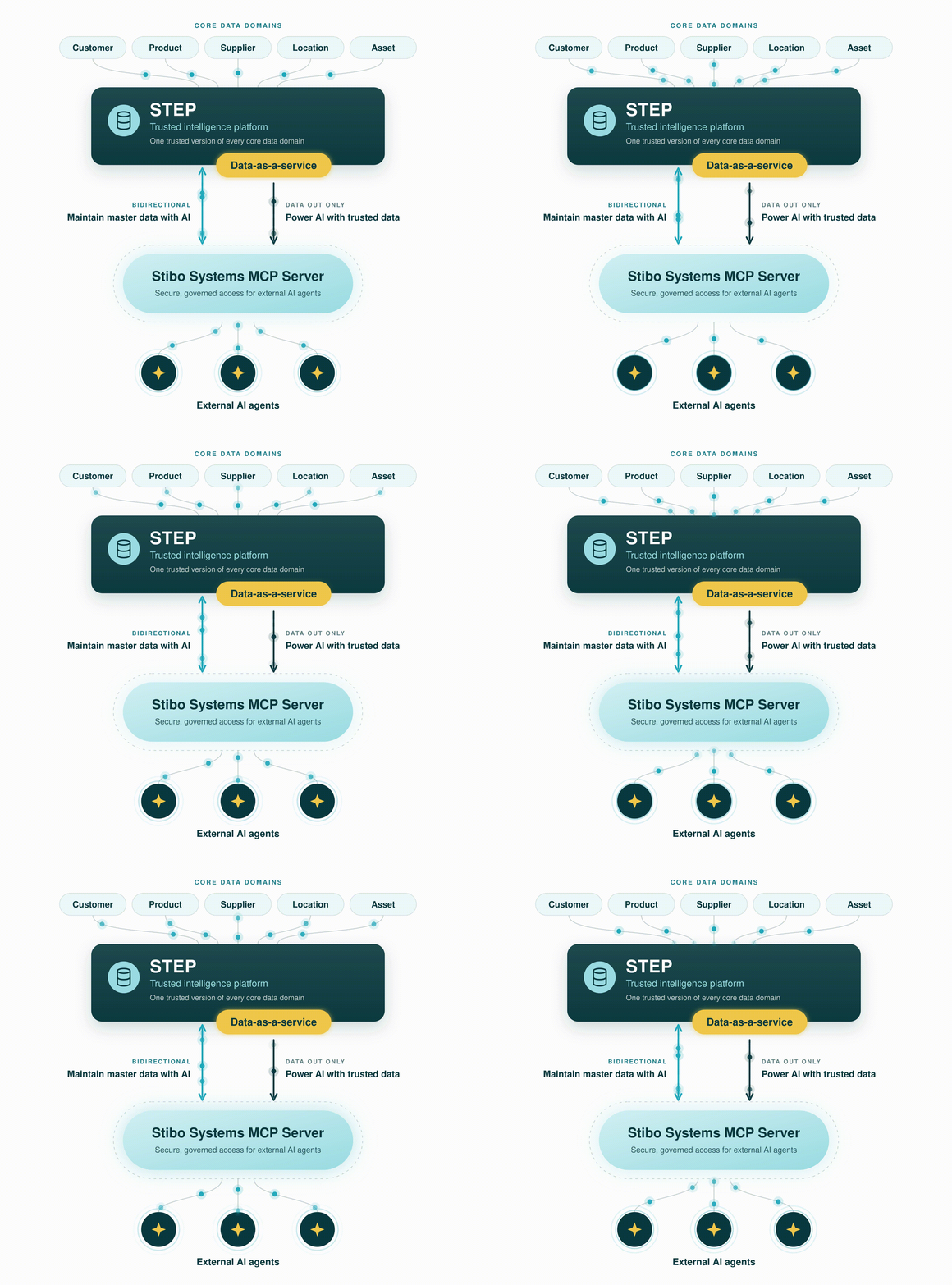
Two types of MCP tooling for two different goals

agentic_ecosystem

MDM FOR AI

Power your AI with trusted master data


Give your AI agents fast, read-only access to governed master data through data-as-a-service (DaaS). Agents can consume product information, customer records, classifications, and connected context at scale, without accessing STEP directly.

This option can support a wide range of customer-facing and high-volume AI initiatives, from shopping assistants and chatbots to recommendation engines and more that need accurate answers in real time.

What you get:

  • Fast, read-optimized access through DaaS
  • Trusted master data with connected business context
  • Scalable support for customer-facing and high-volume AI
  • No direct access to STEP required

AI FOR MDM

Maintain master data with your AI agents


Connect your AI agents directly to STEP so they can query, create, enrich, and update master data within established workflows. Existing permissions, business rules, and governance controls apply to every AI-driven change.

This option is built for organizations that want their own agents to participate in master data management (MDM) while keeping every action controlled, traceable, and aligned with existing processes.

What you get:

  • Governed read/write interaction with STEP
  • Master data creation, enrichment, and updates
  • Participation in established STEP workflows
  • Existing permissions, rules, and controls applied

What the Stibo Systems MCP Server does for you

Faster time to value

Deploy AI agents faster by reducing custom integration work and giving them standardized access to trusted master data, helping speed up both adoption and ROI.

Reduce integration complexity

Give different AI agents a standardized way to interact with trusted master data without rebuilding every connection from scratch.  

Scale AI with control

Help agents access and act on enterprise data while preserving permissions, traceability, and established governance rules.

Stibo Systems MCP Server FAQ

What is Model Context Protocol?

Model Context Protocol, or MCP, is an open standard that gives AI applications a consistent way to connect to external data, tools, and systems. Instead of creating a custom integration for every agent and data source, MCP provides a common interaction layer through which agents can discover and use approved data and capabilities.

What is Stibo Systems MCP Server?

Stibo Systems MCP Server securely connects AI agents to trusted enterprise master data through the open Model Context Protocol. It gives customer-built agents standardized access to governed data, including the relationships, business rules, and context needed to understand and use that data confidently.

What makes the Stibo Systems MCP Server different?

The difference is what sits behind the connection. Rather than exposing raw records alone, Stibo Systems MCP Server connects agents to master data that has already been modeled, governed and validated. Agents can access relationships, hierarchies, business rules, provenance, and governance context that help them understand what the data means and how it should be used.

What is the difference between MDM for AI and AI for MDM?

MDM for AI uses trusted master data to power your AI initiatives. It gives external AI agents fast, read-only access to governed master data through data-as-a-service (DaaS).

AI for MDM uses your own AI agents to help maintain master data. Authorized agents can query, create, enrich, and update records directly in STEP while following established workflows, permissions, and governance controls.

Together, they provide trusted context outward and governed action inward.

Do I need to build a semantic data graph or ontology to use the MCP Server?

No. STEP’s semantic data graph capabilities are built into the platform, so there is no separate graph or ontology to design and maintain solely for the MCP Server. Agents can access structured master data together with its relationships, hierarchies, and governed business context.

Can AI agents update master data in STEP?

AI agents can create, enrich, and update master data through the AI for MDM tooling. Authorized agents connect directly to STEP and work within existing permissions, business rules, workflows, and governance controls, helping keep AI-driven changes controlled and traceable.

What types of AI use cases can the Stibo Systems MCP Server support?

MDM for AI supports customer-facing and high-volume use cases that consume trusted data, such as shopping assistants, chatbots, and recommendation engines. AI for MDM supports agents that help manage master data by creating, enriching or updating records within STEP.

What do I need to get started with the Stibo Systems MCP Server?

Start by identifying what your AI agents need to accomplish. If they need fast, scalable access to trusted master data, MDM for AI may be the right fit. If your own agents need to help create, enrich, or update data in STEP, AI for MDM may be more appropriate. Stibo Systems can help determine the right tooling and availability for your use case.

Give your AI agents data they can trust

Connect your AI agents to governed, context-rich master data and explore the right level of access for your use case.

2