

The Product Information Management (PIM) market has experienced a fundamental shift away from single-purpose PIM toward a more holistic product experience. Largely driven by consumer demands for hyper-personalization, omnichannel retail experiences and global commerce, enterprises are reimagining the role of PIM.
Instead of traditional PIM that only addresses parts of the product lifecycle, organizations are looking for PIM solutions that support better Product Experience Management (PXM) to keep pace with evolving business needs.
It’s no longer solely about SKU management or syndicating product data across channels but delivering complete product experiences that convert across every touchpoint — without sacrificing governance or scale.
And, according to QKS Group’s latest SPARK Matrix™: Product Information Management, Q4 2025 Report, the gap between single-purpose PIM and full lifecycle solutions — between leaders and laggards — is only widening.
What separates the two? And how can you ensure you’re ready for the future of PIM? We’re breaking it down, including the three trends the analysts are seeing right now and what it means for you.
What is the SPARK Matrix™?
The SPARK Matrix™ evaluates vendors across industries based on technology excellence and customer impact. It provides a comparative assessment of market players, highlighting vendor strengths, growth trajectories and market strategies.
It's a trusted guide for navigating complex markets and identifying which vendors are likely to drive innovation and business success.
According to QKS Group, a Leader represents a company that’s set the gold standard in its industry, excelling in both technology excellence and customer impact while delivering innovative, scalable and future-ready solutions.
This year's report identifies numerous critical shifts that are reshaping enterprise PIM requirements and creating a clear divide between platforms that simply manage product data and those that power true product experience management.
3 Key takeaways from the report
The report from QKS Group identified a few key trends that top PIM and PXM providers have already implemented. We think these three are the most crucial to the future of PIM:
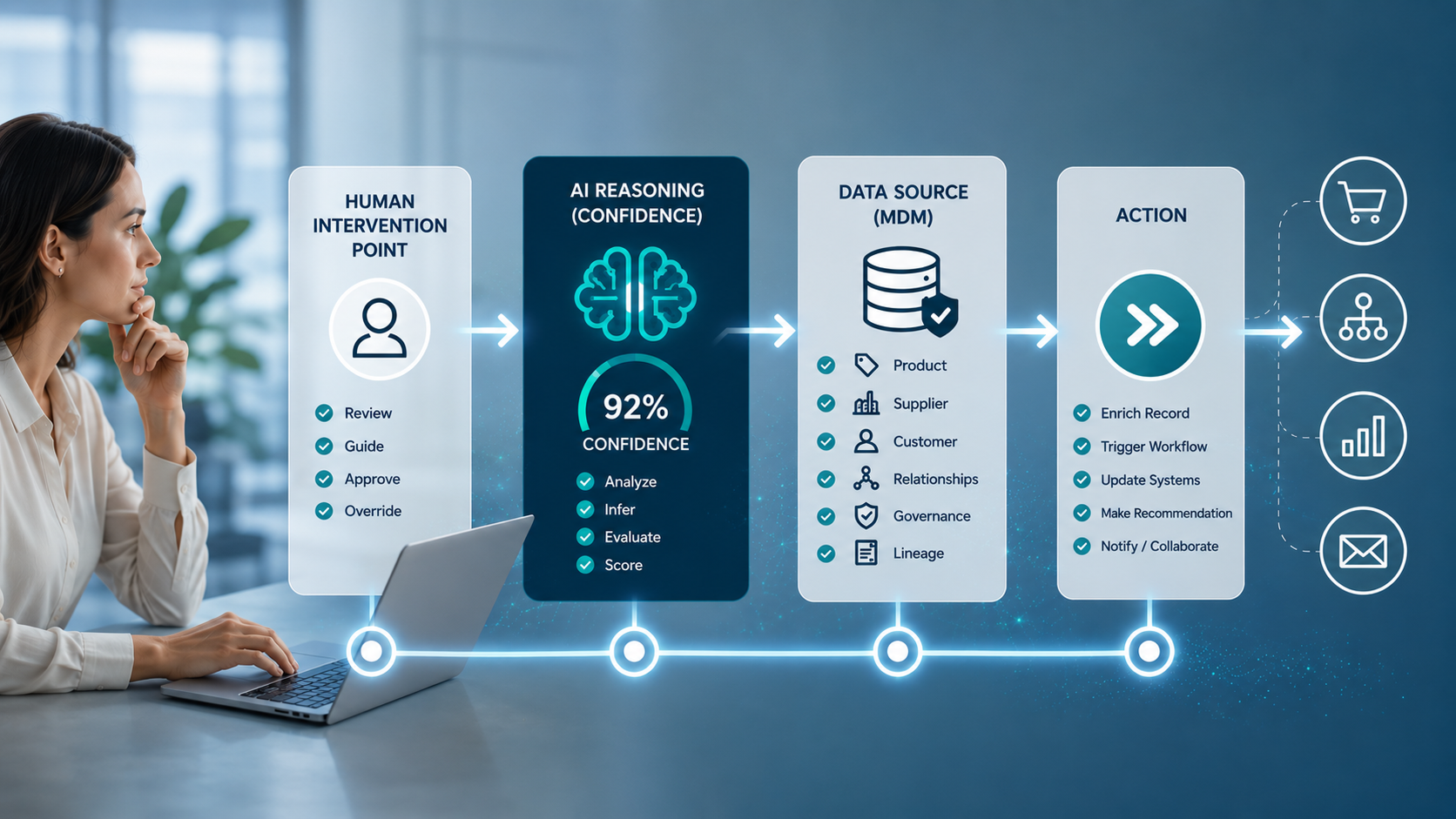
- Moving toward complete PXM vs. PIM that only addresses part of the product lifecycle
- Future-ready and composable architectures built in the cloud
- Embracing AI governance controls to deliver real value
Stibo Systems delivers on all three, driving its recognition as a Leader for the third year in a row.
1. Leading vendors have evolved beyond basic PIM to deliver PXM
The report makes one thing clear... basic PIM is no longer enough. Top vendors have moved past just PIM, delivering full product experience management.
Here’s what that means: Platforms are doing more than just listing product attributes, allowing brands to tell compelling product stories that adapt by language, region and channel context.
If your existing PIM strategy doesn’t include optimizing for a complete product experience, you’re potentially losing conversions. Consumers expect personalized, contextually relevant product content — no matter where they shop.
A single set of static product attributes can't deliver that experience. Brands need PXM solutions that enhance product data with lifestyle imagery, offer localized marketing copy and channel-specific messaging — all while maintaining consistency and governance.
As QKS Group notes in the report, modern PIM has "transformed into a tool that creates product stories and increases customer conversion." The vendors winning in this space allow for real-time content adaptation based on geography, language and distribution channel needs.
Platforms like Product Experience Data Cloud are built to deliver the omnichannel and multi-country commerce that modern brands require.
2. Enterprises expect cloud-native, composable architectures built for the future
While organizations have been moving to the cloud for over a decade now, many vendors still use legacy systems that can’t keep up with the pace of commerce. QKS Group emphasized the need to meet enterprise expectations around this shift to the cloud:
“The majority of enterprises now rely on cloud-native and composable PIM architectures to build data ecosystems that are future-proof. Organizations can distribute content efficiently to marketplaces, ecommerce platforms, retail partners and new social commerce channels through their API-first platform design.”
API-first, cloud-native architectures that are fully composable are a non-negotiable for modern PIM. And they need to integrate seamlessly into broader commerce ecosystems that don’t require ripping out your existing tech stack, even as businesses evolve.
The report explains that leading solutions enable "seamless product data sharing between ecommerce storefronts, marketplaces, in-store kiosks and B2B portals" through API-first design and headless functionality.
This composability allows brands to start with core PIM capabilities and expand as their maturity grows.
QKS Group recognizes vendors who've led this transition — platforms that let enterprises evolve at their own pace while staying agile enough to respond to market changes. The report identifies this architectural approach as paramount to future success.
3. AI only delivers value when paired with strong governance controls
While AI and GenAI capabilities have become table stakes in the PIM market, the report makes a critical distinction: AI-powered content enrichment only delivers value when embedded within robust governance frameworks.
Automated capabilities without validation controls create risk, not value.
This matters because virtually every vendor is talking about AI-powered attribute enrichment, automated translations and content generation. But as QKS Group points out, the platforms that stand out are those that combine AI capabilities with "rule-based validation, completeness scoring and automated remediation workflows." The ones that create true value, not just an AI label.
Enterprise organizations need AI tools that can "identify data gaps and inconsistencies while generating automated recommendations," but always within governance frameworks that ensure data quality, compliance and brand consistency.
The need for this governance revolves around risk. What happens when AI-generated content violates brand guidelines, misses regulatory requirements or introduces inconsistencies across channels? Governance is especially crucial for enterprises operating across regulated industries or managing product data across multiple regions with different compliance requirements.
QKS notes that vendors who excel in this area provide platforms where AI is "embedded within governance controls and validation rules to ensure consistent, high-quality outputs while allowing organizations to maintain enterprise control."
The growing gap between leaders and laggards
These shifts reveal a fundamental truth: not all PIMs are created equal. The market’s splitting into two distinct categories — single-purpose tools that manage product data and holistic platforms that power product experiences at scale.
Top brands have recognized this shift and acted accordingly. They’re investing in platforms that address the entire product lifecycle and are positioned for the future. The laggards? They’re sticking with legacy and limited solutions that will force them to constantly play catch-up and piecemeal additional tools.
The good news? Independent analyst validation, like the SPARK Matrix™, makes it easier to identify which vendors are truly prepared for what comes next. QKS Group's research confirms that leading platforms — those in the Leader quadrant — are the ones solving challenges across the full product lifecycle, not just pieces of it.
“Stibo Systems is steadily evolving from a traditional Product Information Management provider into a strategic product data backbone for omnichannel commerce and supply chain ecosystems. Its open, multi-domain data model, strong governance framework and API-first integration approach allow enterprises to connect PIM with ERP, e-commerce, PLM and downstream analytics without fragmenting product truth across silos. By combining data stewardship workflows, role-based governance and scalable cloud deployment, Stibo Systems helps organizations industrialize how product data is created, validated and shared, turning what was once a back-office hygiene function into a core enabler of revenue growth, channel expansion and regulatory resilience.” - Kumar Anand, Associate Director and Principal Analyst at QKS Group
For vendors like Stibo Systems, this year's Leader recognition validates a strategic bet: PIM must evolve to support full product experiences to drive high-impact business outcomes.
It's why our Product Experience Data Cloud combines PXM capabilities with a composable architecture and governance-first AI. Because enterprises need solutions that can grow with them without requiring wholesale platform changes.
Is your PIM strategy ready for the future?
See why QKS Group named us a Leader in PIM for the third consecutive year, trends and how enterprises are going beyond basic PIM.