

Agentic commerce has changed how people shop and purchase. Customers are no longer browsing, comparing and clicking their way through websites. Instead, they’re stating intent and letting AI agents do the work for them. They now discover, compare and even purchase inside AI conversations — often without ever visiting a brand’s site.
This shift presents a new risk many organizations have not planned for: decision invisibility. If an AI agent can't confidently understand, compare and trust your products, your brand is quietly excluded long before a customer reaches your ecosystem. The warning signs rarely show up in traditional dashboards.
What does show up are a series of subtle signals that suggest your brand may already be slipping out of agent-driven buying decisions.
1. Competitors appear in AI answers while your products do not
One of the earliest signs is simple but uncomfortable: When customers ask AI assistants for recommendations in your category, competitor products appear consistently and yours do not. While this might seem like an ad spend or creative messaging problem, it’s not. It’s more about eligibility.
AI agents select products they can clearly interpret, verify and compare. If your products lack structured attributes, consistent claims or trusted sources, they fall out of contention before the answer is generated. This means that even though nothing looks broken from your perspective and brand search remains stable, traffic gradually declines. What's happening is that upstream, decisions are already being made without you in the room.
2. AI assistants cite marketplaces instead of your own catalog
When AI responses reference generic marketplace listings instead of official brand or retailer catalogs, it’s a signal of lost authority. Agents default to the source that provides the clearest, most complete and most trusted product information. In many cases, that’s a marketplace that has invested heavily in normalized attributes and structured feeds.
If your own catalog is less complete or less consistent than a third-party listing, agents will treat the marketplace as the safer option. The result is subtle: Customers still buy your products, but the decision removes you — shaped and framed elsewhere.
3. Your products are excluded from AI comparisons
Agentic commerce compresses choice. Instead of infinite product grids, agents surface a small set of options and explain why they fit the user’s intent. If your products are missing from those comparisons, it’s rarely random.
Exclusion usually happens when key attributes are incomplete, inconsistent or not comparable across products. AI agents can’t infer missing information the way humans do. Which means that if they can’t reliably compare durability, compatibility, sustainability or usage context, they remove the product from the decision set altogether.
At that point, price or preference isn’t even the issue — your brand is losing before evaluation even begins.
4. Substitutions favor competitors when your data has gaps
Another warning sign appears in substitution behavior. When agents encounter gaps in assortment or incomplete product definitions, they actively recommend alternatives they can evaluate with confidence. Those alternatives often come from competitors whose data is more structured or more complete.
This happens upstream, invisibly. By the time a customer encounters your brand again — if they do at all — the substitute has already been framed as the “better fit” for what they’re looking for. Over time, this erodes share without triggering obvious conversion drops on your own channels.
5. Your brand story gets flattened into generic attributes
Marketing teams often feel this signal before anyone else. Rich brand narratives, premium positioning or differentiated value propositions disappear in AI-generated summaries. What comes back instead is a stripped-down description that sounds interchangeable with every other product in the category.
This flattening happens when brand claims and differentiators exist only in prose or campaign copy, not in structured, machine-readable form. AI agents can’t reliably preserve nuance unless it’s encoded in a way they can evaluate and reuse. When that structure is missing, agents reduce your products to basic specs and price, accelerating commoditization.
6. Premium lines fail to surface in AI recommendations
Premium products are especially vulnerable in agentic commerce. If higher-end SKUs rely on subtle differentiation, emotional storytelling or implied quality signals, agents may never surface them. Instead, recommendations skew toward products with clearer, measurable attributes, even if they’re lower margin.
In many cases, the issue isn’t that premium products lack value. Rather, it’s likely because the attributes that justify that value aren't explicit or comparable in machine-readable data. To an agent, ambiguity like this looks like risk. And when risk rises, premium options quietly drop out of the shortlist.
7. You can’t see or explain how AI agents represent your products
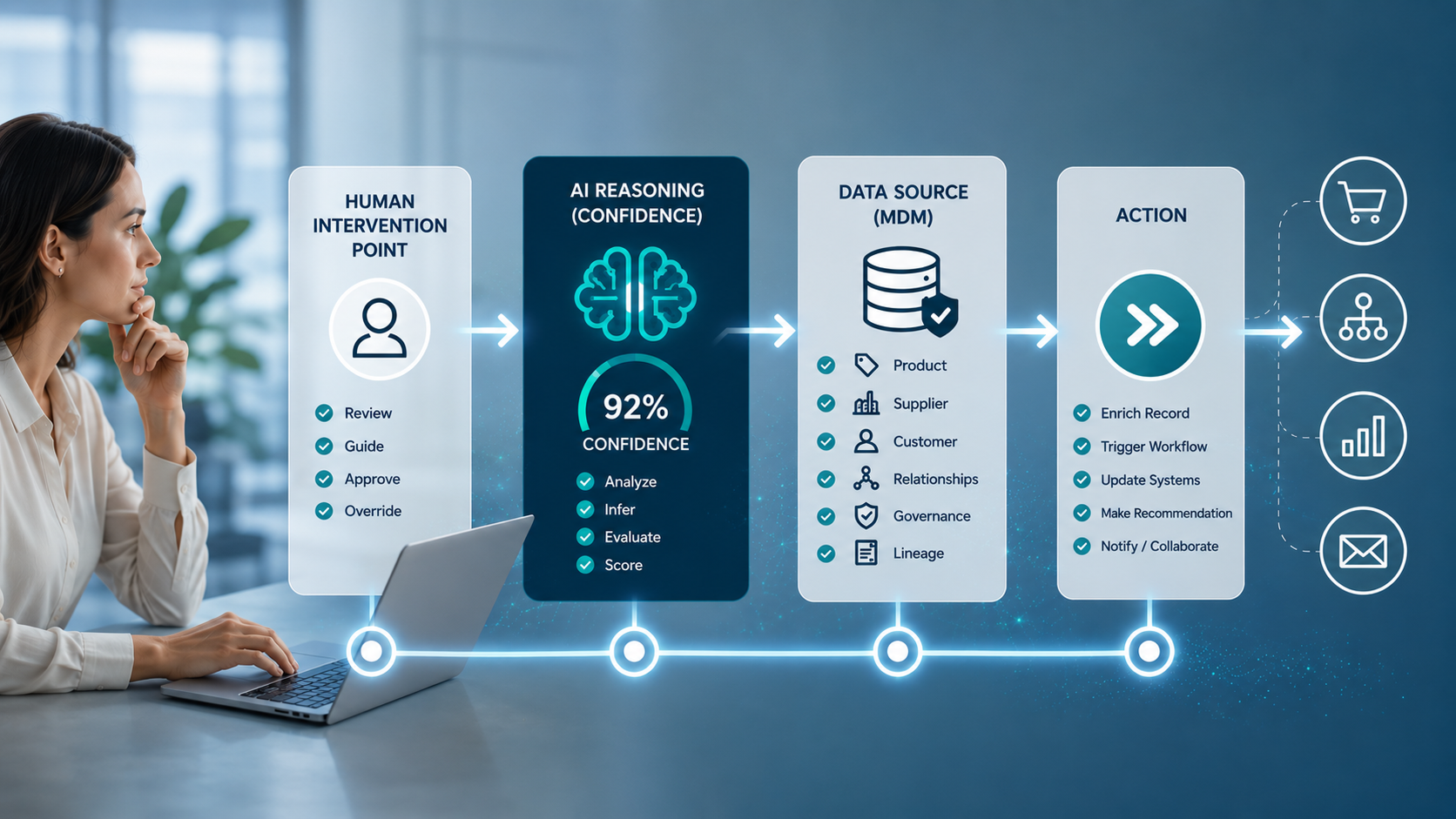
The most dangerous sign is operational blindness. Many organizations can’t tell how their products are being interpreted, summarized or ranked by AI agents. There’s no feedback loop, no monitoring and no way to validate whether key claims are being preserved or lost.
When discrepancies appear, teams treat them as anomalies. In reality, they point to a systemic issue: Product data is being consumed externally at scale without sufficient governance, provenance or control. And in an agent-mediated world, if you can't observe how decisions are being formed, you can’t influence them.
Why these signals matter now
Agentic commerce is still evolving, and not all transactions are fully autonomous yet. But the direction is clear: Agents are reaching decision-grade usefulness, open protocols and commerce rails are emerging and intent is shifting upstream — earlier than traditional analytics can capture.
The brands that succeed won't be the ones with the best landing pages or the most persuasive copy. They’ll be the ones whose product data is decision-ready: precise, contextual, comparable and trusted by machines as well as humans.
If any of these signs feel uncomfortably familiar, rest assured that it’s not too late to adjust your strategy. All it means is that visibility has moved. And that to win attention now, you need to win eligibility inside agent-mediated decisions.
Above all, agentic commerce changes how value is decided. Brands win by being chosen inside automated decisions — not just by delivering polished experiences.