

Blog Post February 3, 2025 | 6 minutes read

4 Trends in the Automotive Industry

The automotive industry is facing a strong shift. Learn more about the upcoming trends in the automotive industry for 2026.

See how you can turn trusted data into a competitive advantage

Get in touch

Explore this article with AI

4 Trends in the Automotive Industry

Master Data Management Blog by Stibo Systems logo
| 6 minutes read
February 03 2025
4 Trends in the Automotive Industry for 2026 ➤​
11:10

Fuel data-driven experiences to engage the empowered digital automotive customer

The road ahead is wide open. For automotive aftermarket companies, it means a strong shift into connected commerce, search, and expanded capabilities to reach consumers in digital channels. Product data has always been important but more comprehensive support of the customer journey and customer experience is needed.

For many, a road trip can be an exhilarating adventure as you can see new people and new places.For those like me who have been full-time remote workers over the past year, using our vehicles has been mostly limited to drives around town or an occasional trip to a nearby city. Longer road trips will undoubtedly put new stress on our cars which have not been driven very much, likely forcing each of us to think about our vehicle, getting ready for the trip, and for some, even generating renewed interest in a DIY repair. For those in the aftermarket space, that can spell a big opportunity.

Multiple pandemic-influenced trends are also combining to create an unprecedented shift in consumers’ perspectives on mobility. Work from home will morph from what had been a 5 day a week affair to hybrid work where employees are in the office a few days of the week, reducing miles traveled but still requiring a vehicle. Additionally, public transportation and rideshare services were negatively impacted and are likely going to have some health concerns carrying over well beyond the pandemic.

In the automotive aftermarket, the road ahead is paved in opportunities

Many consumers, and people in the auto industry, have realized we are looking at a much different business than what was envisioned just a few years ago. Below are a few of the biggest industry trends.

Four major trends in the automotive industry

1. Vehicle age increases in the west while aftermarket is poised for growth in Asia

According to IHS MARKIT, the average age of vehicles in the US reached an all-time high of 12.1 years, a number that has been growing consistently. European vehicles have aged in a similar fashion to 10.8 years. With consumers retaining vehicles longer, the industry needs to keep supporting the vehicle population with parts, and interior accessories to keep up vehicle appearance over a longer time horizon than ever before.

Meanwhile, Asian markets such as China and India continue to grow in vehicle sales as well as domestic production. China has been the largest car market in the world for several years, while India has grown continuously, becoming the 4th largest in the world. As these markets grow and vehicles reach the ripe old age of 4-6 years, we are also seeing the aftermarket expand rapidly, generating growth through wholesale, distribution, and aftermarket retail businesses.

2. Newly adopted digital shopping habits for auto parts are here to stay

Regardless of the market around the world, consumers increasingly turned to streaming to pass the time last year, and they also expanded their hobbies. Do-it-yourself (DIY) maintenance made headway, with consumers working on their commuter vehicles or classic car, jeep, or truck project sitting in the garage. This was made possible by ample downtime and improvements in the experience of buying parts online.


Many “Do-it-For-ME” (DIFM) consumers postponed needed service and repair. In the meantime, they may have also changed their mindset on how they research and buy vehicle repair services. Will they make a call, drive down to their go-to repair shop, or now decide to use an app? From a marketing perspective, it’s important to understand how much consumers changed their behavior in the early stages of buying parts and just how far they have shifted to digital. With 9/10 shoppers doing research online for their vehicle parts and service, it’s critical for automotive manufacturers and retailers to engage consumers early in the process. This means a seamless experience that delivers relevant information and offers to the customer.

3. Electric vehicle adoption also increasing

The European market has seen tremendous shifts to electric vehicles, while sales of diesel and petrol powered vehicles declined 20.1% and 16.9% in Q1 vs. prior year, respectively. Meanwhile, hybrid and other electric-powered vehicles increased market share. EV growth was also strong across other regions of the world.


With a potential 12-13x expected increase in the number of electrified vehicles in the global market (see below), there will undoubtedly be changes in what manufacturers/brands consumers are drawn to in the OEM and aftermarket distribution channels. Electric vehicles require less maintenance and have fewer overall parts than traditional vehicles with internal combustion engines.
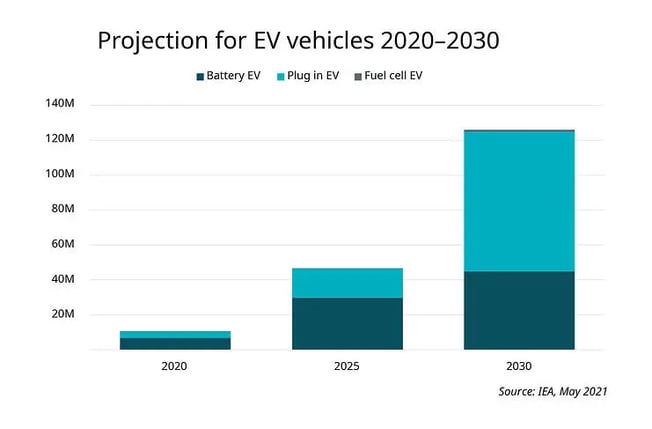
 

Projection for EV vehicles 2020-2030

4. The connected car and autonomous driving

Connected vehicles are not only about having all kinds of digital integrations to the world around us and being able to shop from the car and manage your life. They are also about the ability of the vehicle to be aware of the surroundings, create alerts for the drivers, and even activate autonomous driving capabilities to protect the driver and mitigate the risk of a crash. While autonomous driving continues to be tested, progress is made every quarter as more is learned about the use of machine learning on test and fleet vehicles. As the technology improves and regulations ease, the promise is that autonomous features will be used more often, creating a loop of continuous learning over time. This will eventually lead to fewer collisions and injuries and ultimately, reduced demand for parts to replace those damaged in collisions around the world.

"Self-driving cars are the natural extension of active safety and obviously something we should do."
- Elon Musk


Regardless of your market, it will become more digital. Will you be ready?

As consumers and businesses become more digital in their parts purchasing and ongoing relationships with OEM manufacturers, retailers, and auto shops, there is a clear need to leverage online catalogs to better serve customers. It starts with the ability to ensure the fit is correct for a customer's vehicle make, model, and year. With an extensive catalog, companies need accurate, reliable systems that ensure parts are managed correctly and efficiently through workflows and that coverage gaps are identified and closed. That information then needs to seamlessly feed online product pages to include complete product descriptions, multiple images, and even instructional videos to accompany the basic product specifications.

With a safety-driven need to satisfy technical product information needs, a robust product master data management (or product information management/PIM) solution that works with industry standards such as ACES, PIES, and TecDoc is the starting point for being ready to scale to support new vehicle models and reach new markets. As globalization grows, parts manufacturers and retailers expanding into new markets, also need to convey the same parts information in a new language and appeal to the local market with accuracy, efficiency, and relevancy.

INDUSTRY SHEET

Drive Success with a Single, Trusted Source of Product Information

Learn how to fuel success in the automotive aftermarket industry by leveraging a single, trusted source of operational and product information.
DOWNLOAD
low-res_Industry automotive_cylinder-sans1


Great digital parts shopping experiences demand great data, end-to-end

Effective product management is just a starting point for effective digital commerce and won’t enable you by itself to be an industry leader. In an increasingly fragmented distribution market, both retailers and parts suppliers need a more transparent view of their warehouse, distribution partners, local resellers, independent shops, etc. By creating a single, robust, consolidated view of the entire B2B customer landscape, with details for each individual enterprise, you can ensure that communication is enhanced, and B2B customer experiences are stronger, enhancing trust across the entire distribution network.

Equally important is the ability to better manage end-consumer data, including vehicle type, store, and purchase preferences, loyalty information, etc. With a single customer view, marketing and digital commerce teams can provide more relevant messaging and offerings for the types of products consumers like, as well as to match a specific product to their vehicle type, model, or personal maintenance needs.

Location, location, location (it’s essential for parts buyers, too)

Retailers, suppliers, and wholesale distributors with vast store or operational networks also recognize the value of location data. Retail operations have changed in the past several years with more stores offering curbside or BOPIS delivery options. Backrooms have expanded as a share of store space and category size, and adjacencies and assortment have changed, too. Location data management helps retailers and distributors manage all this incredibly important operational data, creating a single point of truth that enables sharing in real-time. Organizations get a transparent view, enabling them to analyze their business with greater granularity and confidence. Furthermore, greater consistency and trust in the data will enable auto parts retailers and their suppliers to share that data via customer-facing websites with greater confidence to benefit the consumer to make decisions on store visits.

To be positioned to win in an increasingly digital market with many vehicle types, changing technology, and increased globalization, retailers and parts makers need to leverage the power of their data.

Customers across the core industries we serve, including retail, manufacturing, distribution, and CPG are increasingly expanding their digitalization scope to connect multiple data domains to create an insight enabling Digital Business Hub. Auto companies are pursuing this strategy, too, because they recognize the need for better data across the enterprise and business ecosystem. It can address the need to be more agile in response to meet the speed of innovation and remain relevant in the market.

A multidomain master data management strategy ultimately leads to better business outcomes, increased efficiency, and better customer experiences. Companies in the automotive space who wish to continue to navigate the road ahead in an increasingly digital market would find great benefit including multidomain master data management in their own journey.

With more than 25 years of experience working with OEMs, parts manufacturers, retailers, and distributors on their data management needs for this industry, we’ve been able to help leading companies around the world leverage the power of data to drive greater success.

To learn how we helped Europart, a major automotive parts retailer, accelerate their business by taking master data management to the cloud.

SUCCESS STORY

Europart Accelerates Digital Transformation with MDM

Find out how moving from PIM to MDM in the Cloud accelerates digital transformation for this major B2B aftermarket automotive parts retailer.
LEARN MORE
Europart Success Story image
Master Data Management Blog by Stibo Systems logo

Driving growth for customers with trusted, rich, complete, curated data, Matt has over 20 years of experience in enterprise software with the world’s leading data management companies and is a qualified marketer within pragmatic product marketing. He is a highly experienced professional in customer information management, enterprise data quality, multidomain master data management and data governance & compliance.

Discover blogs by topic

  • See more
  • MDM strategy
  • Data governance
  • Retail
  • Customer and party data
  • Data quality
  • Product data and PIM
  • AI and machine learning
  • Manufacturing
  • Product Experience Data Cloud
  • Supplier data
  • Consumer packaged goods
  • Customer experience and loyalty
  • Data compliance
  • Sustainability
  • Data integration
  • Financial services
  • Compliance and risk management
  • Operational efficiency
  • Customer Experience Data Cloud
  • Location data
  • Product data syndication
  • Multidomain data
  • Product onboarding
  • Supplier Data Cloud
  • Business Partner Data Cloud
  • ERP success
  • Life sciences
  • Location Data Cloud
  • Automotive
  • Data modeling
  • Data sourcing
  • Digital asset management
  • Platform
  • Translation and localization
  • Data delivery
  • Data sharing
  • Digital shelf analytics
  • Enhanced content
March 9, 2026

Master Data Meets Microsoft Fabric: Building a Trusted Foundation for AI and Analytics

February 24, 2026

BIC's Blueprint for Conquering Complex Global Product Data Challenges

February 17, 2026

Product 360 After the Salesforce Acquisition: Why You Need to Map Out a Plan B

January 27, 2026

5 Hidden Costs of Bad Customer Data in Retail (and How to Avoid Them)

January 20, 2026

What is the difference between CPG and FMCG?

January 13, 2026

Discover the Value of Your Data: Master Data Management KPIs & Metrics

January 13, 2026

Solving Retail Data Fragmentation: The Key to Consistent Customer Journeys

January 5, 2026

What is a Data Domain? Meaning & Examples

January 2, 2026

Data Migration to SAP S/4HANA ERP: The Fast and Safe Approach with MDM

December 15, 2025

The Difference Between Master Data and Metadata

December 10, 2025

Is Your PIM Strategy Future-Ready? 3 Takeaways from the SPARK Matrix™ Report

December 9, 2025

Master Data Management Roles and Responsibilities

December 9, 2025

Product Listing Page Best Practices: How to Create Better Product Listings with PIM

December 8, 2025

The Board of Directors’ Guide to Selecting Product Experience Software (With Checklist)

December 5, 2025

5 PIM Trends That Will Define 2026 and the Near Future (And How to Prepare for Them)

December 4, 2025

Process Insurance Claims Faster with Trusted Data

December 4, 2025

10 Dangerous Myths About Managing Your B2B Partner and Account Data

December 3, 2025

Fixing Fragmented Customer Account Data: Stop Losing Revenue and Trust

December 2, 2025

A Quick Guide to Golden Customer Records and How to Create Them with Master Data Management

December 2, 2025

How Master Data Management Keeps Manufacturers Compliant — From Design to Delivery

November 20, 2025

What is Manufacturing-as-a-Service (MaaS)?

November 18, 2025

AI in Retail: How to Make Your Data Ready to Use in Microsoft Fabric

November 17, 2025

What is Party Data? All You Need to Know About Party Data Management

November 10, 2025

A Complete Master Data Management Glossary

November 4, 2025

Consumers are Using AI-Powered Tools to Shop Smarter: Why Retail Data Trust Matters More than Ever

October 29, 2025

CDP and MDM: Complementary Forces for Enhancing the Customer Experience

October 27, 2025

How to Estimate ROI of Master Data Management

October 24, 2025

Model Context Protocol (MCP): The Missing Layer for AI Systems That Interact with Enterprise Data

October 20, 2025

Managing Product Complexity: Leveraging Custom Product Management with BOM-Level Precision

October 2, 2025

How CPG Brands Scale D2C Business Without Breaking What Already Works

September 24, 2025

How Leading Brands Built Trusted Data with Amplifi and Stibo Systems

September 11, 2025

Is Your Data the Cause of Flawed AI Outputs?

September 8, 2025

What’s Next for GenAI in Product Experiences?

August 27, 2025

PIM and MDM: Key Differences, Benefits and How They Work Together

August 13, 2025

The 5 Biggest Retail Trends in 2026

August 12, 2025

From Zero to Launch in Under 6 Months: A Quick Guide to Deploying Master Data Management

August 12, 2025

5 CPG Industry Trends and Opportunities for 2026

August 5, 2025

How Operations Leaders are Modernizing Manufacturing Data Without Halting Production

August 4, 2025

Digital Product Passports: The Data Management Mandate

August 1, 2025

How to Improve Back-End Systems Using Master Data Management

July 14, 2025

Product Attribution Strategies That Convert Searchers into Buyers

July 9, 2025

How to Get More Value from Your Data: The Benefits of Master Data Management

July 4, 2025

The Complete PIM Features Guide: The Capabilities You Need for Successful Data Strategies

June 26, 2025

PIM explained: How Product Information Management transforms data quality

June 25, 2025

What is master data management? A complete and concise answer

June 12, 2025

Better Together: CRM and Customer Master Data Management

June 11, 2025

How CPG Сompany Bonduelle Сentralized Product Data Across 37 Countries

June 10, 2025

Master Data Management Tools: A Complete Guide

May 23, 2025

How Signet Jewelers Built Trust in Its Retail Data

May 12, 2025

Manufacturing Trends and Insights in 2026

April 15, 2025

5 Key Trends in Product Experience Management

April 4, 2025

Trust the Machine: Making AI Automation Reliable in Master Data Management

April 2, 2025

How Agentic Workflows Are Changing Master Data Management at the Core

March 17, 2025

What is Smart Manufacturing and Why Does it Matter?

March 11, 2025

How to Implement Master Data Management: Steps and Challenges

March 7, 2025

MDM and AI: Real-World Use Cases and Learnings From OfficeMax and Motion Industries

February 27, 2025

Reyes Holdings' MDM Journey to Better Data

February 17, 2025

The Future of Master Data Management: Trends in 2026

February 3, 2025

8 Best Practices for Customer Master Data Management

February 3, 2025

4 Trends in the Automotive Industry

January 29, 2025

How to Choose the Right Data Quality Tool?

January 28, 2025

AI Adoption: A High-Stakes Gamble for Business Leaders

January 27, 2025

All You Need to Know About Supplier Information Management

January 27, 2025

How Kramp Optimizes Internal Efficiency with Data Strategy

January 27, 2025

From Patchwork to Precision: Moving Beyond Outdated and Layered ERP Systems

January 24, 2025

Thriving Beyond NRF 2025 with Trustworthy Product Data

January 23, 2025

Building the Future of Construction with AI and MDM

January 17, 2025

Why Addressing Data Complexity in Pharmaceutical Manufacturing Is Critical

January 17, 2025

How URBN Leverages Data Management to Support Its Sustainability Information  

January 14, 2025

An Introductory Guide to Supplier Compliance

January 6, 2025

How to Avoid Bad Retail Customer Data

December 17, 2024

How to Implement Data Governance

December 11, 2024

Gen Z: Seeking Excitement Beyond Amazon

December 10, 2024

A Modern Guide to Data Quality Monitoring: Best Practices

December 9, 2024

What is Supply Chain Analytics and Why It's Important

December 5, 2024

What is Supplier Lifecycle Management?

December 3, 2024

Using Machine Learning and MDM CBAM for Sustainability Compliance

November 25, 2024

AAPEX and SEMA: The Automotive Aftermarket Industry’s Mega-Showcase

October 22, 2024

Live Shopping: How to Leverage Product Information for Maximum Impact

October 16, 2024

Why Data Accuracy Matters for CPG Brands

October 15, 2024

Why Choose a Cloud-Based Data Solution: On-Premise vs. Cloud

September 23, 2024

How Master Data Management Can Enhance Your ERP Solution

September 20, 2024

Navigating Change: Engaging Business Users in Successful Change Management

September 11, 2024

What is Digital Asset Management?

September 3, 2024

How to Improve Your Data Management

August 30, 2024

Digital Transformation in the CPG Industry

August 27, 2024

Responsible AI Relies on Data Governance

August 19, 2024

Making Master Data Accessible: What is Data as a Service (DaaS)?

August 15, 2024

6 Features of an Effective Master Data Management Solution

August 13, 2024

Great Data Minds: The Unsung Heros Behind Effective Data Management

August 6, 2024

A Data Monetization Strategy - Get More Value from Your Master Data

August 4, 2024

Introducing the Master Data Management Maturity Model

July 31, 2024

What is Augmented Data Management? (ADM)

July 17, 2024

GDPR Data Governance and Data Protection, a Match Made in Heaven?

May 12, 2024

What Is Master Data Governance – And Why Do You Need It?

April 11, 2024

Guide: Deliver flawless rich content experiences with master data governance

April 10, 2024

Risks of Using LLMs in Your Business – What Does OWASP Have to Say?

April 9, 2024

Guide: How to comply with industry standards using master data governance

April 2, 2024

Guide: Get enterprise data enrichment right with master data governance

April 2, 2024

Guide: Getting enterprise data modelling right with master data governance

April 2, 2024

Guide: Improving your data quality with master data governance

March 25, 2024

How to Get Rid of Customer Duplicates

March 18, 2024

5 Tips for Driving a Centralized Data Management Strategy

March 18, 2024

What is Application Data Management and How Does It Differ From MDM?

February 20, 2024

5 Key Manufacturing Challenges in 2025

February 20, 2024

How to Enable a Single Source of Truth with Master Data Management

February 12, 2024

What is Data Quality and Why It's Important

February 7, 2024

Data Governance Trends 2026

February 6, 2024

What is Data Compliance? An Introductory Guide

January 18, 2024

How to Build a Master Data Management Strategy

January 16, 2024

The Best Data Governance Tools You Need to Know About

January 15, 2024

How to Choose the Right Master Data Management Solution

December 19, 2023

Building Supply Chain Resilience: Strategies & Examples

November 29, 2023

Shedding Light on Climate Accountability and Traceability in Retail

November 13, 2023

Location Analytics – All You Need to Know

October 16, 2023

Understanding the Role of a Chief Data Officer

October 5, 2023

5 Common Reasons Why Manufacturers Fail at Digital Transformation

September 29, 2023

How to Digitally Transform a Restaurant Chain

September 14, 2023

Three Benefits of Moving to Headless Commerce and the Role of a Modern PIM

July 6, 2023

12 Steps to a Successful Omnichannel and Unified Commerce

June 28, 2023

Navigating the Current Challenges of Supply Chain Management

April 6, 2023

Product Data Management during Mergers and Acquisitions

March 1, 2023

Asset Data Governance is Central for Asset Management

February 21, 2023

4 Common Master Data Management Implementation Styles

February 14, 2023

How to Leverage Internet of Things with Master Data Management

February 13, 2023

Sustainability in Retail Needs Governed Data

January 4, 2023

Innovation in Retail

November 21, 2022

Life Cycle Assessment Scoring for Food Products

November 14, 2022

Retail of the Future

November 7, 2022

Omnichannel Strategies for Retail

November 5, 2022

Hyper-Personalized Customer Experiences Need Multidomain MDM

October 25, 2022

What is Omnichannel Retailing and What is the Role of Data Management?

October 18, 2022

Most Common ISO Standards in the Manufacturing Industry

October 17, 2022

How to Get Started with Master Data Management: 5 Steps to Consider

October 1, 2022

An Introductory Guide: What is Data Intelligence?

September 15, 2022

Revolutionizing Manufacturing: 5 Must-Have SaaS Systems for Success

August 25, 2022

Digital Transformation in the Manufacturing Industry

August 17, 2022

Master Data Management Framework: Get Set for Success

June 15, 2022

Supplier Self-Service: Everything You Need to Know

June 14, 2022

Omnichannel vs. Multichannel: What’s the Difference?

June 10, 2022

Create a Culture of Data Transparency - Begin with a Solid Foundation

May 31, 2022

What is Location Intelligence?

May 30, 2022

Omnichannel Customer Experience: The Ultimate Guide

May 24, 2022

Omnichannel Commerce: Creating a Seamless Shopping Experience

May 11, 2022

Top 4 Data Management Trends in the Insurance Industry

May 1, 2022

What is Supply Chain Visibility and Why It's Important

April 21, 2022

The Ultimate Guide to Data Transparency

April 20, 2022

How Manufacturers Can Shift to Product as a Service Offerings

April 16, 2022

How to Check Your Enterprise Data Foundation

April 14, 2022

An Introductory Guide to Manufacturing Compliance

March 31, 2022

Multidomain MDM vs. Multiple Domain MDM

March 23, 2022

How to Build a Successful Data Governance Strategy

March 22, 2022

What is Unified Commerce? Key Advantages & Best Practices

March 17, 2022

6 Best Practices for Data Governance

March 16, 2022

5 Advantages of a Master Data Management System

February 24, 2022

Supply Chain Challenges in the CPG Industry

February 14, 2022

Top 5 Most Common Data Quality Issues

February 10, 2022

What Is Synthetic Data and Why It Needs Master Data Management

February 8, 2022

What is Cloud Master Data Management?

January 28, 2022

Build vs. Buy Master Data Management Software

January 27, 2022

Why is Data Governance Important?

January 24, 2022

Five Reasons Your Data Governance Initiative Could Fail

January 21, 2022

How to Turn Your Data Silos Into Zones of Insight

January 16, 2022

How to Improve Supplier Experience Management

January 16, 2022

​​How to Improve Supplier Onboarding

January 11, 2022

What is a Data Quality Framework?

January 4, 2022

The Ultimate Guide to Building a Data Governance Framework

December 20, 2021

The Dynamic Duo of Data Security and Data Governance

December 20, 2021

How to Choose the Right Supplier Management Solution

December 6, 2021

How Data Transparency Enables Sustainable Retailing

December 1, 2021

What is Supplier Performance Management?

November 7, 2021

The Complete Guide: How to Get a 360° Customer View

October 29, 2021

How Location Data Adds Value to Master Data Projects

October 15, 2021

What is a Data Mesh? A Simple Introduction

September 2, 2021

10 Signs You Need a Master Data Management Platform

August 31, 2021

What Vendor Data Is and Why It Matters to Manufacturers

August 25, 2021

3 Reasons High-Quality Supplier Data Can Benefit Any Organization

August 9, 2021

What is Reference Data and Reference Data Management?

July 25, 2021

GDPR as a Catalyst for Effective Data Governance

May 12, 2021

How to Become a Customer-Obsessed Brand

April 27, 2021

How to Create a Master Data Management Roadmap in Five Steps

April 13, 2021

What is a Data Catalog? Definition and Benefits

April 8, 2021

How to Improve the Retail Customer Experience with Data Management

March 25, 2021

Business Intelligence and Analytics: What's the Difference?

March 21, 2021

What is a Data Lake? Everything You Need to Know

February 24, 2021

Are you making decisions based on bad HCO/HCP information?

December 15, 2020

5 Trends in Telecom that Rely on Transparency of Master Data

November 19, 2020

10 Data Management Trends in Financial Services

October 29, 2020

What Is a Data Fabric and Why Do You Need It?

October 14, 2020

Transparent Product Information in Pharmaceutical Manufacturing

August 23, 2020

How Retailers Can Increase Online Sales in 2025

August 14, 2020

Master Data Management (MDM) & Big Data

August 9, 2020

Key Benefits of Knowing Your Customers

July 21, 2020

Customer Data in Corporate Banking Reveal New Opportunities

July 18, 2020

4 Ways Product Information Management (PIM) Improves the Customer Experience

July 1, 2020

How to Estimate the ROI of Your Customer Data

June 17, 2020

How to Personalise Insurance Solutions with MDM

May 25, 2020

How to Get Buy-In for a Master Data Management Solution

July 18, 2019

How to Improve Your Product's Time to Market With PDX Syndication

June 1, 2019

8 Tips For Pricing Automation In The Aftermarket