Connect and consolidate
Bring location information together from ERP, GIS, facilities, operational, and other business systems.

Explore Stibo Systems with AI
LOCATION DATA CLOUD
The days of scattered location data are over. Stibo Systems Location Data Cloud creates a trusted, unified view of every business location by connecting, governing and enriching site data across ERP, GIS, real estate and operational systems. So teams can operate locations more efficiently and make better decisions.
More connected operations
Organizations rely on location data across operations, logistics, fulfillment, service delivery, workforce planning, and customer engagement. When location information is fragmented, teams struggle to operate consistently across sites.

Greater demand for local relevance
Customers expect accurate, localized experiences everywhere they interact with a business. Delivering those experiences requires trusted information about where the business operates and what each location offers.
AI and analytics need location context
Location is no longer just an address. It provides important business context about facilities, services, territories, relationships, and operations. Analytics, automation, and AI initiatives depend on trusted location data to make better decisions.
Improve operational efficiency across locations
Optimize inventory, products, and supply chains by location
Deliver more consistent local experiences
Make better location and investment decisions
Adapt as your location network changes
Opening an average of 150 new stores each year across multiple markets and channels, Rituals relies on Stibo Systems to connect location, product, customer, and asset data on a multidomain foundation. By creating trusted visibility across its store network and business operations, the company can make more informed decisions, standardize experiences across locations, and support continued global expansion.

Location Data Cloud
Bring location information together from ERP, GIS, facilities, operational, and other business systems.
Validate, standardize, and enrich location information to improve accuracy and usability.
Create location hierarchies, operational structures, territories, and business relationships.
Apply governance, stewardship, workflows, and business rules throughout the location lifecycle.
Provide trusted location information to applications, analytics platforms, customer experiences, and AI-driven workflows.
why Stibo Systems
We’ve delivered the strongest financial performance in our history, driven by continued execution of our strategy and the increasing impact of investments made in recent years – while further strengthening our position in a fast-evolving market. See how Stibo Systems is leading the way.
Read the report

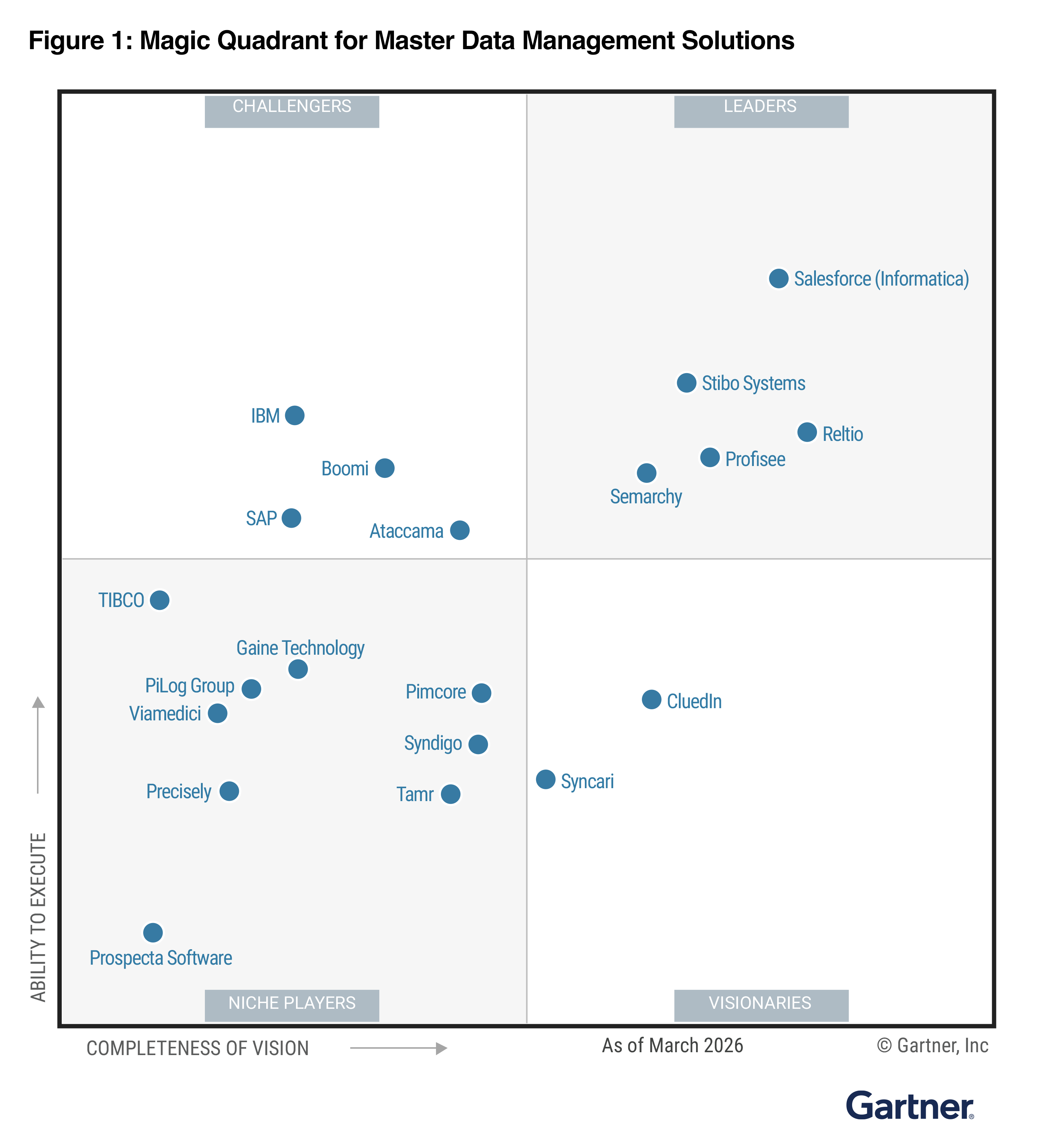
Gartner recognized Stibo Systems as a Leader for our "Completeness of Vision" and "Ability to Execute." This recognition validates years of MDM innovation, strategy and enterprise-scale execution.
Get the report
We're thrilled to be recognized by G2 as a master data management (MDM) Leader in G2's 2026 Summer Grid® Report. Check out what our customers are saying in our latest G2 reviews.
See reviews
Which MDM solution will drive your success? Access detailed vendor rankings and exclusive insights in the ISG Buyers Guide™ for Master Data Management.
Download the Buyers Guide
Stibo Systems Location Data Cloud helps organizations create a trusted, unified view of business location data across multiple systems and business functions.
By connecting, governing, enriching, and synchronizing location information across the systems that create and use it.
Those systems manage specific operational needs. Location MDM helps create a trusted location data foundation that can be shared consistently across the enterprise.
Location Data Cloud helps govern and synchronize trusted location information across channels, applications, and operational systems.
Trusted location data provides important business context that helps analytics, automation, and AI initiatives make more informed decisions.
Location Data Cloud supports multidomain relationships that connect locations to other critical business domains and operational processes.
GIS tools primarily support mapping and spatial analysis, while facilities and real estate systems manage specific operational processes. Location Data Cloud governs the business data that defines each location and connects it with products, suppliers, customers and other enterprise data.