

Bad data costs money. Every day your organization works with inconsistent information across systems you lose efficiency, miss opportunities and risk making poor decisions.
That’s why master data management (MDM) has become a necessity – especially for larger organizations. (Here is a quick introduction to MDM if you need one.)
The better you are at preventing the above problems, the stronger your data becomes as a competitive advantage. But to do so, you need the right tools.
There are many types of data management tools and solutions out there, but the leading companies use tools built for this specific purpose. These are called master data management tools.
In this blog, we’ll introduce the many shapes and sizes master data management tools come in to help you find the one that fits your unique situation.
We'll walk you through:
- What are MDM tools?
- How are MDM tools different?
- The AI revolution in MDM
- What effective MDM tools can do
- Types of MDM tools
- How to find the perfect MDM tool for your needs
- Common use cases for MDM tools
- MDM tools if you work in Marketing or CX
What are MDM tools?
Master data management (MDM) tools create a single source of truth for your critical business data assets. They bring order to the chaos of information scattered across databases, applications, and those countless Excel spreadsheets.
In practical terms, that means taking raw data from across your organization and turning it into something reliable, consistent, and ready to use.
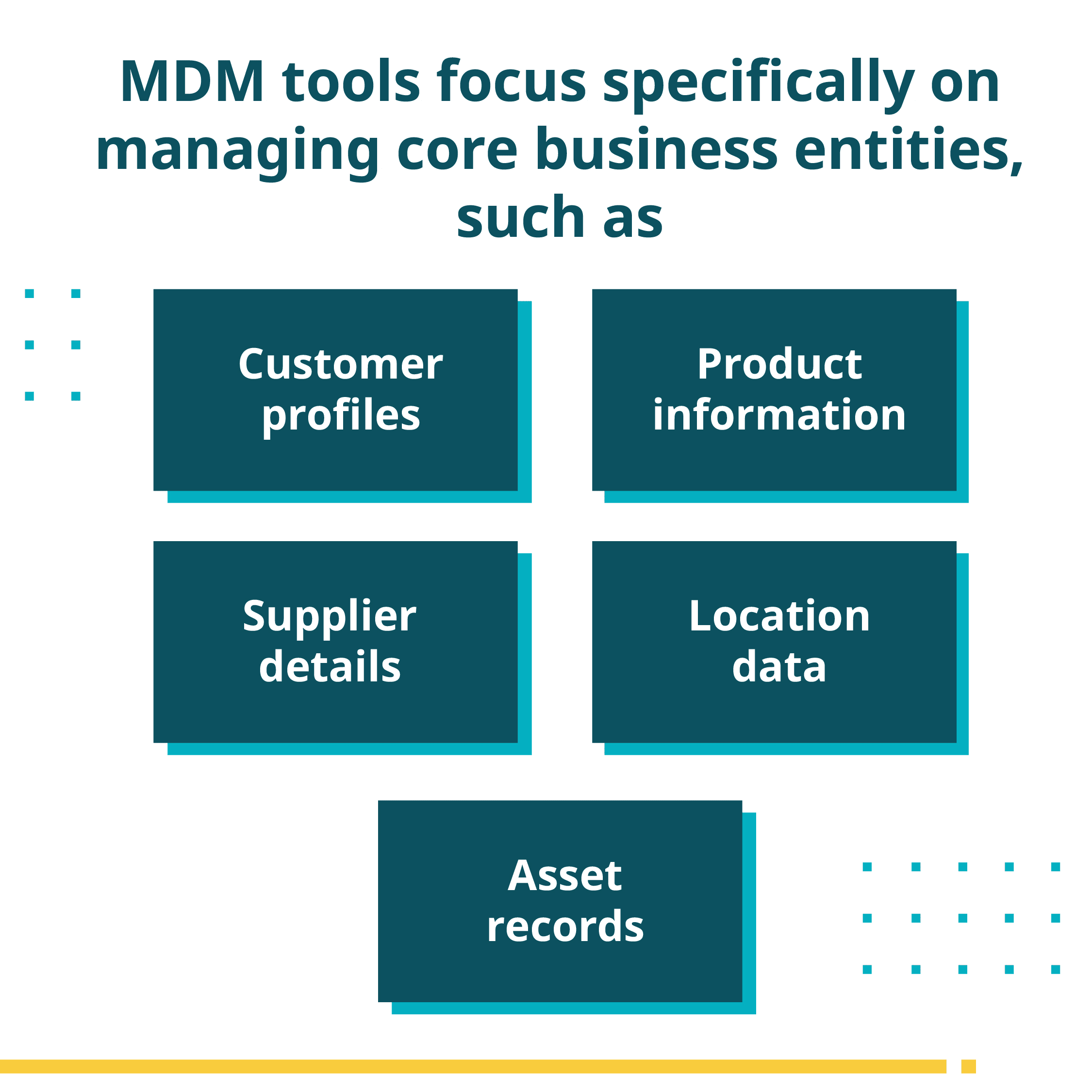
MDM tools focus specifically on managing core business entities, such as:
- Customer profiles
- Product information
- Supplier details
- Location data
- Asset records
How are MDM tools different?
Unlike general data management solutions that primarily store or move information, MDM tools help you maintain the accuracy, consistency, and relationships between your most important business data types.
They don't just house data — they actively govern it. And unlike standalone analytics platforms or business intelligence tools, MDM tools treat data quality and governance as a foundation, not an afterthought.
That distinction matters when your data science teams, machine learning models, and business intelligence tools all depend on getting the right data at the right time.
The AI revolution in MDM
Before we delve into the exciting details of MDM tools, it's important to mention that — just like in so many other walks of life — AI is quickly changing many of these tools. It’s certainly something our own Innovation Team here at Stibo Systems is focusing on.
The newest generations of MDM tools use AI to transform how you manage data:
- Automated cleansing identifies and fixes errors
- Intelligent matching connects related records even when they contain variations or errors.
- Predictive monitoring spots potential data quality issues early, before they cause problems.
Under the hood, many of these capabilities are powered by machine learning models that train on your existing datasets, getting smarter over time as they're exposed to more of your data.
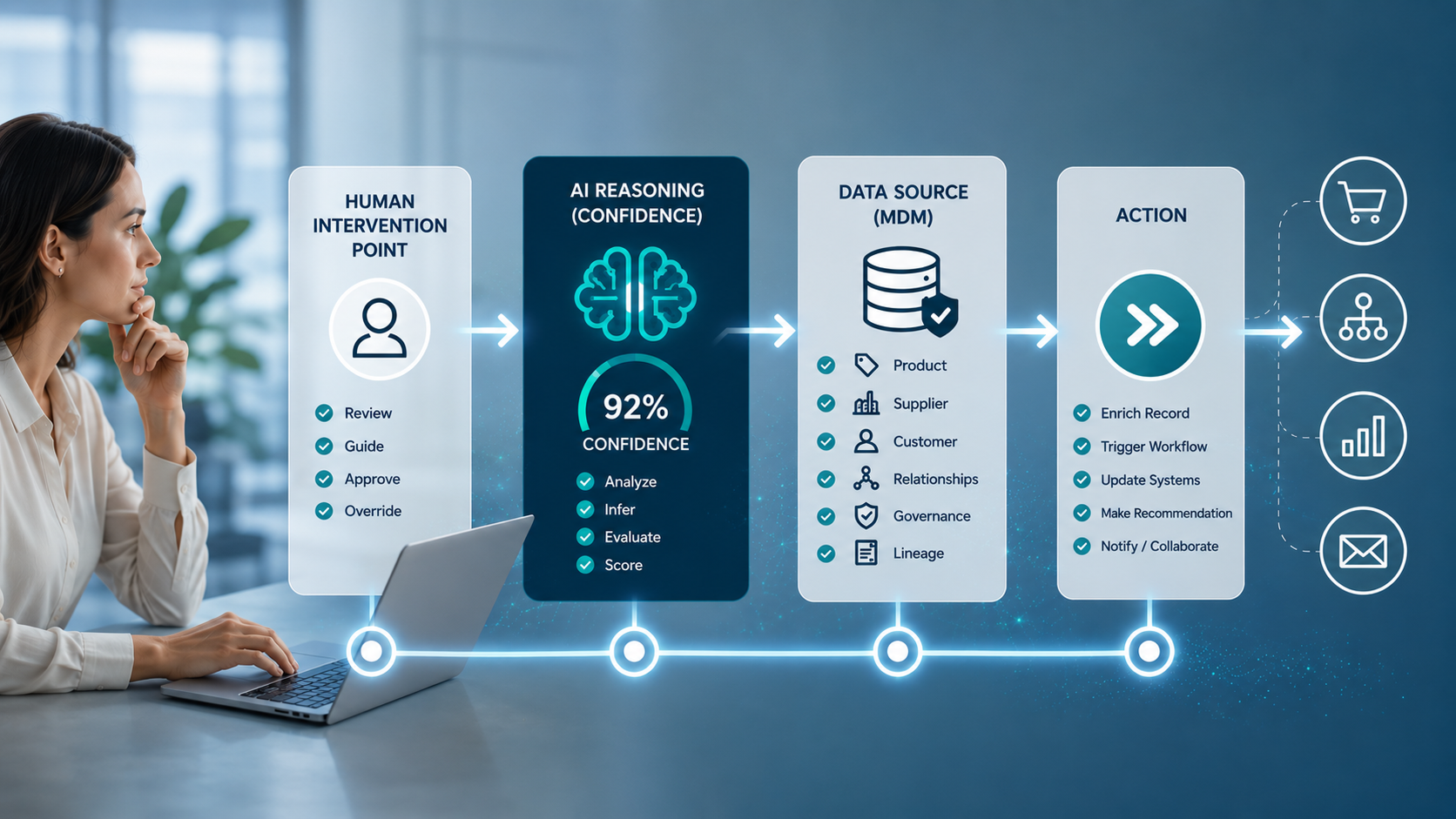
Just remember that humans still play an important role. People still need to review and approve matches when the stakes are high or if the data is particularly sensitive.
AI can do most of the grunt work and make the process faster. But your data stewards should still double-check results, validate matches, and make judgment calls. Especially if merging the wrong records could cause real problems.
To understand how data issues lead to unpredictable or flawed AI outputs stemming from poor data, read our blog post Is Your Data the Cause of Flawed AI Outputs?
What effective master data management tools can do
As mentioned earlier, MDM tools come in all shapes and sizes. But the most powerful ones all share essential capabilities that transform how your organization handles data.
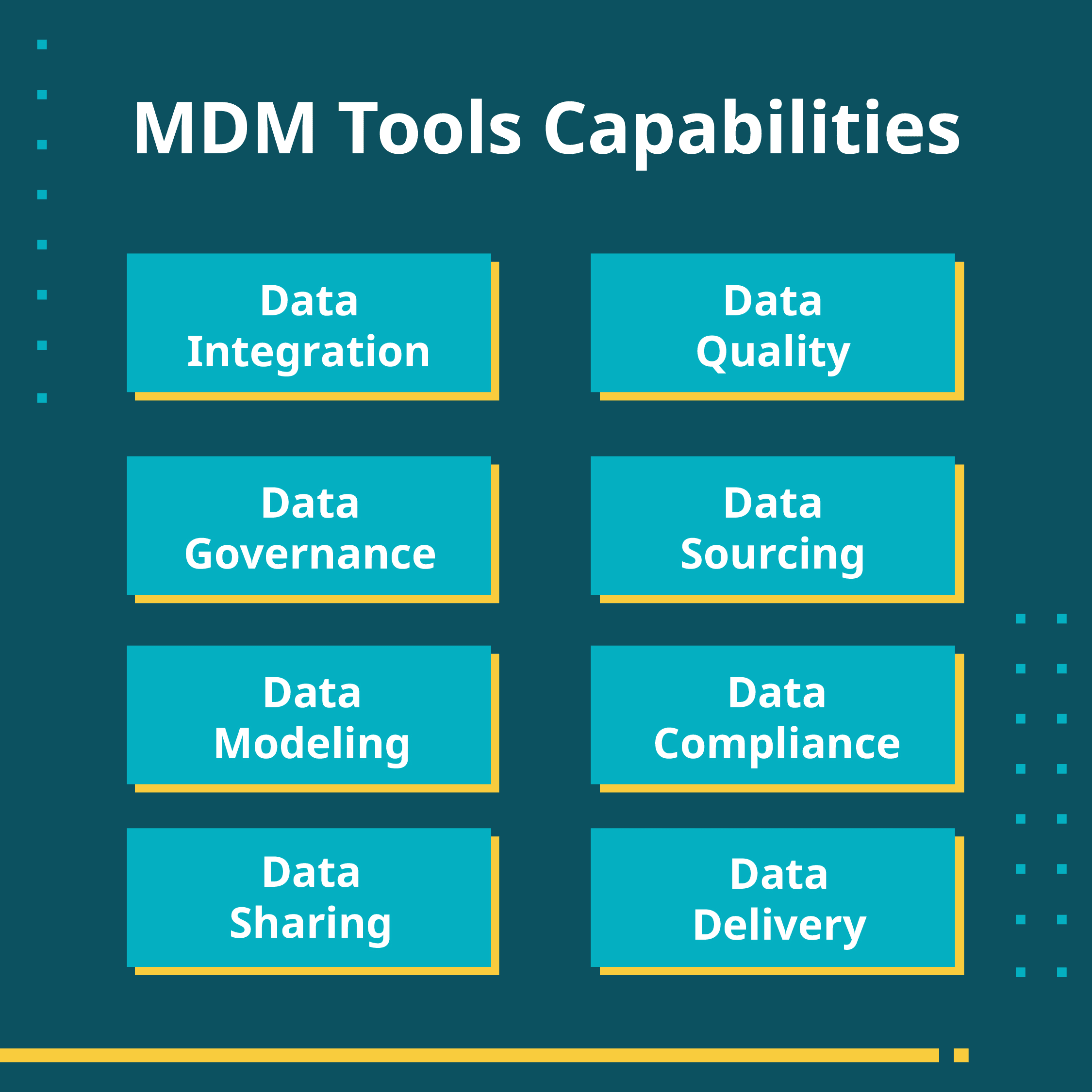
Data integration
Connect everything. Effective MDM tools smoothly integrate with your existing ecosystem:
- ERP systems, including SAP
- CRM platforms
- Ecommerce sites
- Data warehouses and data lakes
- Custom applications
They pull data from various data sources and push clean, consistent information back out. This kind of deep data integration is what allows your teams to stop reconciling conflicting records manually and start making data-driven decisions with confidence.
Look for prebuilt connectors to common systems and flexible APIs that make integration faster and less costly. The best platforms also support ingestion from both structured and unstructured data sources, giving your data teams a more complete picture.
And for organizations dealing with complex data environments, high-performance integration capabilities ensure that large volumes of raw data can be processed quickly and reliably without creating bottlenecks.
Data quality
Garbage in, garbage out no longer applies. Modern MDM tools actively maintain data quality through:
- Automated validation rules that catch errors at entry.
- Duplicate detection that prevents redundant records.
- Standardization that formats data consistently.
The best tools surface data quality scores and trends through dashboards, helping you target your improvement efforts where they matter most. This is especially important when your master data feeds into downstream datasets used by analytics, reporting or machine learning pipelines, where poor quality at the source compounds into unreliable outputs.
Data governance
Control who can view, edit, and approve changes to your master data. Strong data governance often includes role-based access controls that limit what users can see and do, and detailed audit trails documenting every change.
These features make sure your data stays protected but still accessible to those who need it. They also support data lineage tracking so you always know where a piece of data came from, how it's been transformed, and where it's going.
Data sourcing
Track where each piece of information came from and how reliable that source is. This is a core part of managing the full data lifecycle, and it’s especially important when you want to resolve conflicts between different systems that all claim to have the "correct" version.
Raw data arriving from suppliers, partners or external systems often contains inconsistencies, formatting differences, and gaps. Knowing where each record originated helps your team assess its reliability and apply the right transformation and validation rules before it becomes part of your master data.
For example, if your CRM shows one address for a customer, but your billing system shows another, knowing which system is the authoritative source helps you settle the conflict.
Data modeling
Flexibility matters. Your business doesn't stay static, so neither should your data structure. Effective MDM tools let you define relationships between different data domains and adapt to changing business requirements without requiring custom programming. This is an important consideration for organizations that want to streamline operations without heavy IT involvement.
Good data modeling also supports scalability. As your data infrastructure grows, your model should be able to evolve with it.
Data compliance
Comply with regulations without constant manual work. Leading MDM tools help you track consent for personal data usage, implement retention policies, and respond to data subject access requests.
If you're in a heavily regulated industry or if your company, for example, handles EU resident data, these capabilities help you reduce compliance risks and costs. They also make it easier to demonstrate accountability when regulators or auditors come asking, which is increasingly common as data security requirements tighten globally.
Data sharing
Collaboration amplifies value. A strong MDM tool makes it easy to share consistent data across departments, but also with partners and throughout your supply chain, through self-service portals and API access for external systems. This kind of open, governed sharing is what turns your MDM platform into a true enterprise data management hub, not just an internal tool.
Data delivery
Get the right information to the right place at the right time. Your modern MDM tool gives you:
- Real-time synchronization with operational systems.
- Scheduled batch updates.
- Event-driven publishing.
In other words: Your teams always work with current information tailored to their needs. For organizations in retail, financial services and across the supply chain, access to real-time data can be the difference between making the right decision and a costly one.
AI-powered data
Your MDM and AI systems need each other.
- MDM gives AI the clean data it needs to work properly.
- AI helps your MDM system handle more data with less manual effort.
When you feed messy, inconsistent data into AI systems, you get unreliable results. MDM solves this by creating a single trusted source that your AI can learn from, cutting down on errors and biases that come from bad data.
Meanwhile, AI is making MDM systems smarter. It automates the tedious parts — finding duplicate records, matching similar items, spotting unusual patterns — so your team doesn't have to do everything by hand.
This partnership creates a virtuous cycle: better data leads to smarter AI, which then helps improve your data quality even further.
As your organization scales, this cycle becomes even more valuable. Manual data management simply can't keep pace with the volume and velocity of modern enterprise data or big data environments. AI-assisted MDM can.
And with privacy laws (such as GDPR) getting stricter, MDM provides the governance trail you need. When regulators ask how your AI made decisions, you can show them the clean, well-managed data behind those choices and explain the process.
Types of master data management tools
Let's talk about the different MDM tools you'll encounter when you’re researching options. There are a few parameters you should know about to find the tool you need.
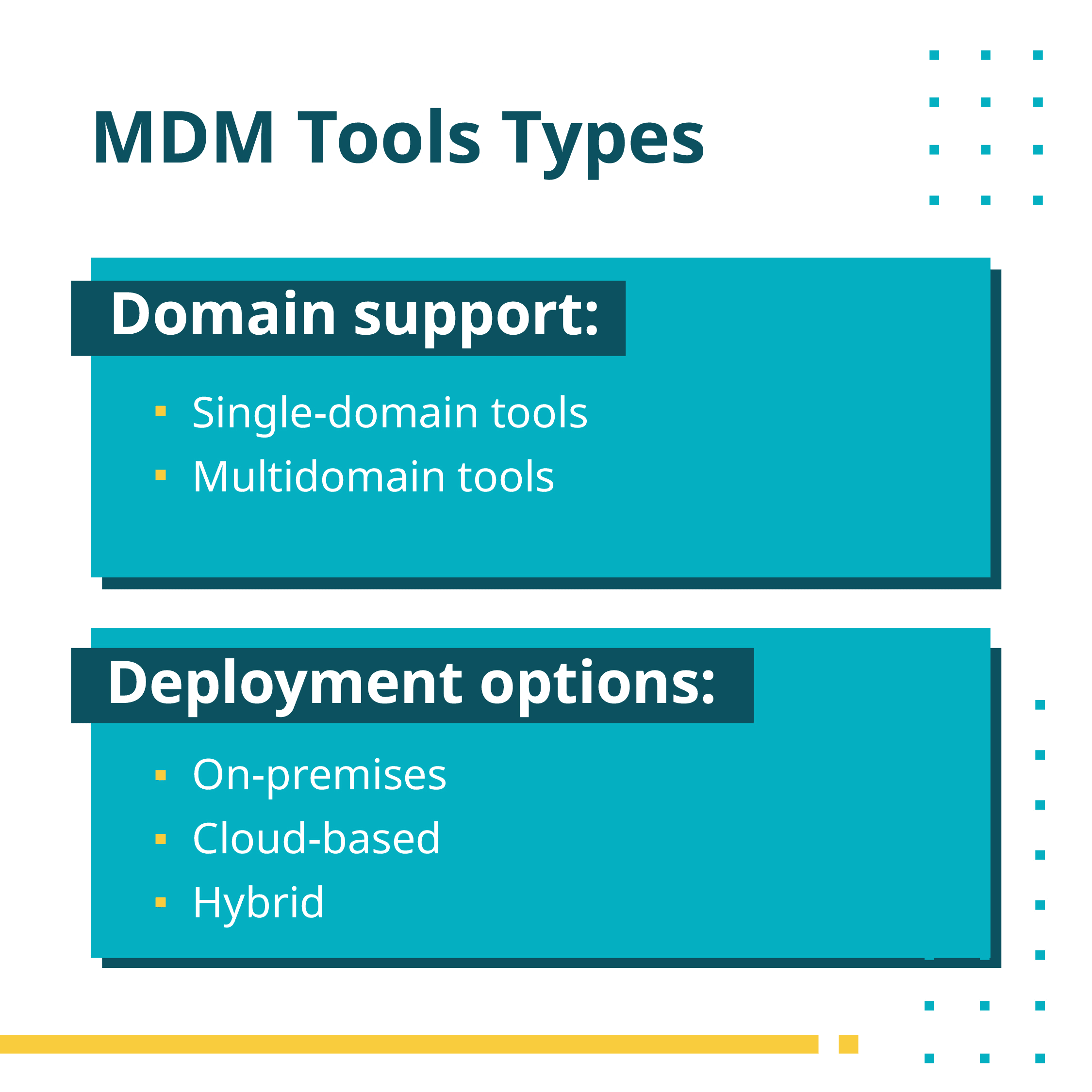
Domain support
Different MDM tools handle different kinds of business data.
1. Single-domain tools
These are the tools that focus on just one type of data:
- Customer MDM excels at maintaining unified customer profiles across sales, marketing, and service systems.
- Product MDM specializes in managing complex product data, digital assets, and specifications.
Single-domain tools connect with specialized systems in their area. Product MDM plugs into your ecommerce platform. Customer MDM links with your CRM. They speak the language of that particular domain.
For organizations just getting started with MDM, a single-domain tool can offer a more manageable entry point, with a lower learning curve and faster time to value.
2. Multidomain tools
These handle several data types in one system. That means you can:
- See relationships that matter to your business (which customers bought which products from which locations).
- Use the same governance rules across all your data.
- Avoid buying and maintaining separate systems for each data type.
- Create workflows that match how your business actually operates.
Multidomain tools shine when your business needs to understand connections between different things. They also tend to offer stronger scalability. As your data domains grow, you're expanding within a single platform rather than managing a patchwork of disconnected tools. They help answer questions like "which products do our highest-value customers typically buy first?"
Deployment options
You'll also need to decide where your MDM system lives. This decision has significant implications for your data infrastructure, data security posture and long-term total cost of ownership.
1. On-premises
With an on-premise deployment, your MDM tool is installed on your own servers. You might choose this option if you:
- Need complete control over your data security setup
- Must keep certain data within specific geographic boundaries
- Run other critical systems on-premises that need to connect directly
- Want to decide exactly when and how updates happen
Often, banks, healthcare organizations, and government agencies prefer this approach for their most sensitive data. Some organizations in these sectors also evaluate open-source MDM options as part of an on-premise strategy, though these typically require more internal technical resources to implement and maintain than a commercial platform.
2. Cloud-based
Here, the vendor hosts everything for you. A cloud-based or cloud-native MDM solution:
- Gets up and running faster — no servers to buy and configure
- Updates automatically without your IT team's involvement
- Starts with lower costs since you pay as you go
- Works wherever your team does
- Scales your data storage and processing capacity as your needs grow
If you're starting a new MDM project today, you'll likely look at cloud options first. You can avoid many technical barriers that delayed MDM projects in the past.
Most modern cloud-based MDM platforms are built to run on leading cloud infrastructure providers, including AWS, Microsoft Azure, and Google Cloud. This means you can often deploy your MDM solution within the same cloud ecosystem your organization already relies on, which simplifies integration and data governance across your broader data platform.
SaaS-delivered MDM takes this a step further by handling upgrades, maintenance, and scalability automatically, so your data teams can focus on using data rather than managing infrastructure.
3. Hybrid
Sometimes you need both approaches. Maybe you need to:
- Keep regulated data in your data center while less sensitive info goes to the cloud.
- Connect new cloud applications with older systems you can't easily replace.
- Move to the cloud gradually instead of all at once.
- Adapt as regulations and technology change.
Many organizations find themselves here during transition periods. You might keep customer financial data on-premises and product information in the cloud. A well-designed hybrid architecture lets you optimize each workload for its environment without sacrificing the unified data governance and data lineage visibility that good MDM requires.
How to find the perfect MDM tool for your needs
Choosing an MDM solution isn't like picking software from a catalog. It's more like finding a business partner — one that will either solve your biggest data headaches or become another expensive disappointment.
Let's walk through a practical approach to finding your match.

Start with your actual problems, not feature lists
Every successful MDM project begins by identifying specific business problems, not technology features.
What keeps breaking in your business because of data issues? Are orders delayed? Are marketing campaigns missing their targets?
Talk to the people doing data workarounds every day, such as the product team manually correcting specifications before each launch and the finance department reconciling customer records from three different systems.
These conversations show you what you truly need.
Know which capabilities actually matter to you
Once you understand your problems, you can find out which MDM functionality will solve them.
Your must-have key features depend entirely on your situation:
- Retail and ecommerce businesses often need strong product information management with digital asset handling.
- Financial services companies typically prioritize customer data governance and compliance features.
Beyond the obvious requirements, also consider usability. A tool with powerful functionality but a steep learning curve can stall adoption across your organization. The best MDM platforms balance enterprise-grade capability with self-service access, so business users can work with data without always depending on IT.
Don't get distracted by impressive capabilities you'll never use. Create a shortlist of features that directly address your specific challenges.
Create a meaningful comparison framework
When you’re evaluating vendors, don’t limit yourself to generic checklists.
"Can it handle our scale?" means different things to different companies.
For a global manufacturer, it might mean managing millions of product variants across dozens of countries. For a regional bank, it might mean maintaining customer relationships with complex household structures.
Scalability and performance matter here, too. Ask vendors how their platform handles high data volumes, concurrent users and peak processing loads. An enterprise-grade MDM solution should be able to grow with your business without requiring a replatforming project every few years.
Test vendors with your actual scenarios:
- Show them a sample of your messy data and ask how they'd handle it.
- Walk through specific workflows your team needs to complete.
- Ask to speak with customers in your industry who solved similar problems.
Plus, ask about data visualization tools and reporting. Can your teams access dashboards and analytics that surface data quality trends and issues? The ability to monitor your data assets in real time, rather than discovering problems after the fact, is an increasingly important part of what separates good MDM platforms from great ones.
Remember that it’s not just about the technology
Always keep in mind that even the most powerful MDM system in the world will fail without:
- Clear ownership of the implementation process
- A plan to migrate and clean existing data
- Training for the people who'll use it daily
- Executive support for new data governance processes
Ask vendors tough questions about implementation time, needed resources, and how they'll help you adopt the tools.
The answers can tell you much more than feature demonstrations.
Consider your AI strategy and readiness
AI changes so fast, and your approach to AI within MDM should match your organization's position.
Different industries face different AI considerations. Retailers may want to connect MDM with recommendation engines. Financial services companies need to consider bias detection in customer data processing.
It’s always useful to ask yourself:
- Do you want prebuilt AI capabilities or a platform that works with your existing AI investments?
- What specific problems do you want AI to solve within your data management processes?
- Are there regulatory constraints that affect how you can use AI with your data?
- Does your team have the skills to work with and tune AI capabilities?
It's also worth asking how the platform connects with your broader analytics ecosystem. The best MDM solutions don't operate in isolation. They feed clean, trusted data into your business intelligence tools, data analytics platforms, and downstream applications to make your entire data infrastructure smarter.
Finally, the best MDM solutions not only match your current AI maturity but also support where you're heading.
Remember: The goal isn't only about finding the "best" MDM tool on the market. It's finding the right tool for your specific data challenges, technical environment, and organization.
Common use cases for master data management tools
Now let's explore how MDM tools solve real business problems. Each of these use cases represents an area where organizations see tangible returns on their MDM investments.
Product information management
Every product in your catalog exists in multiple systems — each system with different pieces of information:
- Marketing works with compelling descriptions and lifestyle images.
- R&D maintains technical specifications and compliance data.
- Sales needs pricing tiers and availability details.
- Supply chain tracks dimensions, weight, and packaging.
Without an MDM tool, these fragments live in separate systems, spreadsheets and documents. Updates happen unevenly. Errors multiply. New product launches involve frantic emails and last-minute corrections.
MDM changes this dynamic completely. It creates a single authoritative source where you manage product information once, then distribute it to all channels and systems. This kind of centralized data management is especially valuable for organizations with large or complex catalogs, where manual data transformation and reconciliation across systems simply doesn't scale.
As a result, your website, catalogs, packaging, and sales materials all have consistent, accurate information. New products reach the market faster because you've eliminated redundant data entry and manual reconciliation work. And because your product data flows through automated workflows rather than email chains, your teams spend less time chasing information and more time acting on it.
Customer data integration
"Why do I have to keep telling you who I am? Don't you recognize me?"
Customers get frustrated when your company treats them like strangers across different touchpoints. MDM tools solve this problem by creating unified customer profiles that connect interactions across channels and departments.
If you’re a B2C company, MDM helps you:
- Recognize valuable customers regardless of how they contact you
- Personalize experiences based on complete relationship history
- Avoid marketing products customers already own
- Maintain accurate contact preferences across systems
And if you’re a B2B organization, MDM gives you a complete view of complex account structures, including parent-child relationships, multiple locations, and various divisions or departments.
Your teams make better decisions when they see the complete picture instead of fragments. Marketing improves targeting. Service resolves issues faster. Sales identifies growth opportunities within existing accounts. With real-time data integration across your CRM, marketing platform, and service systems, every customer-facing team works from the same trusted profile, not a version that was accurate three days ago.
Supplier data consolidation
Large organizations often find out they work with the same suppliers across multiple divisions — but manage those relationships inconsistently.
MDM for supplier data gives you a central repository of vendor information:
- Contract terms and conditions.
- Approved items and negotiated pricing.
- Performance metrics and quality ratings.
- Risk factors and compliance status.
- Key contacts for different functions.
When you consolidate all your supplier information, it changes the whole dynamic in your supply chain. You can:
You consolidate all your supplier information, and that changes the whole dynamic in your supply chain. You can:
- Find opportunities to leverage total spend for better terms.
- Quickly find alternative sources when supply chain disruptions occur.
- Ensure consistent quality standards across divisions.
- Reduce risk by monitoring compliance documentation.
Automating supplier data ingestion and validation, rather than relying on manual updates, also means your procurement teams are always working with current information. That's a meaningful advantage when supply chain conditions change quickly. It allows your procurement teams to shift from administrative tasks to strategic supplier management by providing complete, reliable vendor information at their fingertips.
Location data standardization
Your physical locations — stores, warehouses, offices, service areas — show up in dozens of business systems. Each system needs slightly different location attributes:
- Navigation systems need precise geocoordinates.
- Delivery services require loading dock specifications and operating hours.
- Facilities management tracks maintenance schedules and equipment inventories.
- Marketing maintains store features and local promotions.
MDM for location data standardizes all this information across systems, without losing any of the specialized attributes each application needs. It also creates a reliable foundation for data analytics and business intelligence tools that depend on accurate location data to generate meaningful insights.
The business impact comes in both customer experience and operational efficiency. From accurate deliveries and store locators to technicians showing up with the right equipment and managers having correct performance data.
Sustainability data
As environmental reporting gets more important, it can affect everything from product development to supplier selection and facilities management.
With the right MDM tool, you can connect environmental information to your existing master data domains:
- Products include materials composition, recyclability, and carbon footprint.
- Suppliers maintain certifications and sustainability ratings.
- Facilities track energy usage, water consumption, and waste metrics.
There are several benefits of having your sustainability data live within your MDM system instead of in a separate database:
-
Incorporate environmental factors into everyday business decisions. Product designers see the environmental impact of the materials they choose. Procurement evaluates sustainability alongside cost and quality.
-
Respond quickly to reporting requirements. When regulators or customers request environmental data, you can generate reports from information you maintain continuously rather than starting a new data collection project.
-
Track progress toward sustainability goals. Real-time dashboards give you consistent visibility across products, suppliers, and facilities, so you can monitor improvements over time and quickly identify where optimization is needed.
AI-enhanced use cases
As mentioned earlier, AI is becoming critical in modern MDM tools. As promised, let’s look at a few ways AI is being used to tackle data management challenges.
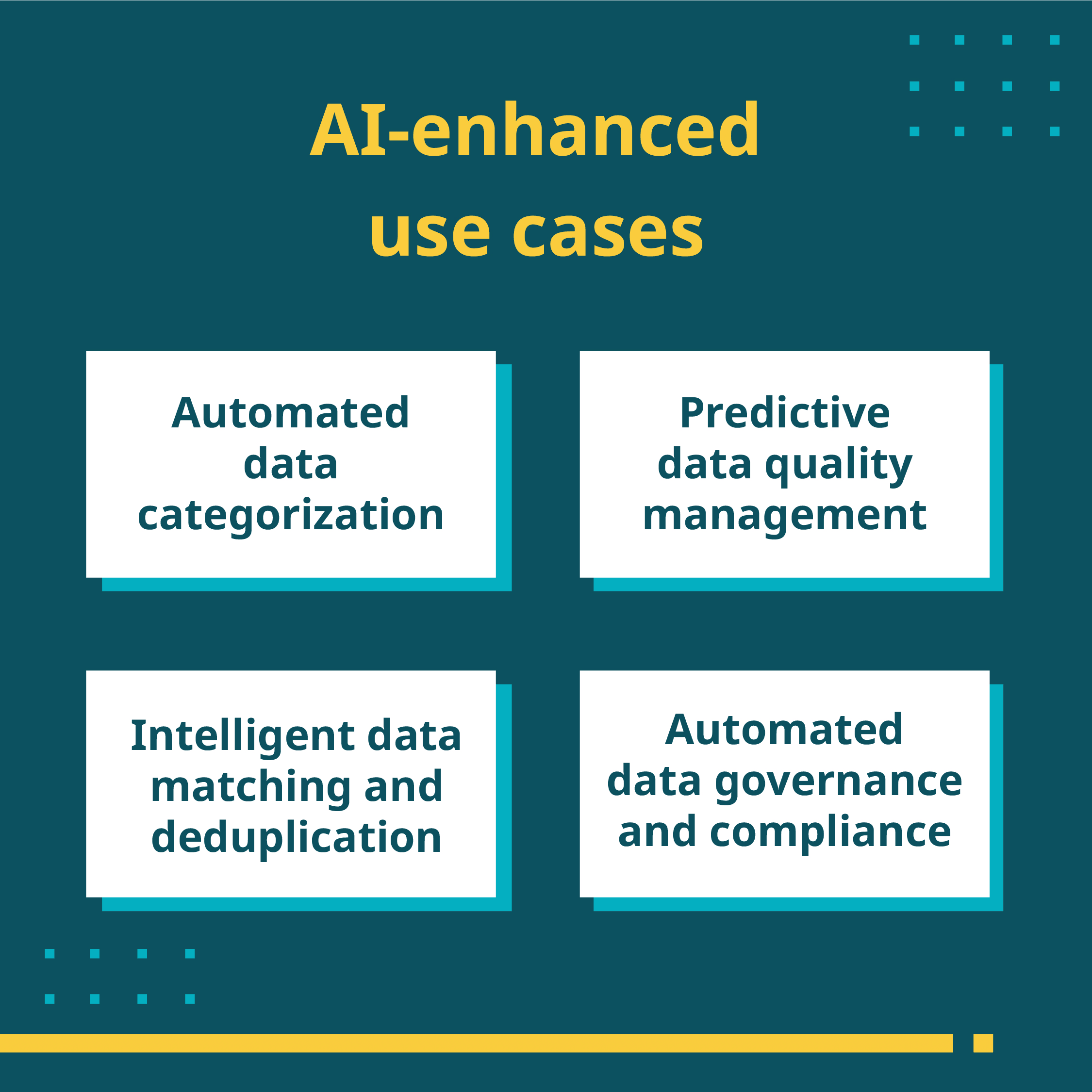
Automated data categorization
Ask anyone who's managed a large product catalog about their biggest headache, and they'll likely mention categorization. Placing thousands of items into the right categories and subcategories used to take weeks of mind-numbing work.
AI changes this completely.
The system learns from your existing categorized products, then automatically suggests categories for new items. This kind of intelligent automation dramatically reduces the manual effort involved in data transformation, especially during large-scale product onboarding or catalog migrations.
When a supplier sends a spreadsheet with 500 new products, the AI analyzes descriptions and specifications to place each item where it belongs.
It doesn't just categorize — it also spots missing information. When the system notices that all ski jackets have a "waterproof rating" but a new jacket doesn't, it flags the gap. Some systems even use metadata management to automatically enrich records and suggest attribute values based on patterns found in similar products across your catalog.
Your team still reviews the results, but instead of starting from scratch, they're editing and confirming what the AI proposed. Over time, this feedback loop improves the model's accuracy, making the automation smarter with every cycle.
Predictive data quality management
Most companies find out about data problems after they've already caused issues. Incorrect prices on the website, packages sent to wrong addresses and duplicate customer profiles leading to redundant marketing
An AI-powered MDM tool spots potential problems early by learning patterns from past mistakes.
It notices that products from a certain supplier often have unit-of-measure errors. It recognizes address formats that consistently cause delivery problems. It identifies customer record patterns that typically indicate duplicates.
When new data matches these problematic patterns, the system warns you before the bad information spreads to other systems. This kind of predictive data quality management is a significant upgrade over reactive approaches, where problems only surface after they've already disrupted a workflow or damaged a customer relationship.
Over time, as your team confirms or corrects these warnings, the AI gets smarter about what to flag. The result is a continuously improving data quality engine that scales with your data volume without requiring proportional increases in manual oversight.
Intelligent data matching and deduplication
Finding duplicate records used to involve exact matching rules that either missed too many duplicates or created false matches. AI approaches this problem differently.
Instead of rigid rules, AI-matching engines consider multiple factors together.
They understand that "Elizabeth Smith" at one address and "Liz Smith" at a slightly different address might be the same person, especially if the phone numbers are similar and purchase patterns match.
These systems recognize common nicknames, abbreviations, typos, and formatting variations. They can also apply fuzzy matching logic across unstructured data fields, which is particularly useful when records have been entered inconsistently across multiple systems over many years.
They adjust their confidence level based on how many factors align, so you can prioritize obvious matches for automatic merging and flag questionable matches for human review. This balance between automation and human oversight is what makes AI-powered deduplication practical at enterprise scale, where the volume of potential matches makes fully manual review impossible.
Automated data governance and compliance
Data governance often fails because it relies on busy people consistently following manual steps. AI can help a lot here. It helps by building governance into the workflow itself.
The system learns to recognize sensitive information that needs special handling:
- Personal data
- Financial details
- Regulated product specifications
When it detects any of these elements, it automatically applies the appropriate access controls and routes approval requests to the appropriate reviewers. This kind of automated governance also supports data lineage tracking, giving your compliance teams a clear, auditable record of how data has moved and been transformed across your systems.
It also learns from past governance decisions.
- If your legal team often reviews certain types of product claims, the system starts routing similar content to them automatically.
- When the compliance team always checks supplier certifications from certain countries, those get flagged for review without someone having to remember the policy.
Your governance becomes more consistent because it doesn't depend on your people having to remember every rule and exception. And as your organization's data infrastructure grows, automated governance scales with it, without adding proportional overhead to your data teams.
MDM tools if you work in marketing or CX
If you’re in marketing or manage customer experience, you know the headache of data scattered across too many systems.
Your customers expect you to recognize them whether they're on your website, in your store or calling support. You need product details to match across channels. And you're constantly walking the line between personalized experiences and respecting privacy.
Let’s look at how MDM tools help marketing and CX teams solve this puzzle.
Getting a complete view of your customers
We've all been that frustrated customer who has to repeat their story to multiple people at the same company. That's what happens when customer data lives in separate systems.
MDM tools fix this by connecting:
- Purchase history from your CRM or order system.
- Email preferences from your marketing platform.
- Support tickets from your helpdesk.
- Website behavior from your analytics tool.
The result is a unified, real-time customer profile that every team works from, not a fragmented collection of records that tells a different story depending on which system you're looking at.
Now when someone contacts you after clicking on an email campaign, your team sees their entire history — not random fragments. You can target the right segments with relevant offers, and your support team solves problems faster because they have context.
For marketing and CX teams, this kind of data integration is what makes genuinely personalized experiences possible at scale. And in a market where customers have more choices than ever, that matters.
Making your marketing job easier
Marketing moves at lightning speed. A good MDM tool helps you keep pace.
-
Launch campaigns faster. No more chasing product managers for the latest specs. Your product information is already organized and ready to use.
-
Do personalization that works. You can match customer profiles with real-time behavior to create experiences that feel tailored without being intrusive.
-
Get products to market quicker. When everyone from product teams to copywriters to designers all work from the same data pipeline, you eliminate confusion and contradictions.
-
Keep your messaging consistent. Your product descriptions, specs, and images stay uniform across your website, app, social media and printed materials.
Managing customer data without the headaches
Customer data comes with big responsibilities. Trust and compliance are areas where MDM tools shine. They help you:
- Track consent across channels (who opted in to what and when).
- Show how you're using data when legal asks.
- Set up reasonable retention periods.
- Respond quickly to "what data do you have on me" requests.
With MDM tools, staying compliant becomes infinitely easier, and so does keeping customers’ trust. With the right access controls in place, your marketing team gets the data access they need while sensitive customer information stays protected. That balance between accessibility and data security is something ad hoc solutions rarely get right.
How an MDM tool’s AI features can help marketing and CX teams
The newest MDM tools include AI capabilities that actually help with day-to-day marketing and CX challenges.
Better customer segments
AI finds patterns you'd never spot in customer data. Instead of basic demographics, you discover meaningful behavior clusters that help you market more effectively. These AI-generated segments update dynamically as new data flows in, so your targeting stays current without requiring your team to rebuild audiences from scratch every campaign cycle.
Content that resonates
When your product and customer data are well-organized, AI can tell you which messages will connect with specific groups. Some platforms surface these insights through dashboards that highlight content gaps, engagement trends and audience behavior. Some tools even flag gaps in your content strategy based on customer journey analysis.
Spotting opportunities and risks
Clean, connected customer data helps predict who's ready to buy, who might cancel, and who could become your next best customer. Real-time data processing means these signals are available when they're still actionable, not after the window has passed. That means you can focus your budget and team effort where they'll have the biggest impact.
The bottom line for marketing and CX teams is this: Basic systems just store your data. Intelligent ones help you understand what it means, act on it faster and make the kind of data-driven decisions that compound over time.
A quick introduction to Stibo Systems’ range of MDM solutions
This blog post is not about us, but we'd be remiss not to briefly illustrate MDM tools by looking at our MDM solutions. Then you can see how some of the world’s leading companies work with MDM on a daily basis.
How it all fits together
At Stibo Systems, we use a straightforward building-block approach.
At the foundation is our MDM platform. It handles all the core MDM functions we’ve discussed above. It's built to serve as a centralized data platform that connects your data sources, enforces data governance rules, and delivers trusted data across your entire ecosystem.
You can run this platform in the cloud or on your own servers, depending on what makes sense for your IT setup and security requirements. For organizations that prefer a SaaS model, our cloud-native deployment option handles scalability, maintenance, and upgrades automatically, so your data teams stay focused on getting value from your data rather than managing infrastructure.
On top of this foundation, you'll find targeted MDM solutions for specific needs:
- Product Experience Data Cloud, which manages your product data
- Customer Experience Data Cloud, which handles B2C customer information
- Business Partner Data Cloud, which handles B2B customer information
- Supplier Data Cloud, which organizes supplier details
- Location Data Cloud, which keeps location data consistent
- Sustainability Data Cloud - , which tracks environmental metrics and compliance data across products, suppliers and facilities
With a modular design like this, you can start with your biggest data headache (often product or customer data) and add other components when you're ready. This means you avoid paying for functionality you don’t need today, while still getting a platform that can scale as your data strategy expands into additional domains.
What sets it apart
Reliability when it matters
The platform is built for enterprise-grade operations where data accuracy is mission-critical. Many organizations have run their core business processes on Stibo Systems software for over a decade, trusting it with their most essential data. That kind of long-term stability is increasingly rare in a market crowded with newer entrants, and it matters when you're building critical data infrastructure that your entire organization depends on.
Industry expertise baked in
After more than 25 years working with retailers, manufacturers, distributors and many other types of companies across the world, we have built industry-specific templates and best practices into their solutions.
In other words: You're not starting from scratch. You're starting with a data model that already reflects how businesses like yours actually operate, which shortens your time to value and reduces the risk of a costly implementation.
Innovation that solves real problems
Rather than adding features because they are flashy, we focus all our innovations on solving genuine data challenges.
Our approach to AI, for example, keeps humans in the loop at critical decision points. Automation handles the repetitive, high-volume work, such as data categorization, deduplication, and data quality monitoring, while your team focuses on the decision-making that actually requires human expertise.
Enterprise-grade connectivity
A strong MDM platform is only as valuable as its ability to connect with the rest of your technology stack. Stibo Systems offers a broad library of prebuilt connectors and open APIs that make it straightforward to integrate with your existing apps, ERP systems, CRM platforms, and cloud infrastructure, whether you're running on AWS, Microsoft Azure or Google Cloud.
That connectivity is what turns MDM from a standalone tool into the backbone of your broader data infrastructure.
Sustainability support
As environmental reporting requirements grow, the platform includes specific capabilities to track sustainability data alongside your other master data — connecting product environmental impacts, supplier certifications, and facility resource consumption, for example. This means sustainability data lives within the same governed, high-quality data environment as the rest of your master data, rather than sitting in a separate system that's harder to audit and maintain.
Who uses it?
STEP, our trusted intelligence platform, connects teams across your organization that might otherwise work in silos.
- Marketing teams use it to make sure product information looks right across all your channels, website, catalogs, store displays, and everywhere else customers see it.
- Customer service teams rely on it to see a complete picture of who they're talking to, what they've bought and any previous issues.
- Supply chain teams use it to maintain accurate vendor details and quickly find alternative sources when supply disruptions happen.
- Data engineering and IT teams appreciate that it connects with their existing systems without requiring a complete overhaul of their technology landscape.
The real value comes when all these teams work from the same trustworthy data foundation instead of maintaining separate, conflicting versions of the truth.
Turn your data into a business advantage
Throughout this guide, we've looked at how master data management tools fix the everyday data headaches you face.
When product information differs between your website and catalog, or when customer service doesn't know what marketing just promised a customer, that's what MDM tools help solve.
You've seen how these tools come in different flavors — some focused on specific data types, others handling everything in one system. You've learned how deployment options range from on-premise to cloud-native to hybrid, and how platforms built on AWS, Microsoft Azure, and Google Cloud give you the flexibility to fit MDM into your existing infrastructure.
You've seen how AI is transforming what these tools can do, from automated data categorization and predictive data quality management to intelligent deduplication and automated data governance.
And you've learned how they particularly help your marketing and customer experience teams create consistent experiences across all your customer touchpoints, powered by real-time data and self-service access to trusted information.
Good MDM isn't just about buying technology. It's about changing how your company thinks about data. When you treat data as something valuable rather than just the exhaust from your business processes, you make better decisions and run smoother operations.
So take a hard look at your current data problems.
Where are the most painful inconsistencies?
Which teams waste the most time hunting for information?
Start there, and you'll build momentum for broader improvements. Your data is too important to leave scattered across dozens of systems. Put it to work.
EBOOK
Ready to build your business case for Master Data Management?