

Blog Post February 13, 2023 | 8 minutes read

Sustainability in Retail Needs Governed Data

Master data management can facilitate data transparency and support your sustainability goals and ESG initiatives.

See how you can turn trusted data into a competitive advantage

Get in touch

Explore this article with AI

Sustainability in Retail Needs Governed Data

Master Data Management Blog by Stibo Systems logo
| 8 minutes read
February 13 2023
Sustainability in Retail ➤
17:11

Data management and data governance is the first and most foundational step sustainability leaders need to take on their journey to support ESG initiatives and sustainability in retail.

Sustainability data has many sources and formats. It needs to be calculated, collected  and curated to make it fit for compliance, reporting and customer experiences.

In this guide to retailers, we will discuss some of the drivers behind sustainability initiatives, the complexity of sustainability data and show how sustainability data management can have great business value.


low res_DigitalizationAndSustainability_iStock-1203267074 copy-1


Sustainability in retail is business- and data-driven

Companies have many different business-critical data: product and asset information, as well as supplier and stakeholder data. Keeping this data clean and well-managed is crucial to run the business. However, in recent years a new subset of data of equal importance is getting attention: sustainability data.

The environmental impact caused by the production and transportation of industrial and consumer goods has drawn scrutiny from governments, NGOs and consumers alike. The call for companies to act responsibly and adopt more sustainable practices in sourcing, manufacturing, packaging and distribution processes will intensify as environmental, social and governance (ESG) concerns increase globally. To meet that call, new types of data need to be governed and managed.

Companies need to set sustainability and ESG goals for three main reasons:

  • Regulatory demands from governments, investors and 3rd parties are growing and evolving at a high pace
  • Brands and organizations differentiate themselves from competition with social and environmental actions
  • Consumers are increasingly influenced by the sustainability footprint of the products and services they consume
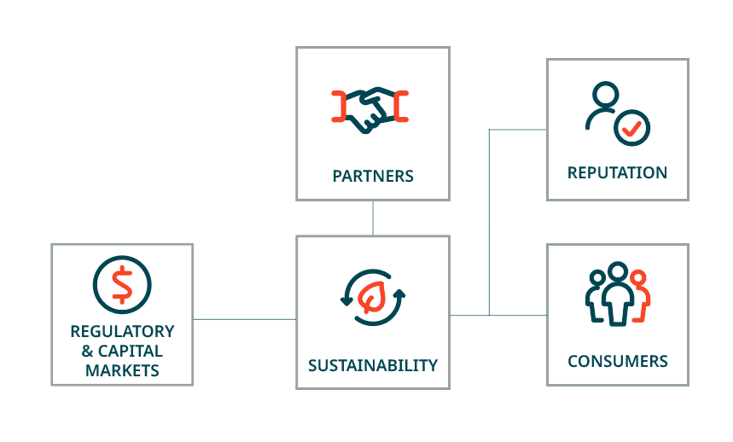
Image about the impact of sustainability in retail stakeholders

The ramifications of the sustainability call impact all parts of the business from funding to customer experiences

At the heart of sustainability in retail lies data management that can provide transparency. This is key to instill consumer trust in a brand. It’s not enough to be ethically sourcing, you also need to be able to bring the proof.

The sustainability demand affects all parts of the business: supply chain management, purchase, product development, legal, finance, sales and marketing. Many departments need to have access to and share trusted sustainability data process management internally and/or with customers and 3rd parties (investors).

“Authenticity is important, but customers are increasingly expecting that [fashion brands’] efforts are backed up by data,” according to Clarisse Magnin, a McKinsey senior partner.

McKinsey & Company, NEF Spotlight: The path forward for retail’s sustainable future, January 26,2021


Sustainability is changing retail

The growing market for sustainable goods has made the pivot toward sustainability more palatable for companies.

“For our first ten years, sustainability was not even in the top five reasons why customers chose our company. Now it is one of the top two reasons” said the CEO of one fashion company. “Customers want to see data on the environmental impact. Transparency is crucial.” (McKinsey & Company, NEF Spotlight: The path forward for retail’s sustainable future, January 26, 2021).

Learn more about Retail of the Future.

As a result of consumers becoming more purposeful in their shopping behavior, retailers need to look again at which products they are bringing to market, and they need to adopt certain sustainability standards.

Retailers can establish more environmentally sustainable product offerings, innovate in more efficient store operations and partner with their supply chain partners to reduce environmental and social impacts. These are some of the top opportunities for retailers.

But will consumers pay? Generally, the younger and more affluent the consumer, the more likely that consumers will pay more. Currently 60% of Gen Z, higher income shoppers are willing to pay more for sustainable products vs. only 49% among all demographics. (McKinsey & Company, Climate sustainability in retail: Who will pay?, May 4, 2022).


Retailers leading the way to sustainability

Even though environmental and corporate interests are aligning more than they have in the past, the actual path toward adopting more sustainable practices is not the same for all. Each company must look to which initiatives make the biggest impact and how they can measure it. Below, you will find three very different examples of individual sustainability goals - circular economy, carbon neutrality and human dignity. But, of course, there can be many more depending on your type of business. A top-down approach is recommended: Take a step back and consider which standards are meaningful to comply with, identify the KPIs, and then create a data governance policy that supports those KPIs.

1. Circular economy

One concept that has gained traction in recent years is the circular economy model, where materials that otherwise would be headed to a local landfill are being reused to create new products. In addition to the many inherent environmental advantages of this approach, companies benefit from reduced sourcing costs and the creation of new revenue streams from these sustainable products, ultimately improving their financial performance. Furniture giant Ikea introduced its Buyback & Resell program in 2020 for 27 countries, offering store credit in exchange for used items. In 2021, the company expanded the program to 33 locations in the US. (CBI Insights, The Shift To A Circular Economy: How Tech Is Shaping The Future Of Sustainable Retail, February 2, 2022)

2. Carbon neutrality

Many retailers are setting goals for carbon neutrality. BestBuy has become a founding member of the Breakthroughs 2030: Retail campaign, a Race to Zero initiative that aims to accelerate climate action within the retail industry. The company claims to have reduced emissions 61% since 2009 and pledges to be carbon neutral by 2040 (Best Buy, Best Buy becomes founding member of Race to Zero campaign, November 10, 2021).

3. Human dignity

From a sustainable supply chain perspective, Walmart has implemented a responsible sourcing program to promote human dignity. This includes selecting suppliers according to certain assessment data, “such as KPIs and Health Check Reports – to help hold suppliers accountable for supply chain health and risks.” (Walmart, Responsible Sourcing).


The complexity of sustainability data

Underneath all sustainability initiatives there are data and metrics. The sustainability demand therefore raises a need for solutions that make sustainability data more accessible and connected to other types of master data, such as product, location and supplier data.

The complexity of sustainability data is notorious. It includes a variety of stakeholders and sources, it’s difficult to calculate and it can have a huge impact on the bottom line.

Let a recent example highlight the complexity: In order for consumers to make sustainable shopping choices, a group of French retailers have launched the Eco-Score – an easy-to-understand symbol that sums up the
life cycle assessment and environmental impact of food products. The Eco-Score aptly encapsulates the variety of data that needs to be factored into the calculation, including product packaging, production processes, supply chain parameters like travel, the policies of the countries involved, whether the product affects any endangered species, the amount of water needed, the use of raw materials and your sub-suppliers’ carbon footprint.


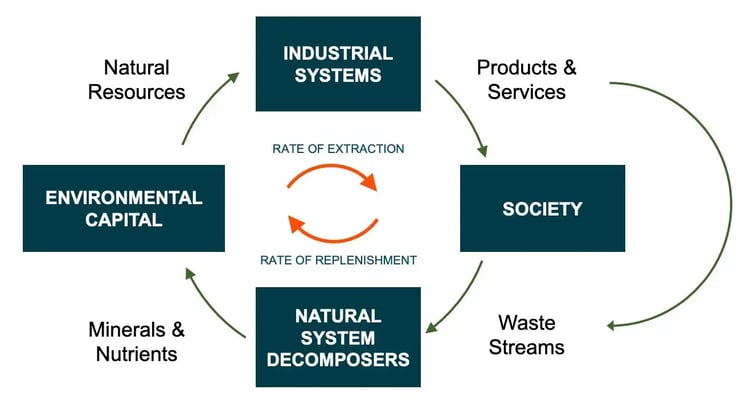
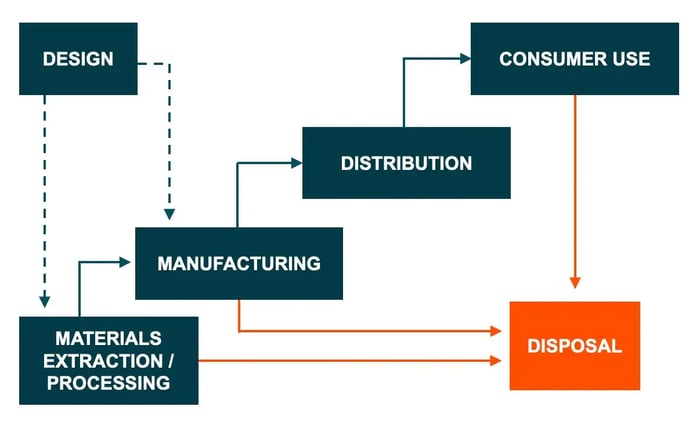
Traditional product lifecycle:
Traditional_product_lifecycle


Sustainable manufacturing approach:

Sustainable_manufacturing_approach

Sustainability data is not a singular data domain, it needs to be extracted from your suppliers, product information, location data and financial data. 

Calculating, aggregating and mapping this variety of data requires expertise and data scientists, as well as technology to support the processes. Lots of master data must be linked together and organized in logical hierarchies. Retailers need to reduce the complexity and organize data in a single source of truth, providing the needed transparency.

As an example, to adopt a circular economy mindset and become more environmentally and socially responsible, companies will need greater visibility and control over the recycled and externally sourced materials as they flow through the product development process and supply chain. Yet, for companies burdened by disconnected systems, siloed teams, inefficient processes or an inability to access information across the enterprise, this can be a significant challenge.


To achieve the needed transparency, data needs to be governed centrally:
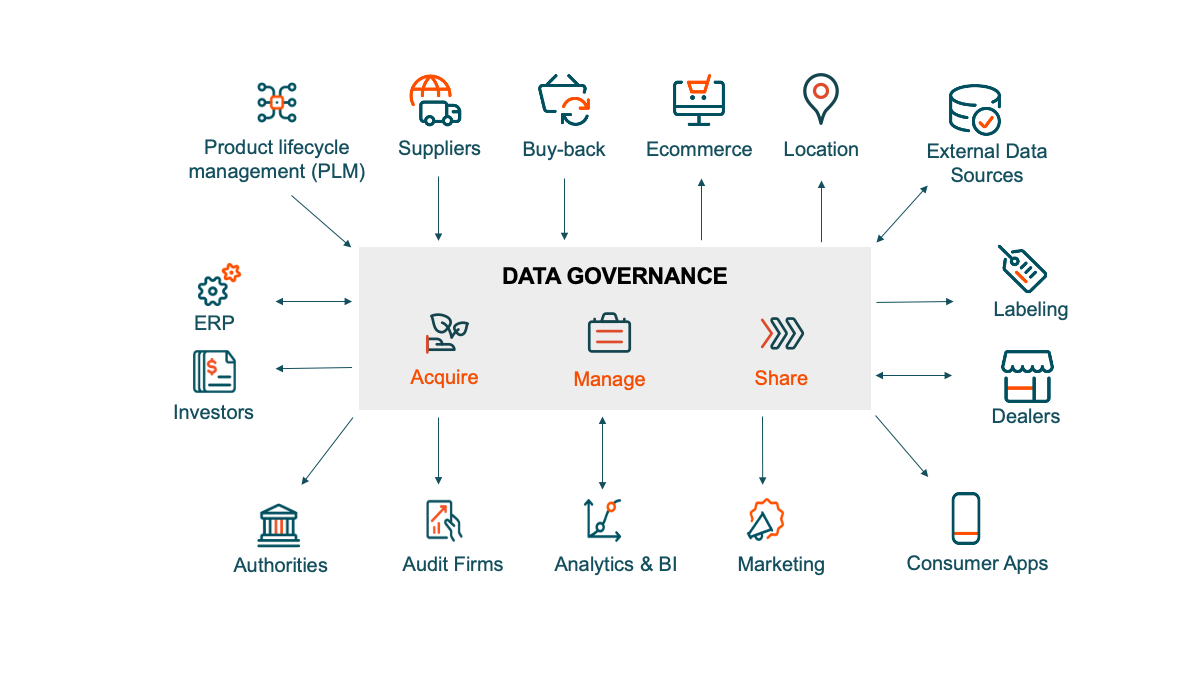
Image of data governance for sustainability in retail

“Data is essential to ensure that organizations are aligned with rapidly evolving regulations around climate disclosure. Data also provides organizations with the means to accelerate their journey to net zero by catalyzing organization-wide action on emissions reduction.”
(Capgemini Research Institute: Data for Net Zero, 2022)

As more companies provide their products and services with sustainability KPIs, the collection and management of sustainability reference data has become a master data initiative.

Retailers may bind their suppliers contractually to adhere to sustainability objectives. Suppliers, therefore, need to ensure that their products are sourced appropriately and carry sufficient information to support controls and enhance transparency for the retailers and their end customers.

This value chain shows that sustainability data lives in the relationships between companies within the procurement, manufacturing, distribution and customer engagement processes. A data management system is needed to describe the individual sustainability characteristics of products, suppliers, distributors and other actors within that value chain.

The retailer’s questions that sustainability data can answer:
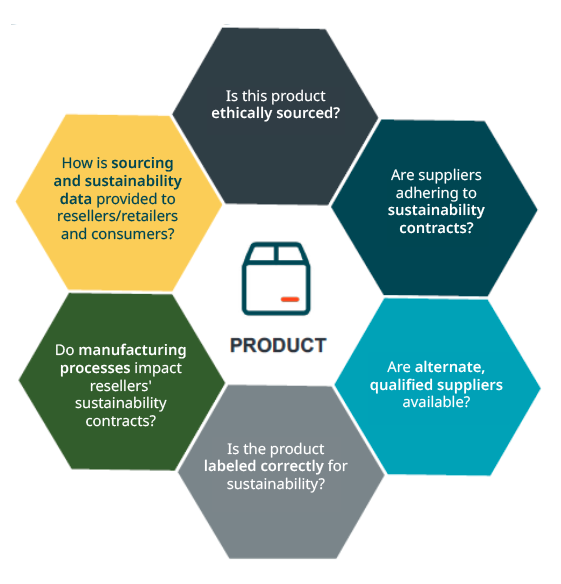
Image about retailers questions answered by sustainability data


Enable traceability with master data

Evidencing sustainability requires the ability to track a variety of data through the supply chain and product lifecycle. Imagine, for instance, a fashion retailer wanting to engage in textile-to-textile recycling, recovering materials from consumer textile waste to produce yarns for new fabric. To do that you need to collect trustworthy information from an array of datapoints across the value chain, establishing end-to-end data visibility from both upstream and downstream activities:

Supplier data

  • Identifying which suppliers are partaking in buyback programs and comply with your standards for recycled material and other sustainability criteria.
  • Capturing data on bill-of-materials, sustainability and ESG programs of suppliers, including certificates and audit reports.
  • Ensuring updated contact information and contracts.

Tracking supplier data is important for risk mitigation and in order to be able to quickly switch suppliers.

Location data

  • Identifying manufacturing plants.
  • Capturing data on product quality, manufacturing methods, storage conditions, logistics, work environment, water consumption, waste management, etc.

Managing location data is crucial to establish supply chain transparency. This enables you to make informed decisions on where to source from and choose the most compliant and sustainable solution, e.g., locally sourced material.


Product data

  • Ensuring correct labelling, attributes and digital assets for consumer information, including disposal information and how to return and recycle products.
  • Ensuring accuracy about the percentage of the product that comes from recycled textiles, so it’s represented on applicable product tags across sales and marketing channels, as well as in stakeholder reporting.

These assets can be described with master data which is low volatility data. Treating sustainability data as master data enables you to create a solid framework of data points for measuring the success of your sustainability initiatives.


Managing your supply chain is crucial to achieve sustainability

A transparent supply chain is crucial to be able to communicate sustainability.

Maybe you don’t have your own product development team or capability. You need to control and access supplier items and supplier data, nevertheless. 

The retailer is the consumer’s touchpoint in a long value chain, it’s therefore on the retailer to track supply chain data and set up a transparent supply chain system where reporting data is fit to share with consumers, authorities and investors.

Countries and their states and provinces are developing more regulations to encourage improved sustainability of supply chains and improved human protections, for example, the California Transparency in Supply Chains Act requires companies to, among other things, disclose how they evaluate and address risks of human trafficking and slavery in their supply chain, as well as conduct audits of suppliers to evaluate their compliance with company standards (The California Transparency in Supply Chains Act).

“As net zero has become an organizing principle for business, executives are on the spot to lay out credibly how they will deliver their transition to net zero while simultaneously building and reinforcing resilience against the certain volatility of ongoing economic and political shock.” 
(McKinsey Sustainability: A devilish duality: How CEOs can square resilience with net-zero promises November 1, 2022)


What is supply chain transparency?

Data transparency hinges on centralized data management. The opposite being siloed data management.
Data transparency is a powerful tool that can provide the needed agility in a quickly shifting market. It occurs when an enterprise’s different departments and external business partners work together on the same platform to ensure a single source of truth.

In real life, this means that suppliers syndicate and share relevant information in a format that is accepted by the retailer. Key suppliers can even be integrated and load information directly into the retailer’s data management platform.

Supplier information then becomes available as master data, which, in turn, can be enriched by third-party sources and leveraged by internal teams, such as product development or the ESG office. 

The one-platform collaborative process also has the advantage that new suppliers can quickly be onboarded, and you can easily track supplier performance. This helps improve risk management and makes your supply chain more resilient towards disruptive incidents.

Supplier information includes:

  • Contracts
  • Contact information
  • Organizational hierarchy
  • Performance metrics
  • Sub-supplier information
  • Manufacturing plants
  • Operating practices
  • Logistics (which suppliers deliver how much to which locations through which methods?)
  • Certificates
  • Compliance to company and regulatory standards
  • ESG reporting

It’s the retailer’s responsibility to curate and share this information to create a customer experience that is transparent and trustworthy. Governed supplier data is a company asset.

Transparency does not mean full disclosure of everything but the ability to share what is needed. The initiatives to improve visibility across the supply chain add to the volumes of data to be collected, managed and shared. That’s what makes the collaborative platform critical.

Retailers of tomorrow

Retailers of tomorrow will look into how they can:

  • Manage compliance and related details
  • Remove silos of data and generate a 360° view of sustainability data related to products, suppliers and locations with metrics
  • Connect sustainability data to corporate ESG reports
  • Prepare products to leverage the business around circular economies
  • Manage data related to the UN Sustainable Development Goals
  • Manage data related to regional and national policies
  • Manage data related to financial guidelines, such as the Sustainability Accounting Standards Board (SASB)
  • Efficiently manage certification data with proper governance and accuracy

Retailers need to apply master data discipline to sustainability and ESG data. This enables you to capture the entire data value chain in a single repository and build data cards that can give you insight into suppliers, products, locations, assessments, ESG goals and, not least, the relations between the data points.

EXPLORE

Master Data Management for Retailers

Clean and well-managed data enables retailers to provide superior customer experiences, increase speed to market and ensure consistency across channels.
LEARN MORE
industry_category_retail
Master Data Management Blog by Stibo Systems logo

Miriam Molino is Stibo Systems' Head of Global Retail Practice. Miriam brings deep expertise in retail after more than 25 years in the industry; as a consultant serving retail Corporations in multiple strategic and operational initiatives, and as well as part of the industry as she has worked for one of the biggest retail companies in Spain going through a massive digital transformation. At Stibo Systems, Miriam is reinforcing the company focus and value orientation towards retail clients.

Discover blogs by topic

  • See more
  • MDM strategy
  • Data governance
  • Retail
  • Customer and party data
  • Data quality
  • Product data and PIM
  • AI and machine learning
  • Manufacturing
  • Product Experience Data Cloud
  • Supplier data
  • Consumer packaged goods
  • Customer experience and loyalty
  • Data compliance
  • Sustainability
  • Data integration
  • Financial services
  • Compliance and risk management
  • Operational efficiency
  • Customer Experience Data Cloud
  • Location data
  • Product data syndication
  • Multidomain data
  • Product onboarding
  • Supplier Data Cloud
  • Business Partner Data Cloud
  • ERP success
  • Life sciences
  • Location Data Cloud
  • Automotive
  • Data modeling
  • Data sourcing
  • Digital asset management
  • Platform
  • Translation and localization
  • Data delivery
  • Data sharing
  • Digital shelf analytics
  • Enhanced content
March 9, 2026

Master Data Meets Microsoft Fabric: Building a Trusted Foundation for AI and Analytics

February 24, 2026

BIC's Blueprint for Conquering Complex Global Product Data Challenges

February 17, 2026

Product 360 After the Salesforce Acquisition: Why You Need to Map Out a Plan B

January 27, 2026

5 Hidden Costs of Bad Customer Data in Retail (and How to Avoid Them)

January 20, 2026

What is the difference between CPG and FMCG?

January 13, 2026

Discover the Value of Your Data: Master Data Management KPIs & Metrics

January 13, 2026

Solving Retail Data Fragmentation: The Key to Consistent Customer Journeys

January 5, 2026

What is a Data Domain? Meaning & Examples

January 2, 2026

Data Migration to SAP S/4HANA ERP: The Fast and Safe Approach with MDM

December 15, 2025

The Difference Between Master Data and Metadata

December 10, 2025

Is Your PIM Strategy Future-Ready? 3 Takeaways from the SPARK Matrix™ Report

December 9, 2025

Master Data Management Roles and Responsibilities

December 9, 2025

Product Listing Page Best Practices: How to Create Better Product Listings with PIM

December 8, 2025

The Board of Directors’ Guide to Selecting Product Experience Software (With Checklist)

December 5, 2025

5 PIM Trends That Will Define 2026 and the Near Future (And How to Prepare for Them)

December 4, 2025

Process Insurance Claims Faster with Trusted Data

December 4, 2025

10 Dangerous Myths About Managing Your B2B Partner and Account Data

December 3, 2025

Fixing Fragmented Customer Account Data: Stop Losing Revenue and Trust

December 2, 2025

A Quick Guide to Golden Customer Records and How to Create Them with Master Data Management

December 2, 2025

How Master Data Management Keeps Manufacturers Compliant — From Design to Delivery

November 20, 2025

What is Manufacturing-as-a-Service (MaaS)?

November 18, 2025

AI in Retail: How to Make Your Data Ready to Use in Microsoft Fabric

November 17, 2025

What is Party Data? All You Need to Know About Party Data Management

November 4, 2025

Consumers are Using AI-Powered Tools to Shop Smarter: Why Retail Data Trust Matters More than Ever

October 29, 2025

CDP and MDM: Complementary Forces for Enhancing the Customer Experience

October 27, 2025

How to Estimate ROI of Master Data Management

October 24, 2025

Model Context Protocol (MCP): The Missing Layer for AI Systems That Interact with Enterprise Data

October 20, 2025

Managing Product Complexity: Leveraging Custom Product Management with BOM-Level Precision

October 2, 2025

How CPG Brands Scale D2C Business Without Breaking What Already Works

September 24, 2025

How Leading Brands Built Trusted Data with Amplifi and Stibo Systems

September 11, 2025

Is Your Data the Cause of Flawed AI Outputs?

September 8, 2025

What’s Next for GenAI in Product Experiences?

August 27, 2025

PIM and MDM: Key Differences, Benefits and How They Work Together

August 13, 2025

The 5 Biggest Retail Trends in 2026

August 12, 2025

From Zero to Launch in Under 6 Months: A Quick Guide to Deploying Master Data Management

August 12, 2025

5 CPG Industry Trends and Opportunities for 2026

August 5, 2025

How Operations Leaders are Modernizing Manufacturing Data Without Halting Production

August 4, 2025

Digital Product Passports: The Data Management Mandate

August 1, 2025

How to Improve Back-End Systems Using Master Data Management

July 14, 2025

Product Attribution Strategies That Convert Searchers into Buyers

July 9, 2025

How to Get More Value from Your Data: The Benefits of Master Data Management

July 4, 2025

The Complete PIM Features Guide: The Capabilities You Need for Successful Data Strategies

June 26, 2025

PIM explained: How Product Information Management transforms data quality

June 25, 2025

What is master data management? A complete and concise answer

June 12, 2025

Better Together: CRM and Customer Master Data Management

June 11, 2025

How CPG Сompany Bonduelle Сentralized Product Data Across 37 Countries

June 10, 2025

Master Data Management Tools: A Complete Guide

May 23, 2025

How Signet Jewelers Built Trust in Its Retail Data

May 12, 2025

Manufacturing Trends and Insights in 2026

April 15, 2025

5 Key Trends in Product Experience Management

April 4, 2025

Trust the Machine: Making AI Automation Reliable in Master Data Management

April 2, 2025

How Agentic Workflows Are Changing Master Data Management at the Core

March 17, 2025

What is Smart Manufacturing and Why Does it Matter?

March 11, 2025

How to Implement Master Data Management: Steps and Challenges

March 7, 2025

MDM and AI: Real-World Use Cases and Learnings From OfficeMax and Motion Industries

February 27, 2025

Reyes Holdings' MDM Journey to Better Data

February 17, 2025

The Future of Master Data Management: Trends in 2026

February 3, 2025

8 Best Practices for Customer Master Data Management

February 3, 2025

4 Trends in the Automotive Industry

January 29, 2025

How to Choose the Right Data Quality Tool?

January 28, 2025

AI Adoption: A High-Stakes Gamble for Business Leaders

January 27, 2025

All You Need to Know About Supplier Information Management

January 27, 2025

How Kramp Optimizes Internal Efficiency with Data Strategy

January 27, 2025

From Patchwork to Precision: Moving Beyond Outdated and Layered ERP Systems

January 24, 2025

Thriving Beyond NRF 2025 with Trustworthy Product Data

January 23, 2025

Building the Future of Construction with AI and MDM

January 17, 2025

Why Addressing Data Complexity in Pharmaceutical Manufacturing Is Critical

January 17, 2025

How URBN Leverages Data Management to Support Its Sustainability Information  

January 14, 2025

An Introductory Guide to Supplier Compliance

January 6, 2025

How to Avoid Bad Retail Customer Data

December 17, 2024

How to Implement Data Governance

December 11, 2024

Gen Z: Seeking Excitement Beyond Amazon

December 10, 2024

A Modern Guide to Data Quality Monitoring: Best Practices

December 9, 2024

What is Supply Chain Analytics and Why It's Important

December 5, 2024

What is Supplier Lifecycle Management?

December 3, 2024

Using Machine Learning and MDM CBAM for Sustainability Compliance

November 25, 2024

AAPEX and SEMA: The Automotive Aftermarket Industry’s Mega-Showcase

October 22, 2024

Live Shopping: How to Leverage Product Information for Maximum Impact

October 16, 2024

Why Data Accuracy Matters for CPG Brands

October 15, 2024

Why Choose a Cloud-Based Data Solution: On-Premise vs. Cloud

September 23, 2024

How Master Data Management Can Enhance Your ERP Solution

September 20, 2024

Navigating Change: Engaging Business Users in Successful Change Management

September 11, 2024

What is Digital Asset Management?

September 3, 2024

How to Improve Your Data Management

August 30, 2024

Digital Transformation in the CPG Industry

August 27, 2024

Responsible AI Relies on Data Governance

August 19, 2024

Making Master Data Accessible: What is Data as a Service (DaaS)?

August 15, 2024

6 Features of an Effective Master Data Management Solution

August 13, 2024

Great Data Minds: The Unsung Heros Behind Effective Data Management

August 6, 2024

A Data Monetization Strategy - Get More Value from Your Master Data

August 4, 2024

Introducing the Master Data Management Maturity Model

July 31, 2024

What is Augmented Data Management? (ADM)

July 17, 2024

GDPR Data Governance and Data Protection, a Match Made in Heaven?

May 12, 2024

What Is Master Data Governance – And Why Do You Need It?

April 11, 2024

Guide: Deliver flawless rich content experiences with master data governance

April 10, 2024

Risks of Using LLMs in Your Business – What Does OWASP Have to Say?

April 9, 2024

Guide: How to comply with industry standards using master data governance

April 2, 2024

Guide: Get enterprise data enrichment right with master data governance

April 2, 2024

Guide: Getting enterprise data modelling right with master data governance

April 2, 2024

Guide: Improving your data quality with master data governance

March 25, 2024

How to Get Rid of Customer Duplicates

March 18, 2024

5 Tips for Driving a Centralized Data Management Strategy

March 18, 2024

What is Application Data Management and How Does It Differ From MDM?

February 20, 2024

5 Key Manufacturing Challenges in 2025

February 20, 2024

How to Enable a Single Source of Truth with Master Data Management

February 12, 2024

What is Data Quality and Why It's Important

February 7, 2024

Data Governance Trends 2026

February 6, 2024

What is Data Compliance? An Introductory Guide

January 18, 2024

How to Build a Master Data Management Strategy

January 16, 2024

The Best Data Governance Tools You Need to Know About

January 15, 2024

How to Choose the Right Master Data Management Solution

December 19, 2023

Building Supply Chain Resilience: Strategies & Examples

November 29, 2023

Shedding Light on Climate Accountability and Traceability in Retail

November 13, 2023

Location Analytics – All You Need to Know

October 16, 2023

Understanding the Role of a Chief Data Officer

October 5, 2023

5 Common Reasons Why Manufacturers Fail at Digital Transformation

September 29, 2023

How to Digitally Transform a Restaurant Chain

September 14, 2023

Three Benefits of Moving to Headless Commerce and the Role of a Modern PIM

July 6, 2023

12 Steps to a Successful Omnichannel and Unified Commerce

June 28, 2023

Navigating the Current Challenges of Supply Chain Management

April 6, 2023

Product Data Management during Mergers and Acquisitions

March 14, 2023

A Complete Master Data Management Glossary

March 1, 2023

Asset Data Governance is Central for Asset Management

February 21, 2023

4 Common Master Data Management Implementation Styles

February 14, 2023

How to Leverage Internet of Things with Master Data Management

February 13, 2023

Sustainability in Retail Needs Governed Data

January 4, 2023

Innovation in Retail

November 21, 2022

Life Cycle Assessment Scoring for Food Products

November 14, 2022

Retail of the Future

November 7, 2022

Omnichannel Strategies for Retail

November 5, 2022

Hyper-Personalized Customer Experiences Need Multidomain MDM

October 25, 2022

What is Omnichannel Retailing and What is the Role of Data Management?

October 18, 2022

Most Common ISO Standards in the Manufacturing Industry

October 17, 2022

How to Get Started with Master Data Management: 5 Steps to Consider

October 1, 2022

An Introductory Guide: What is Data Intelligence?

September 15, 2022

Revolutionizing Manufacturing: 5 Must-Have SaaS Systems for Success

August 25, 2022

Digital Transformation in the Manufacturing Industry

August 17, 2022

Master Data Management Framework: Get Set for Success

June 15, 2022

Supplier Self-Service: Everything You Need to Know

June 14, 2022

Omnichannel vs. Multichannel: What’s the Difference?

June 10, 2022

Create a Culture of Data Transparency - Begin with a Solid Foundation

May 31, 2022

What is Location Intelligence?

May 30, 2022

Omnichannel Customer Experience: The Ultimate Guide

May 24, 2022

Omnichannel Commerce: Creating a Seamless Shopping Experience

May 11, 2022

Top 4 Data Management Trends in the Insurance Industry

May 1, 2022

What is Supply Chain Visibility and Why It's Important

April 21, 2022

The Ultimate Guide to Data Transparency

April 20, 2022

How Manufacturers Can Shift to Product as a Service Offerings

April 16, 2022

How to Check Your Enterprise Data Foundation

April 14, 2022

An Introductory Guide to Manufacturing Compliance

March 31, 2022

Multidomain MDM vs. Multiple Domain MDM

March 23, 2022

How to Build a Successful Data Governance Strategy

March 22, 2022

What is Unified Commerce? Key Advantages & Best Practices

March 17, 2022

6 Best Practices for Data Governance

March 16, 2022

5 Advantages of a Master Data Management System

February 24, 2022

Supply Chain Challenges in the CPG Industry

February 14, 2022

Top 5 Most Common Data Quality Issues

February 10, 2022

What Is Synthetic Data and Why It Needs Master Data Management

February 8, 2022

What is Cloud Master Data Management?

January 28, 2022

Build vs. Buy Master Data Management Software

January 27, 2022

Why is Data Governance Important?

January 24, 2022

Five Reasons Your Data Governance Initiative Could Fail

January 21, 2022

How to Turn Your Data Silos Into Zones of Insight

January 16, 2022

How to Improve Supplier Experience Management

January 16, 2022

​​How to Improve Supplier Onboarding

January 11, 2022

What is a Data Quality Framework?

January 4, 2022

The Ultimate Guide to Building a Data Governance Framework

December 20, 2021

The Dynamic Duo of Data Security and Data Governance

December 20, 2021

How to Choose the Right Supplier Management Solution

December 6, 2021

How Data Transparency Enables Sustainable Retailing

December 1, 2021

What is Supplier Performance Management?

November 7, 2021

The Complete Guide: How to Get a 360° Customer View

October 29, 2021

How Location Data Adds Value to Master Data Projects

October 15, 2021

What is a Data Mesh? A Simple Introduction

September 2, 2021

10 Signs You Need a Master Data Management Platform

August 31, 2021

What Vendor Data Is and Why It Matters to Manufacturers

August 25, 2021

3 Reasons High-Quality Supplier Data Can Benefit Any Organization

August 9, 2021

What is Reference Data and Reference Data Management?

July 25, 2021

GDPR as a Catalyst for Effective Data Governance

May 12, 2021

How to Become a Customer-Obsessed Brand

April 27, 2021

How to Create a Master Data Management Roadmap in Five Steps

April 13, 2021

What is a Data Catalog? Definition and Benefits

April 8, 2021

How to Improve the Retail Customer Experience with Data Management

March 25, 2021

Business Intelligence and Analytics: What's the Difference?

March 21, 2021

What is a Data Lake? Everything You Need to Know

February 24, 2021

Are you making decisions based on bad HCO/HCP information?

December 15, 2020

5 Trends in Telecom that Rely on Transparency of Master Data

November 19, 2020

10 Data Management Trends in Financial Services

October 29, 2020

What Is a Data Fabric and Why Do You Need It?

October 14, 2020

Transparent Product Information in Pharmaceutical Manufacturing

August 23, 2020

How Retailers Can Increase Online Sales in 2025

August 14, 2020

Master Data Management (MDM) & Big Data

August 9, 2020

Key Benefits of Knowing Your Customers

July 21, 2020

Customer Data in Corporate Banking Reveal New Opportunities

July 18, 2020

4 Ways Product Information Management (PIM) Improves the Customer Experience

July 1, 2020

How to Estimate the ROI of Your Customer Data

June 17, 2020

How to Personalise Insurance Solutions with MDM

May 25, 2020

How to Get Buy-In for a Master Data Management Solution

July 18, 2019

How to Improve Your Product's Time to Market With PDX Syndication

June 1, 2019

8 Tips For Pricing Automation In The Aftermarket