

Data runs marketing, from precisely targeted campaigns to on-point segmentation to a fully personalized customer journey. And the most successful marketing teams are those with the reliable and trustworthy data needed to create coveted golden customer records.
The ones that act as a single source of truth — painting a clear, complete picture of your customers — so you can deliver the right message, at the right time, on the right channel.
A golden record is the most accurate, complete and trusted version of a customer profile. Think of it as a single source of truth.
Without golden customer records, you have to work with incomplete, inaccurate data that:
- Prevents true hyper-personalization
- Erodes customer trust and loyalty
- Puts you at risk of non-compliance, which can have serious reputational and financial consequences
Simply put, golden customer records are foundational for delivering consistent and tailored omnichannel experiences. And 96% of digital professionals agree — personalization is key to providing high-quality digital customer experiences.
We’re exploring golden records, from what they are and why they matter to how you can leverage master data management (MDM) to create those records and fuel more effective marketing and customer experiences (CX).
Quick insights
- Golden customer records unify accurate, trustworthy data into a single source of truth for marketing and CX teams
- A unified customer view is the starting point for hyper-personalization, smarter segmentation and real-time decision-making that drives ROI
- Siloed or outdated data erodes trust, disrupts the CX and increases compliance risks — golden records eliminate these data silos and fragmentation issues
- MDM powers golden records by cleansing, governing, deduplicating and enriching customer data across systems
- Businesses using golden records achieve stronger campaign performance, higher retention and long-term customer loyalty
- Use cases like cross-selling and demographic-based targeting become possible with a single, reliable view of the customer
- Customer Experience Data Cloud helps marketing and CX teams activate golden records across channels, platforms and customer journeys
- Golden records support compliance with GDPR, CCPA and ESG standards to reduce risk while prioritizing customer data privacy
What’s a golden customer record?
Golden customer records bring together data — from your CRM, customer service platforms, ERP and more — into a single trustworthy record to provide a 360° view of your customers.
This single source of truth (unified customer view) gives your marketing and CX teams a complete and consistent view of your customers, no matter where they interact with your brand.
So, instead of working with siloed or outdated data, golden records make sure everyone’s operating from the same reliable foundation of customer data, allowing you to:
- Tailor every customer interaction across channels
- Build customer trust by responsibly using their personal information — such as phone numbers, emails and demographic data — in a way that complies with data regulations
- Segment and target customers with more precision
Creating golden customer records is about more than simply bringing data together in a centralized repository. You get golden records when you resolve data inconsistencies through identity resolution, get rid of duplicate entries through deduplication and enrich customer profiles with the most up-to-date information possible.
“The golden record is the holy grail of customer data. It helps you personalize at scale, target audiences with laser precision and drive real ROI — while prioritizing compliance and consent." - Oliver McVeigh, Chief Delivery Officer, Global Delivery at Stibo Systems.
For marketing, CX and compliance teams, a golden record is foundational to success.
Why marketing CX leaders should care about golden records
Data isn’t just an IT prerogative — it’s crucial for building golden customer records, which have become a strategic necessity for sales, marketing and CX teams. Here’s why:
- Personalization relies on trustworthy customer data. Without a unified customer record, you’re guessing at how you can personalize customer experiences. And when 82% of consumers admit that personalized experience influences which brand they purchase from, you can’t afford to guess. Golden records provide precision, creating a unified customer view that helps you tailor every message, offer and interaction.
- Fragmented data creates a poor CX, making it impossible to deliver consistent omnichannel experiences or seamless service interactions. But golden records make sure everyone’s using the same trustworthy data, so you can streamline smooth interactions throughout the customer journey and fuel sustainable growth.
The result? Companies with leading CX programs are 26x more likely to report revenue growth of 20% or more.
- Incomplete, inaccurate customer data threatens compliance. Industry regulations around consumer and data privacy — like GDPR and CCPA — require accurate data and informed consent.
Golden records help you maintain compliance by centralizing and governing customer data, mitigating risk and potential fines or reputational damage. - Segmentation and targeting require precise, complete data. Golden records provide the trusted, unified customer data that activation platforms need to build relevant customer segments, helping you tailor your marketing efforts and create personalized experiences.
Now that we’ve explored why golden records matter, let’s look at the tangible business benefits they deliver — across marketing performance, customer loyalty and operational efficiency.
5 business benefits of golden customer records
Golden customer records not only give you a unified customer view — they drive real results that directly impact the bottom line. Take a look at the top five business benefits golden customer records deliver.
1. Deliver hyper-personalized experiences that drive revenue
Personalization is about more than using someone’s first name in an email or retargeting ads.
It’s about using those golden customer records as a foundation for your marketing initiatives. Like providing exceptional support when a customer calls in. Or understanding their preferences and calling them by the right name. MDM or a customer data platform (CDP) gives you the unified customer view — unambiguous, trustworthy customer information needed for true personalization
And when you do it right, you can drive revenue growth, an increased customer lifetime value and long-term engagement and loyalty. Just take a look:
- 78% of consumers say that a personalized experience makes them more likely to repurchase from you and refer friends and family to your brand.
- 80% of business leaders say that customers spend an average 34% more when offered personalized shopping experiences.
- According to Twilio Segment's report, nearly half of consumers say they'd likely become repeat buyers if a retail brand offered a personalized experience.
- 78% of consumers say they're more likely toy to be a repeat customer if they had an amazing customer experience on a digital channel.
The facts are clear: customers who receive personalized experiences spend more, come back and send more business your way. Personalization — powered by golden customer records — delivers undeniable ROI.
2. Laser focus your targeting and segmentation to increase campaign ROI
Golden records are built around the up-to-date, complete and accurate data MDM provides. Master data management then synchronizes that data — those golden customer records — with your CRM, ecommerce tools and other marketing platforms, giving you flawless data integration to refine your targeting and segment customers accurately.
“Segmentation mitigates the risk of relying on gut feelings and ensures that fact-based, data-driven options are available for these strategic product marketing decisions. Effective segmentation empowers businesses to precisely target specific customer needs and preferences, leading to more efficient resource use and improved customer satisfaction.”
- Joanne Morin Correia, Principal Research Director at Info-Tech Research Group
So instead of wondering if your customer data’s accurate enough to support effective marketing, Customer Experience Data Cloud gives activation platforms the trusted foundation needed to deliver campaigns with laser precision and on-point messaging that boost conversion rates — whether it’s more clicks, purchases or loyalty program sign-ups. Research backs it up: 80% of companies using segmentation report increased sales.
3. Build customer trust through compliant data use
Customer trust is earned. The best way to do that? Treat their data with care. According to PwC’s Voice of the Consumer Survey 2024, nearly half of consumers are happy for brands to use their data to create personalized experiences — but you need to protect their personal data. The same survey revealed:
- 83% of consumers say protecting their personal data is one of the most crucial factors in earning their trust.
- 80% also demand assurances that you won't share their personal data
MDM helps you build trust by verifying that the customer data you use is accurate, consented and governed in accordance with privacy regulations, like GDPR and CCPA. It centralizes and enforces governance to protect customer data privacy and ensure compliance.
And when customers know that you’re handling their data responsibly, they’re more likely to stay loyal. You can use their data how they want you to — to personalize the CX — without compromising trust.
4. Boost customer retention and loyalty
While discounts and rewards are often the flashy perks that attract customers to loyalty programs, they’re not why customers remain loyal. It’s the frictionless and personal experiences you create — the ones you rely on high-quality customer data to deliver.
Golden customer records make those experiences possible by giving everyone, from marketers to customer service reps, access to the same, accurate 360-degree view of every customer. So when a customer calls in, the support rep has a complete history of previous issues and can provide exceptional service.
And when each team has the information they need, you can start building a fully personalized customer journey that builds trust and keeps customers loyal to your brand. Here’s why that matters:
- The chances of selling to an existing customer are up to 14x higher than selling to a new customer
- Existing customers are 50% more likely to try new products and spend 31% more compared to new customers
- Increasing retention by 5% can boost profits by up to 95%
A unified customer view supports retention and loyalty by providing accurate and complete profiles that other systems can then use to identify at-risk customers, personalize outreach and proactively address issues before they churn.
5. Create omnichannel consistency
Golden records ensure that every team has access to updated and accurate customer data, acting as the foundation for you to create consistent experiences, whether your customers are talking with support or interacting with your marketing campaign.
When you’ve got unified customer data, you can:
- Deliver seamless transitions between channels — like shopping online but picking the order up in-store
- Maintain consistent messaging and personalization across touchpoints
- Avoid frustrating experiences and friction caused by outdated or conflicting information
Brands with omnichannel strategies see 90% higher customer retention rates.
Golden customer records create consistency, and that consistency drives sustainable business growth by allowing every team to deliver exceptional omnichannel experiences, no matter where someone is along the customer journey.
How to create golden records and build a unified customer view
From personalization and increased customer loyalty to compliance and consistency, golden customer records power more effective marketing and promote data quality standards. But simply having customer data isn’t enough to create those coveted records — you need governance, a process and consistency.
Here’s how you can create a unified view of your customers, built around trustworthy and reliable datasets:
- Audit current customer data to identify duplicates, formatting inconsistencies and other issues that could jeopardize quality.
- Define user access and set permissions to ensure consistency and confirm that only the right people can update customer records.
- Identify and integrate crucial data sources, like your CRM, ERP and other marketing platforms that store customer data.
- Establish data governance policies that make sure all customer data meets strict quality standards — those needed for golden customer records.
- Ensure compliance with data privacy regulations, like GDPR and CCPA, to mitigate risk and build customer trust.
- Cleanse and standardize customer data so you’re working only with high-quality, valid data — not duplicate, contradictory or outdated data.
Another powerful tool for creating golden records? Master data management.
How MDM creates and maintains golden records
Golden customer records don’t just happen — they’re the result of the disciplined and repeatable processes MDM provides. Here are four ways MDM helps you create and maintain those golden records from various sources of data.
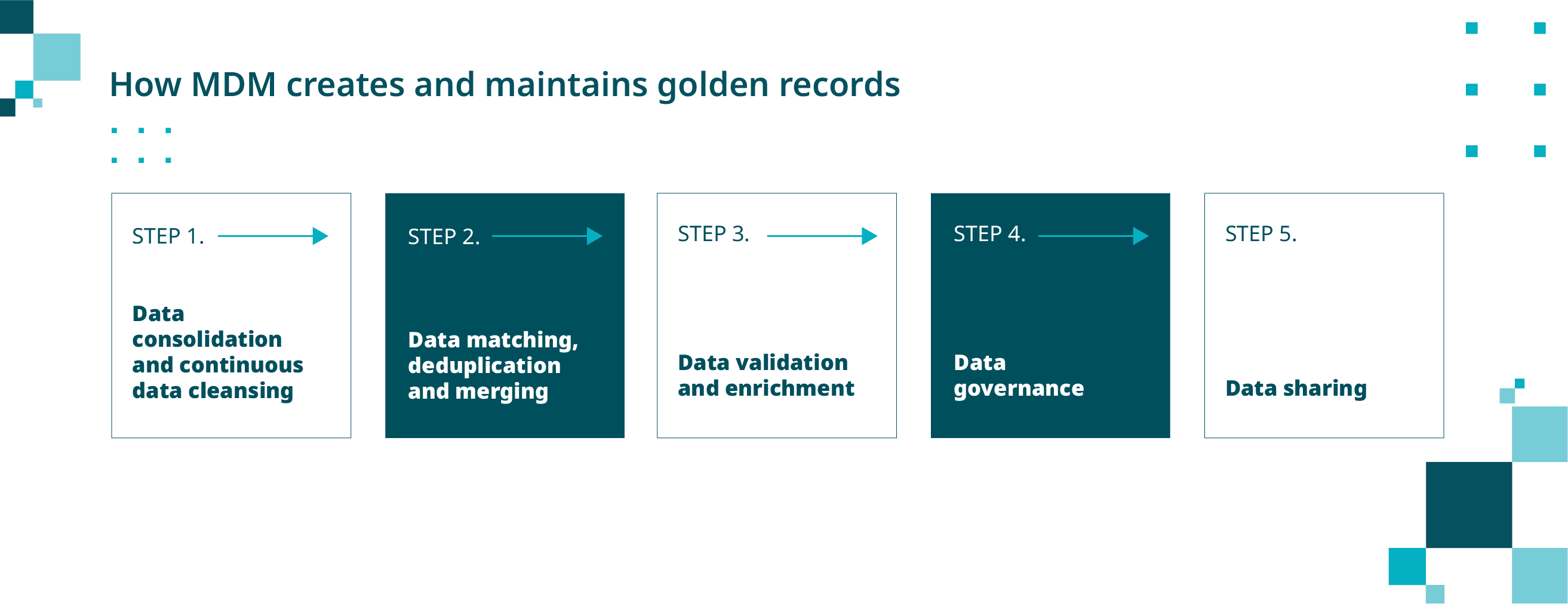
1. Data consolidation and continuous data cleansing
Master data management pulls structured and unstructured customer data — like call logs or emails — from the systems your teams use most:
- CRM
- ERP
- POS
- Loyalty platforms
Once it brings all that data together, MDM automates data cleansing by standardizing formats, removing outdated entries and correcting other errors before they create a poor CX or campaign chaos with inaccurate targeting. It creates golden records by ensuring data quality and that every record is up to date and consistent everywhere.
2. Data matching, deduplication and merging
Using fuzzy matching algorithms and survivorship rules, MDM identifies and resolves duplicate records, merging matched records into a unified customer profile.
Let’s say your billing system lists an address as 123 Main St., but your CRM formats it as 123 Main Street. Matching and merging these records allows you to create a single golden record with accurate, consistent and up-to-date data.
3. Data validation and enrichment
Master data management validates customer data with external databases — like credit bureaus — and then enriches customer profiles with third-party data to build richer golden customer records. No more questioning which version’s accurate or creating a less-than-stellar CX based on outdated customer data — you can rest assured that your system is built to deliver data accuracy.
4. Data governance
MDM enforces governance policies around how you create, update and use customer data to ensure data quality and consistency. It also supports compliance with industry regulations — like GDPR, CCPA and ESG standards — allowing you to prioritize customer data privacy and data security while reducing risk.
5. Data sharing
Marketing platforms, CRM, ecommerce tools, support systems — customer data lives everywhere. MDM pulls data from all of your systems, cleanses it and then synchronizes it back out to create a consistent, unified customer view.
Clean, accurate and trustworthy data gets shared out, ensuring data quality and consistency — no matter where it lives.
How Stibo Systems delivers golden customer records
Stibo Systems helps top brands manage their master data to fuel everything from more effective marketing campaigns and personalized customer interactions to tailored omnichannel experiences. Customer master data management gives you the reliable, trustworthy data foundation that activation platforms need to personalize and deliver a better CX.
And when it comes to creating golden customer records, there’s no solution better than our Customer Experience Data Cloud (CXDC).
CXDC was built for marketing and CX teams like yours — teams looking to do more with customer data, like scale your CX across channels or drive revenue through powerful campaign targeting. Here are just a few ways CXDC helps brands transform their data strategy:
- Create a better customer experience. Use the unified customer view CXDC provides to deliver personalized experiences driven by a deeper, more complete understanding of your audience.
- Build trust through compliance. Show customers you take their data privacy seriously by using golden customer records to meet regulatory compliance mandates and minimize risk.
- Boost customer loyalty. Increase customer satisfaction and long-term loyalty by leveraging golden records to more accurately target your marketing efforts so they resonate.
- Govern your data. CXDC enforces governance to ensure data quality, so every customer profile is accurate and complete. These trustworthy customer records let you execute a more personalized CX.
- Integrate with your existing tech stack. Connect to your business-critical tools to unify customer data across systems and get those reliable golden records. CXDC cleanses, enriches and synchronizes data so customer profiles are consistent everywhere.
- Be AI-ready. CXDC is AI-ready and scales with you. It gives you the clean and reliable data needed to power predictive analytics and real-time decision-making. Whether you’re deploying chatbots or using AI to personalize your CX, golden records make sure your AI delivers trustworthy outcomes
Deliver more personalized customer experiences with golden customer records
From laser-targeted marketing campaigns that drive ROI and tailored experiences along the customer journey to robust compliance that builds long-term loyalty and trust, golden customer records are foundational to effective marketing and greater business objectives.
And with master data management and CXDC, you can finally trust your customer data and act on it in ways that drive your business forward. You can move from fragmented insights toward confident execution — powered by a single source of truth.
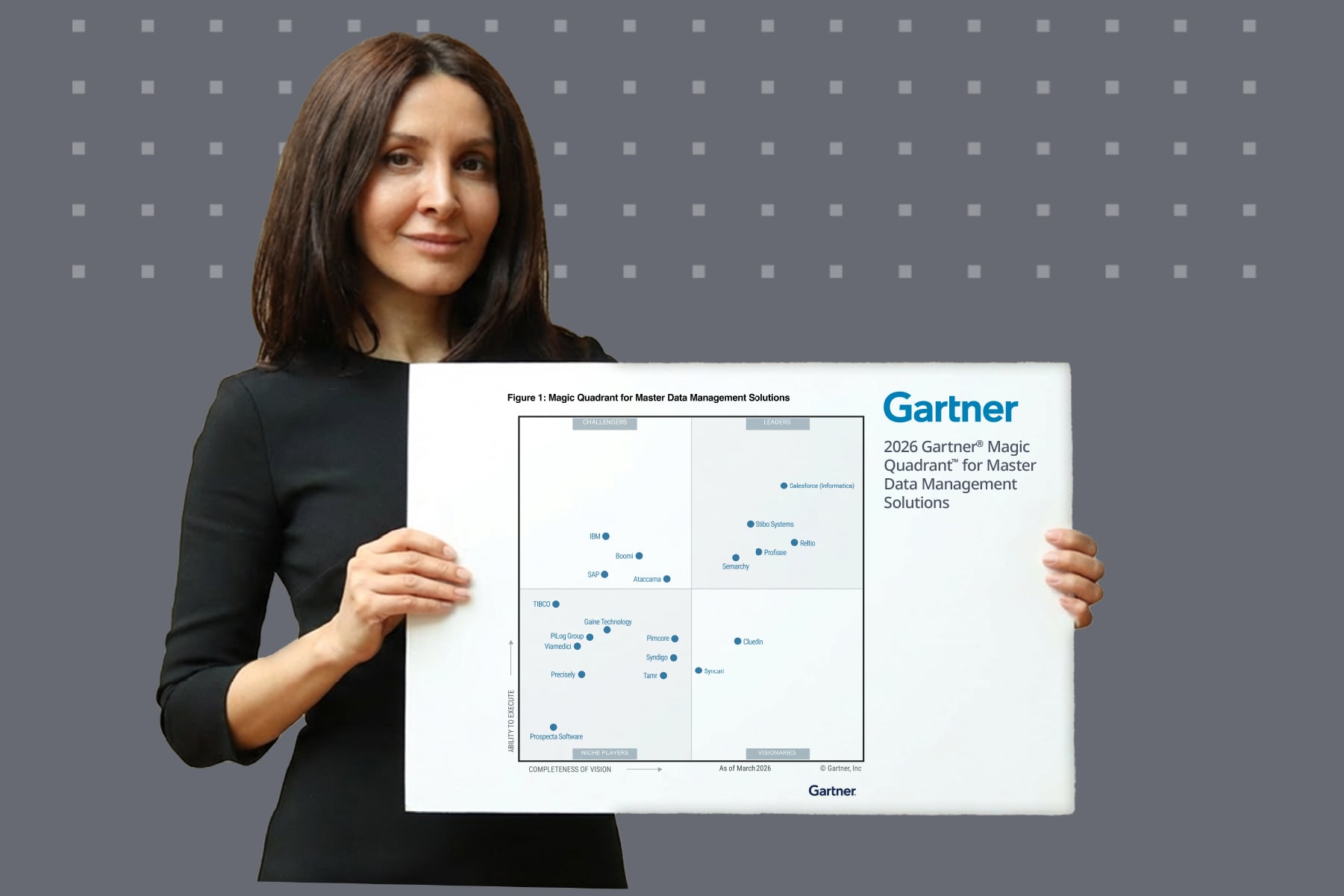
Stibo Systems named a Leader in the Gartner Magic Quadrant for Master Data Management Solutions, 2026
Gartner recognized Stibo Systems as a Leader for our "Completeness of Vision" and "Ability to Execute." This recognition validates years of MDM innovation, strategy and enterprise-scale execution.