Remaining true to our character and customers, while continuing our speed of growth, required a rapid, comprehensive solution. This is why Stibo Systems’ Product MDM solution was so appealing.Read the story
Solutions built on trusted data and business context
Every Stibo Systems solution helps organizations connect critical business data, govern it with confidence, and activate it across operations, customer experiences, analytics, automation, and AI. Whether you're focused on products, customers, suppliers, locations, sustainability, or business relationships, each solution creates the trusted foundation needed for better decisions and stronger business outcomes.
Product Experience Data Cloud

Turn product data into better product experiences. Govern, enrich, syndicate, and optimize product data across channels, markets, and customer touchpoints.
Customer Experience Data Cloud

Create a trusted customer foundation for personalization, service, analytics, and AI-driven engagement across every touchpoint.
Business Partner Data Cloud

Unify accounts, contacts, legal entities, and relationships to create a trusted view of every business partner across the enterprise.
Supplier Data Cloud

Govern supplier data across systems to accelerate onboarding, improve visibility, reduce risk, and support more agile sourcing decisions.
Location Data Cloud

Connect location data with the products, suppliers, customers, and operations that depend on it to create richer business context and better decisions.
Sustainability Data Cloud

Connect sustainability information with products, suppliers, and locations to support transparency, traceability, compliance initiatives, and business decision-making.
The foundation for trustworthy intelligence
Every Stibo Systems solution is built on the same multidomain foundation, helping you connect critical business data, govern it with confidence, and make it available wherever it's needed.
Create trusted business context
Connect products, customers, suppliers, locations, sustainability information, and business relationships to create a more complete picture of your business.
Govern data at enterprise scale
Improve consistency, quality, stewardship, and transparency across the systems, teams, and processes that depend on your data.
Power analytics, automation, and AI
Give downstream analytics, copilots, agents, and AI-enabled processes the trusted data and business context they need to deliver more reliable outcomes.
Annual report: Our Year in Review
We’ve delivered the strongest financial performance in our history, driven by continued execution of our strategy and the increasing impact of investments made in recent years – while further strengthening our position in a fast-evolving market. See how Stibo Systems is leading the way.
Read the report
Stibo Systems named a Leader in the Gartner Magic Quadrant for Master Data Management Solutions, 2026
Gartner recognized Stibo Systems as a Leader for our "Completeness of Vision" and "Ability to Execute." This recognition validates years of MDM innovation, strategy and enterprise-scale execution.
Get the report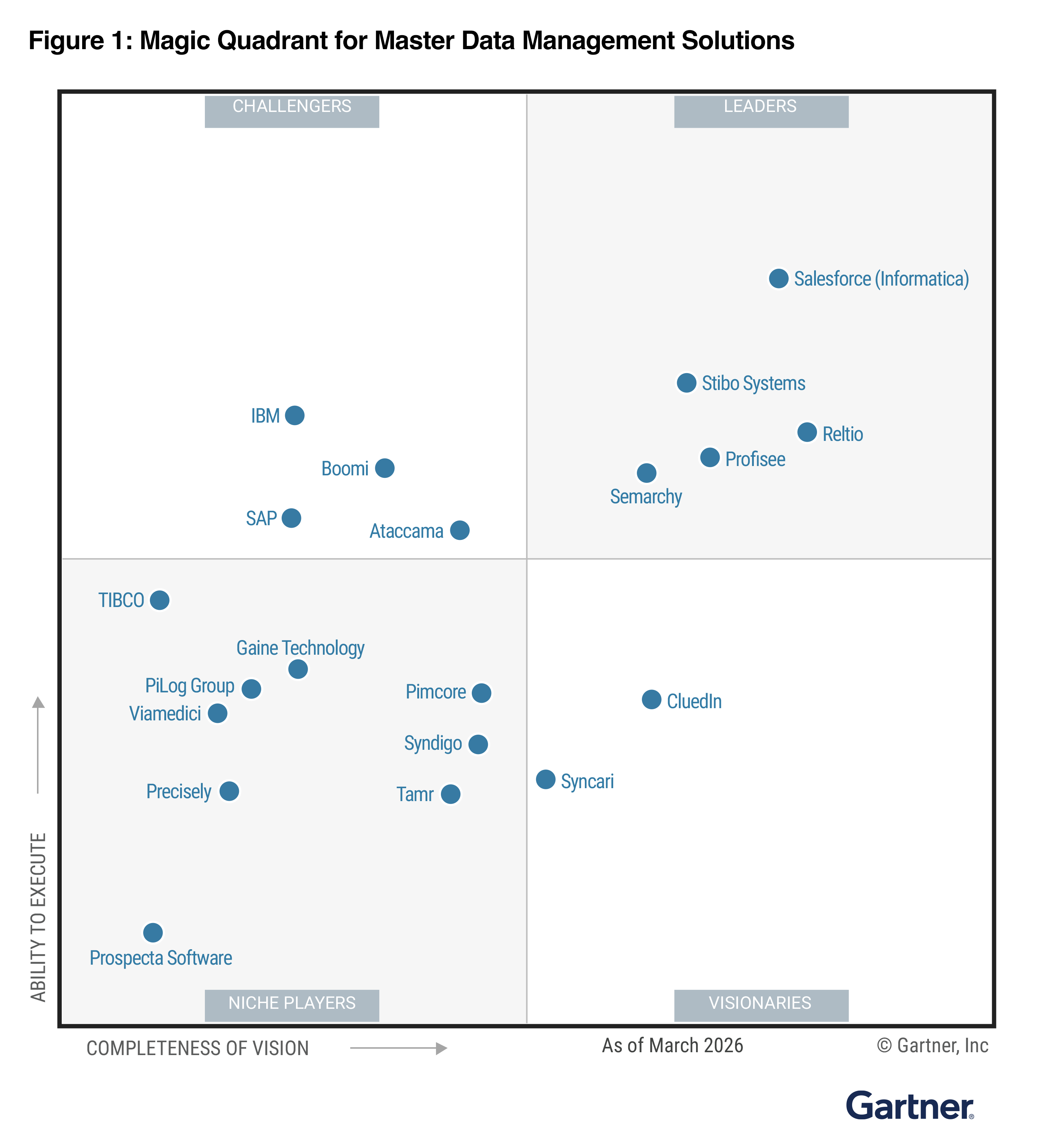
Stibo Systems recognized by G2 as an enterprise MDM High Performer
We've been named an enterprise master data management (MDM) High Performer in G2's 2026 Fall Grid® Report. Take a look at our latest G2 reviews to see what customers are saying.
See reviews
Stibo Systems has earned the "Users Love Us" badge from G2
The results are in — and after earning more than 20 reviews with an aggregate rating of over 4 stars, G2 has awarded us the "Users Love Us" badge. We're thrilled to continue providing best-in-class service to our customers. Check out what they're saying in our latest G2 reviews.
See reviews
Stibo Systems named an MDM Leader by G2 for summer 2026
We're thrilled to be recognized by G2 as a master data management (MDM) Leader in G2's 2026 Summer Grid® Report. Check out what our customers are saying in our latest G2 reviews.
See reviews
Stibo Systems Recognized as a Leader in the SPARK Matrix™: Product Information Management, Q4 2025 Report
QKS Group's latest report named Stibo Systems as a Leader for Product Information Management (PIM) once again. Read the report to see why Stibo Systems is a Leader and how enterprises are looking for more than basic PIM, embracing safeguarded AI and future-proofing with cloud-based solutions.
Download the report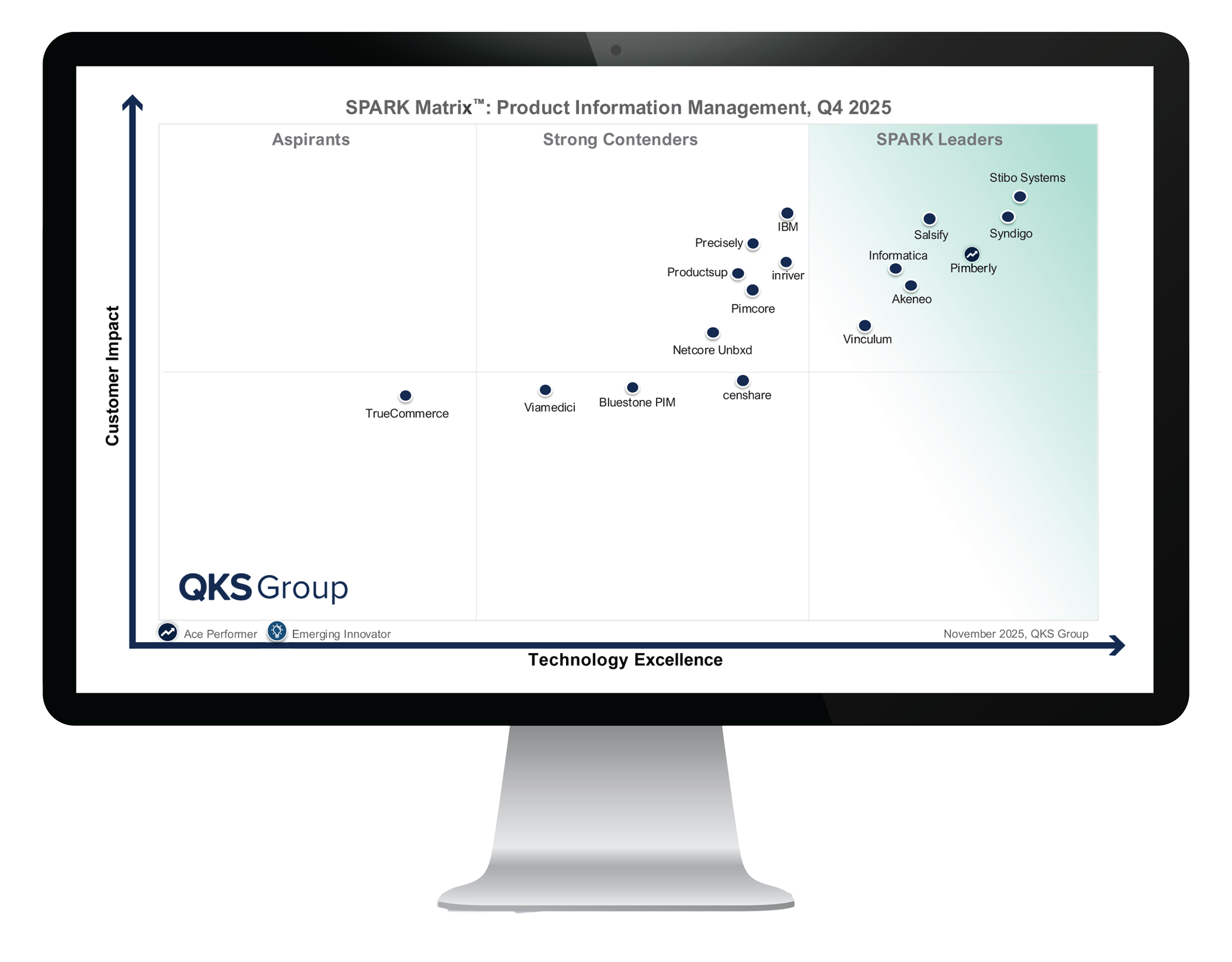
Stibo Systems Named a Leader in The Forrester Wave™: Master Data Management Solutions, Q2 2025 report
We believe this recognition highlights our commitment to delivering scalable MDM solutions, driving data transparency, and empowering confident business decisions.
Explore the report.webp)
Stibo Systems Recognized as a Top Performer for MDM in The Hackett Group® Digital World Class® Matrix for Master Data Management 2025 Report
The Hackett Group's latest report named Stibo Systems as a top performer for master data management (MDM). Read the report to see why Stibo Systems is a top performer and explore how leading MDM solutions are innovating with artificial intelligence to help customers achieve business outcomes.
Download the report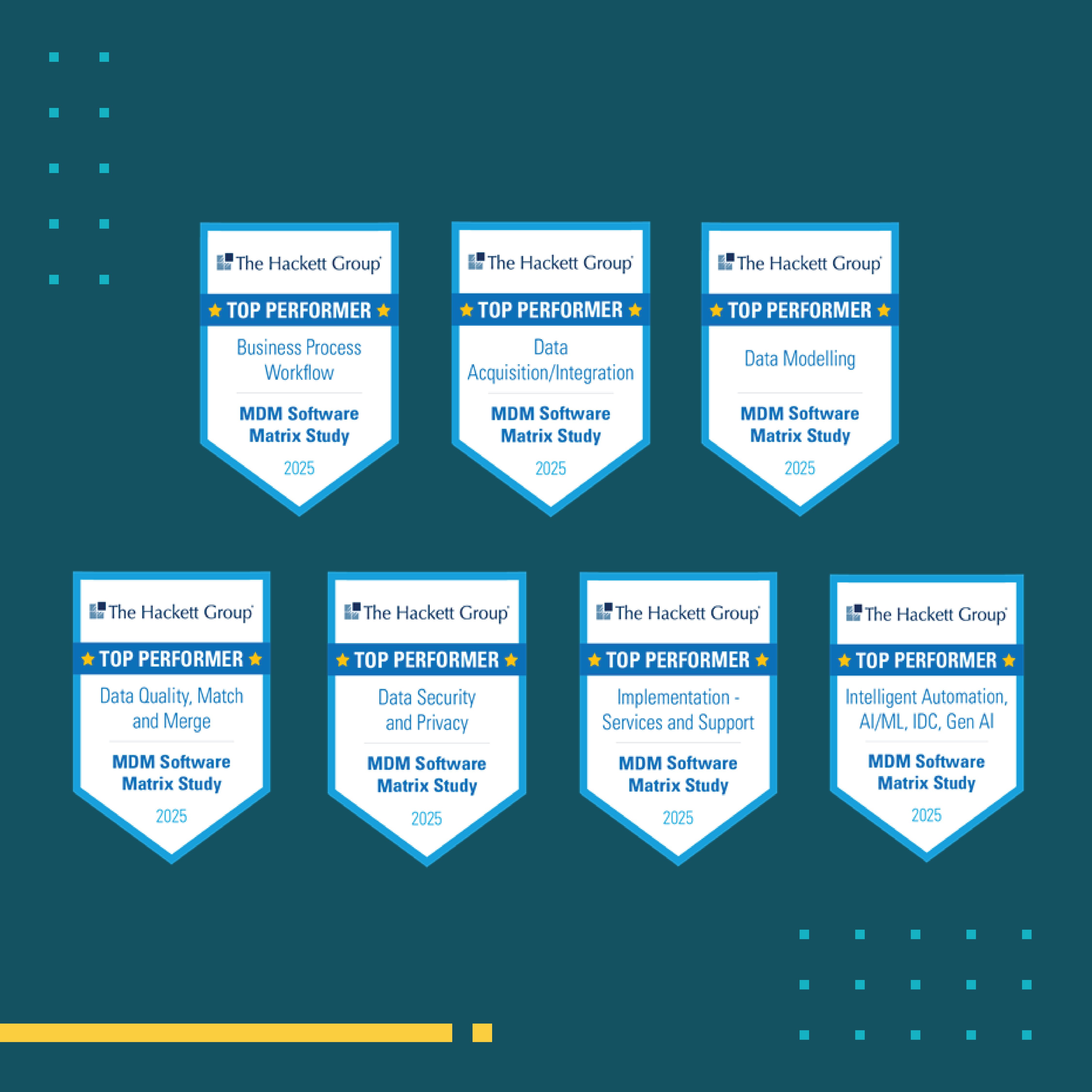
Stibo Systems Named a Leader in the IDC MarketScape: Worldwide Retail Product Information Management Applications 2025 Vendor Assessment
IDC MarketScape’s latest report named Stibo Systems as a Leader for retail product information management (PIM). Read the excerpt to see why Stibo Systems is a Leader and explore how modern-day retailers have embraced PIM to create seamless, omnichannel customer experiences that drive revenue growth.
Download the excerpt.png)
Simplify your MDM vendor selection
Which MDM solution will drive your success? Access detailed vendor rankings and exclusive insights in the ISG Buyers Guide™ for Master Data Management.
Download the Buyers Guide